“An insurgency is a competition between insurgent and government for the support of the civilian population, which provides the sea in which the insurgent swims.“
— John A. Nagl
Zamboanga del Sur (ZDS) is the 52nd province of the Republic of the Philippines, carved out from the former Zamboanga Province, which comprised the entire southwestern Mindanao peninsula on September 15, 1972. It included initially 42 municipalities and one city – distributed over three congressional districts. In February 2001, its inhabitants voted to create a new province from its third congressional district. As a result, Zamboanga del Sur was established with 26 municipalities and one city, and 681 barangays.
The province’s mountainous countryside stretches northward from Sibugay in the southwest. It runs along the northern boundary to Salug Valley in the east. The coastal plains are regularly extending from south to West then spread into vast flatlands when reaching the coastal plains of the Baganian peninsula in the southeast.
In Pagadian City, we will be greeted by the sweet smiles of endearing Pagadianons. The city is known as the “Little Hong Kong of the South” for its geographical features being beautifully impressed in the slopes of the Zamboanga del Sur. The bustling city spreads over the luscious high hills at the foot of Mt. Pinukis down to the serene waters of the Illana Bay. As a fast-growing commercial center in the region, it prides itself with friendly people, clean, wide cemented streets, and its queer-looking tricycles.
Going to the north of the city, is the town of Labangan which has a vast strip of irrigated rice farms extending to the east toward the coastal town of Tukuran. This sandy town is lined up with beautiful beaches of the placid Illana Bay that provides abundant catch for the locals.
A few kilometers to the north, we ascend to Pulacan, Labangan, where the Philippine Army’s 1st Infantry “TABAK” Division (1ID) resides in the verdant hills of Camp Cesar Sang-an embracing a sprawling community of families of soldiers.
Proceeding further, we will see the rolling hills of Ramon Magsaysay, Sominot, Midsalip, and Aurora. Vast fields of corn plantations nestled with towering coconut trees greet us in these towns. As we get to the high point in Ramon Magsaysay and Aurora, the soothing greenery of the enchanting Salug Valley – rice fields, rivers, and streams is a sight to behold.
Going down from Ramon Magsaysay, we get close to the seemingly boundless rice fields of Salug Valley, which extends over the towns of Molave, Mahayag, and Tambulig in the eastern side where the ice-cold spring waters of the famed Tambulig Mountain Resort flow from the bosom of the majestic Mt. Malindang.
The enormous rice fields continue to the north toward the town of Dumingag, where it is met by the town’s long and steep mountain ranges. Located at the foot of Mt. Malindang is the hilly town of Josefina along with the hinterland barangays of Dumingag. From Pagadian City toward the 2nd Congressional District of ZDS, we reach Dumalinao town, characterized by rolling lands from the northwest by the foot of Mt. Palpalan of Pagadian City down into the northeast by Illana Bay. Going East to the Baganian Peninsula where the towns of San Pablo, Guipos, San Miguel, Dinas, Dimataling, Pitogo, Tabina, Margosatubig, Vincenzo Sagun, and Lapuyan are situated – dominantly planted with coconut trees and corn. They also have the best bountiful marine resources. At the municipality of Guipos is Camp Major David P. Sabido, the home of the 53rd Infantry “MATAPAT” Battalion (53IB).
From Dumalinao, going to Zamboanga Sibugay Province (ZSP), we reach the town of Tigbao, where the beautiful forever-green Mt. Timolan is seen from the national highway. Further along is the coastal town of Kumalarang, the “First-Class Crab Capital of the Philippines.” In the interior to the west are the towns of Bayog and Lakewood, famous for its large, pristine lake.
In Zamboanga del Sur’s towns live a mixture of inhabitants of different descent, which made its unique and colorful tradition.
THE PEOPLE
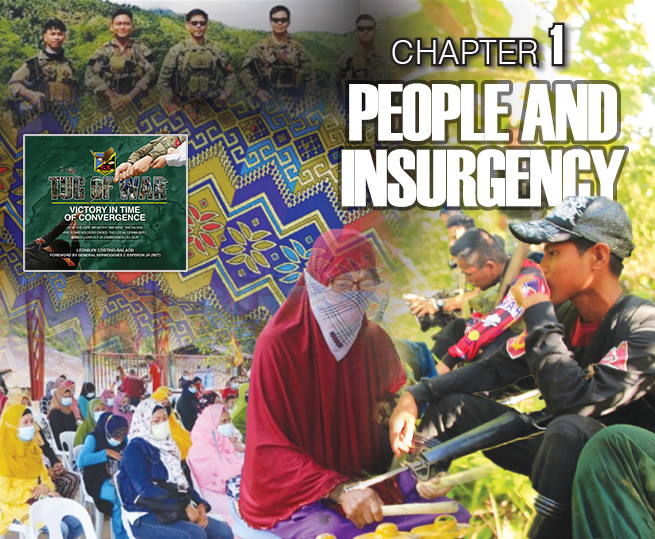
The province of Zamboanga del Sur is composed of the “tri-people” — the Subanen, Muslim, and Christian settlers. These groups of people live side by side or co-mingle in many places, contributing to the color and variety of the culture and heritage of the province. It has a population of more than 1 million and is the most populated of the three provinces in the region. Poverty incidence among families rose from 18.8% in 2015 to 28.0% in 2018. The Cebuanos are the dominant ethnic group in the province. It is followed closely by the Bisaya and the Subanen who comprise 9% of the total population. The rest of the household population belongs to the different ethnic groups of the Moro people.
The vibrant and colorful blend of the three cultures is eminent in Zamboanga del Sur. Each tribe has its contribution to the unique and exciting character of the province. While it is common for mixed tribal communities that frictions and misunderstandings can happen, they share a sense of community and tolerance for each other’s differences. The sense of harmony is symbolized by the Unity Park, located at the Provincial Government Complex in Dao, Pagadian City.
THE INDIGENOUS SUBANENS
The Subanens are the original inhabitants of the province. Their ancestors migrated from the Eastern part of Borneo Island. They settled along the coasts and riverbanks in the Zamboanga Peninsula. They lived peacefully where they were provided abundantly by the rich natural resources of the province. They fished on the rivers and nearby bays and tilled the fertile lands. Their preference to live in places near the river was the reason they got their name “Subanons” or “People of the River.” “Suba” means river in their dialect.
The Subanens have rich customs and traditions but lead simple lives. They live in houses with cogon grass-roofing supported by long posts of round timbers. They install removable stairs which they could easily pull up to ward off potential aggressors. The occupants have deadly spears and an itchy concoction of poisonous herbal juices mixed with drippings of salted anchovies ready as their weapons.
Itinerant Subanens live in makeshift houses made of small wooden poles and covered with large tree leaves. These move around easily as they settle in different places.
A Subanen village is led by a Timuay who is strong enough to protect his neighbors. A rich Timuay usually lives in a longhouse where he accommodates his several wives. The people who seek his protection build their houses around his abode where they stay more or less permanently. These groups become more prosperous and thrive as a community. The Timuay exercise traditional powers to settle disputes among the village members and impose fines and light punishments.
In these villages, colorful and expensive festivities like the Buklog (pronounced as gbecklug) are celebrated. Buklog is usually sponsored by wealthy families to cheer a happy event like a good harvest. The host takes long preparations, including raising and fattening pigs, cows, carabaos, and chickens. They invite their relatives from other villages, even those from afar. The guests also bring some food to make the event last longer. There were dancing, shouting, and rhythmic sounds which could be heard even to the distant hills. Men and some women gather around an expensive porcelain jar filled with Pangase wine made from fermented rice. They drink the wine using a bamboo straw which is shared by everyone while enjoying sumptuous food.
The Timuays and some rich Subanens have several wives depending on their wealth or influence. Each wife is given a room in the longhouse. This setup was also practiced by women – having more than one husband but is now considered taboo.
The groom’s family pays a dowry, usually a parcel of land or several carabaos, depending on the bride’s beauty and the wealth and social standing of the bride’s family.
Known to be peace-loving people, their hospitality and friendliness made them vulnerable to hostile tribes and migrants. Many Subanen settlements were driven away from their homes and went to rugged and barren lands. However, other Subanens chose to repel the invaders and held their ground. One such legendary leader who defended his people was Datu Imbuing of Lapuyan.
The Subanens still have communities in different towns in the province. Many of them who are educated have already adopted the ways of the Visayans. The majority of Subanens live in the Municipality of Lapuyan, which is now considered the last Subanen stronghold where they dominate, and the tribal identity is retained.
THE SELF-SUFFICIENT MOROS
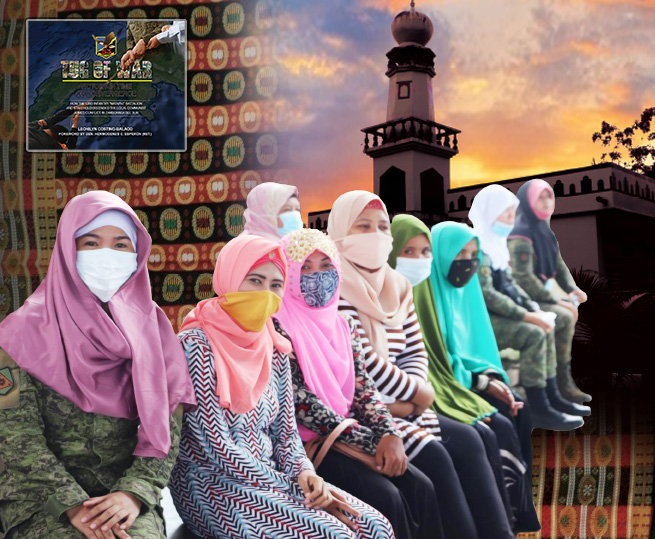
The Moros, or Muslims as they are popularly called, comprised the next wave of settlers in the province. They started coming to the Zamboanga Peninsula when the Spaniards and the Americans waged wars against the Moro Sultanate in Sulu and Tawi-tawi. The Tausugs, Samals, and Badjaos settled in the coastal municipalities of ZSP while the Maguindanaoans and Maranaos crossed the Yllana Bay and found refuge in the towns of Tukuran, Labangan, and Pagadian City. Some found their way to the Baganian Peninsula in Dinas, Dimataling, San Pablo, and Pitogo.
The Maguindanaoans and Kalibugans are farmers. The Tausugs, Samals, and Badjaos are fishermen and farmers, while the Maranaos are traders and artisans. Being principally a sea-faring people, most of the Moros in the province reside in the coastal municipalities.
Muslim religious leaders came to convert the Subanens to their Islam religion. While warring, Moro groups invaded and subdued many Subanen settlements because of their unmatched bravery, strategy, and better armaments. Despite being perceived as fierce Moros, many of them are devout followers of their religion. Those who are practicing the pillars of Islam are appropriately called Muslims. They pray regularly five times a day, genuflecting while facing Mecca. It is a Muslim’s lifetime ambition to make at least one hajj or pilgrimage to Saudi Arabia.
The Moros have diverse cultures, customs, and traditions. Most of their traditional ceremonies are connected with courtships and weddings. Having several wives is permitted in Islam; a man can have up to four wives as long as he can provide for them and treat them equally. The man can only contract the second and more marriages with the consent of his original wife. The wedding happens after the groom has given the appropriate dowry to the bride’s parents. Muslim weddings are generally big family affairs where all relatives and friends of the bride and groom are invited.
The Moros have robust family ties. The family patriarch is concerned with the welfare of all family members. He is expected to provide help to anyone who is sick or getting married. The Muslims have high respect for their elders and leaders. They are loyal to them and follow their wishes. However, family loyalty can have negative consequences. For one, they believe that when an offense is done against a person, it is directed to the entire clan. Like when a family is slain by someone from another line, any clan member can volunteer to kill the offender to make things even. It is called the rido system, which is a vicious cycle of violence between warring families. It only stops when religious or political leaders mediate. An adequate sum of money is paid for the victim’s family who is without fault.
Many Moro people are now highly educated, and some are successful entrepreneurs and political leaders. They have produced prominent leaders who are active catalysts of development in the province.
THE VISAYAN MIGRANTS
The Visayan settlers of the province are the descendants of the Cebuanos, Boholanos, Ilonggos, Warays, and the Siquijornons, who migrated to the region. At the start of the 20th century, many had started to migrate until they found their way to ZDS. They occupied different municipalities within the area. The migrants bought the lands of the natives and settled in different terrains. The Cebuanos and Ilongos preferred the sites fit for coconuts. The Ilocanos and Ilonggos opted for flat and irrigable lands. Many migrants convinced their relatives to come to the province. They married the daughters of rich Subanens to acquire large parcels of land. The Christians later became the dominant residents of the area.
The Cebuanos are known for their friendly and outgoing nature, exemplified by the people of the town of Aurora, where most of the Cebuano migrants settled. They have a very colorful fiesta and founding anniversary celebrations. They are fond of music and are good singers and dancers.
The Boholanos are deeply religious. Having been accustomed to the hard life, they are frugal. However, they make exceptions during fiestas, where they spend their savings to lavishly feed their guests. Generally peace-loving and respectful to their elders, communities dominated by the Boholano descendants are progressive and peaceful.
The proud and affectionate Ilonggo migrants were not as large in ZDS as in other parts of Mindanao. Still, their prominent descendants settled in the towns of Molave, Dumingag, and Tukuran. Ilonggo men are chivalrous and are affectionately demonstrative. They are famous for their tasty cuisine and hilarious Ilonggo songs.
THE MIGRANTS FROM LUZON
A relatively small number of migrants who came from the provinces of Luzon contributed to the diversity and unique qualities of the Zambosurians.
The Ilocanos are among the richer and progressive migrants because of their honesty, hardworking nature, and penny-pinching attitude. Many of the Ilocano children became successful lawyers and doctors in the province. Even those coming from poor families completed their education by doing odd jobs, working as barbers, sales clerks, and waitresses while studying. No wonder most of the Ilocanos in ZDS become successful.
The Tagalogs are known for their business acumen in the province. Many started as peddlers until they were able to put up small stalls in the public market. They dominate the retail trade but constitute a tiny portion of the population. Still, their contribution to the development of the province outweighs their number.
THE ENTREPRENEURIAL CHINESE-FILIPINOS
The Chinese-Filipinos constitute a small yet influential group. They excel in many sectors of the local economy and even in local politics. Their overall contribution to the development and economic growth of the province is immense. They have become an essential pillar of the community whose influence cannot be disregarded. However, their business dominance made them a target of robberies, kidnappings, and extortion.
A FUSION OF COLORFUL HERITAGE
The original settlers and the migrants constitute the population mix of the province. It is a concoction of many tribes and clans, big and small. Each has its own set of traditions, peculiar customs, dreams, and aspirations. It is a mixture of unique and diverse people continuously trying to co-exist despite unequal socio-economic, educational, livelihood, and development opportunities.
THE INSURGENCY
The Subanens are continuously losing their lands to the Moros and the Christian settlers. They are driven to barren and unproductive territories where they are hardly able to sustain their needs. They are poverty-stricken, unjustly cast, and isolated from civilization; they thus become a rich source for rebellious ideology. According to the Office of the Presidential Adviser on the Peace Process (OPAPP), 70% of the Communist-NPA Terrorists (CNTs) are indigenous people. They live in deplorable conditions in the hinterlands far from the reach of the government. They are the most vulnerable to the Communist Terrorist Group (CTG) propaganda, which is taking refuge in their communities. Many of the Subanens hold vital positions in the organization and are the most passionate fighters.
Jonilou, aka Jobel, is a CTG cadre who has been in the armed struggle for 10 long years. He was a poor Subanen boy in a remote barangay in Dumingag. “I wanted to be in school because I dreamed of becoming a soldier, but we were destitute, and life was so hard,” Jonilou remembers. As a young boy, he had to work on the farm to help the family get by. As a teenager, he went to the city to find work but life became more challenging. When he came home, he was approached by the CTG. Without a second thought, he joined the armed group. He was at the time frustrated and desperate to improve the plight of his family. Many more were like Jonilou. They were deceived into fighting against the government driven by their circumstances and lured by the Communist Party of the Philippines – New People’s Army’s (CPP-NPA) empty promises.
Through the Anti-Terrorism Act (ATA) of 2020, the CPP-NPA is designated as a terrorist organization by the Anti-Terrorism Council (ATC) by virtue of Resolution Number 12 (2020) dated 09 December 2020. It is likewise designated as a foreign terrorist organization on August 9, 2002, by the United States Department of State under section 219 of the U.S. Immigration and National Security Act.
THE BIRTH OF CPP-NPA INSURGENCY IN ZAMBOANGA DEL SUR AND CREATION OF WMRPC
Long before Jonilou joined the CTG, the CPP-NPA had been in the province spreading violence and atrocities. It dates back to 1974 when the Western Mindanao Regional Party Committee (WMRPC) was established as the highest ruling entity of the CPP-NPA in the province.
When the Mindanao Regional Party Committee (MRPC) of the Communist Party of the Philippines (CPP) expanded its area and organized its Eastern Front Committee (EFC) and the Western Front Committee (WFC), three provincial committees of the WFC were also created, namely: Provincial Committee “MONTEROSA” in Misamis Occidental, Provincial Committee “GABRIEL” in Zamboanga del Norte (ZDN), and Provincial Committee “BALANDO” in ZDS. These provincial committees flourished, rapidly grew large in strength, and were later upgraded into sub-front committees (SFC). Not long after, to guard over their growing power, an armed group called the Main Guerilla Unit (MGU) was organized following the theories and principles of the NPA.
The government launched the nationwide campaign LAMBAT-BITAG in 1988. Consequently, the WMRPC leadership suffered significant setbacks. Several front committees were deactivated after losing many members. In contrast, others were downgraded into district committees after losing ground from the continuous military offensive by the Special Operations Team (SOT). Severely affected were the FC-1 “Big Beautiful Country (BBC).” At the same time, FC-BALANDO was renamed FC-AMORES, taken from the name of their fallen comrades.
In 1989, without the mass support for the guerilla bases and guerilla zones, the WMRPC distributed remaining full-time members of the region to other fronts. Determined to preserve whatever was left of its fighters, the WMRPC created a headquarters force (HQ Force) to secure its regional leadership and other executive committee members. The HQ Force was with five red fighters led by Mario Bagundol aka JALLY.
The government efforts continued to turn the odds against the WMRPC until, in 1992, all military organs were dissolved after the party’s rift brought about by the Reaffirm Movement. The Regional White Area Committee (RWAC) also broke away from the WMRPC. The territorial organs, however, continued with their recovery work at the hinterlands. The following year, FC-AMORES established two Special District Committees (SDC): SDC-NOELMA covering the areas of Aurora and Tukuran and SDC-KAMANDAG surrounding Kumalarang, Lakewood, and Buug. Their mass recovery work continued the following years.
In 2001, Angelina Besonia aka Midz headed the WMRPC with four operational staff: finance, medical, ordnance, and liaison. The RWAC was reactivated with the party, and several white area members were consistently immersed with the red fighters. The HQ Force, then coded as “TRIPOLI,” was reactivated to secure the regional leadership and the white area members’ immersion with the party but not for long. It was deactivated in 2002, along with other party groups and partisan units.
Their recovery efforts were not paying very well for their recruitment of new members. The WMRPC continued to merge several district committees because of its lack of personnel and downgraded several front committees into section committees. It went through another change in leadership. Leonido Nabong aka Otic/Coco, the deputy secretary of the WMRPC, was promoted as secretary, while aka Midz became his assistant. Meanwhile, FC-AMORES following several defeats from the military operations was renamed FC-KARA, taken from the names of four of their fallen comrades. Its secretary, Elsa Renton, was elevated as deputy secretary of the WMRPC. At the same time, Rodrigo Tayasan took over the supervision of the front committee.
In 2004, the section committees (SECOM) started gaining ground and were again raised into FC. This included FC-KARA with one Front Guerilla Unit (FGU) as security, FC-Feliciano A also with one FGU, FC-JOJI, and FC-NBC. This restructuring continued until 2008 when it also organized its military organ, the Regional Operations Command (ROC). As they grew in number and scope, Sub-Regional Party Committees (SRPC) was established to lessen the workload of aka Coco, still the WMRPC secretary, so he may delegate the authority and responsibility to the two sub-committee secretaries.
The restructuring of the WMRPC was conceptualized in response to the successful infiltration by the military inside their ranks. Their cadres were targeted by spies. The restructuring was intended to reduce the risks of neutralization of their seasoned leaders. A team of red fighters was formed to re-establish the former HQ Force “TRIPOLI,” now coded as “AGUILA,” which is tasked primarily to secure aka Coco whenever he visits any territorial units.
By 2006, FC-KARA was already led by Matias Gaquit. The committee recognizing its ability to recruit members prompted the creation of Sentro De Grabidad (SDG) “KARA” led by Rowil Muñasque and the Sandatahang Yunit Pampropaganda (SYP) “KARA” led by Samy Pardillo. The SYP is mainly tasked to conduct Ideological-Political-Organizing (IPO) work. At the same time, the SDG guards them and guides tactical offensive.
53RD INFANTRY “MATAPAT” BATTALION: Becoming the Guardian of the Peninsula
The massive proliferation of the CPP-NPA and their nonstop recruitment among the indigenous people prompted the move of the 53rd Infantry “MATAPAT” Battalion (53IB) from Sulu to mainland Zamboanga Peninsula on March 26, 2006. It found its new and permanent home at Camp Sabido in Guipos, Zamboanga del Sur.
The 53IB carries a rich and glorious history of serving and securing the communities in its areas of responsibility. The unit has evolved from its provisional status and has proven its worth to become a full-fledged infantry battalion under the operational control of 102nd Infantry “IGSOON” Brigade (102Bde) and 1ID of the Philippine Army. The unit adopted the “MATAPAT” moniker to symbolize the Filipino Soldier’s sincerity and loyalty to the people, the Constitution, and the Armed Forces of the Philippines (AFP). The “MATAPAT” tag embodies the troops’ faithfulness and devotion to their duties and responsibilities.
On January 1, 1985, the battalion was activated as an organic infantry maneuver battalion of the 4th Infantry “DIAMOND” Division. Lieutenant Colonel Noel C. Agos served as Officer-in-Charge from November to December 1984 during its transition from provisional status until its full-time activation.
It was initially based in Lumbia, Cagayan de Oro, Misamis Oriental. The unit was transferred to Jolo, Sulu, on June 1, 1987, and given the task to subdue the secessionist movement of the Moro National Liberation Front (MNLF) in the area. After a brief campaign in Sulu, the unit was redeployed to Agusan del Norte of the CARAGA Region in 1988. It shifted its efforts to confronting the CPP-NPA. The unit has since made notable contributions in Internal Security Operations (ISO) in the said region. However, because of the force reduction scheme and streamlining of the Philippine Army to attain a “lean but mean” regular force equipped with modern arms during the Ramos administration, some infantry battalions had to be deactivated, including the 53IB, on February 14, 1992.
In the early part of the new millennium, the security situation in the area of responsibility of the 1ID covering the island provinces of Sulu and Basilan had dramatically changed. In Basilan, the Abu Sayyaf Group (ASG) escalated its terrorist acts. It became notorious overnight as an Islamic extremist group engaged primarily in kidnap-for-ransom targeting foreign tourists.
Due to the volatile security situation in Western Mindanao under the 1ID, the need to activate and organize new infantry battalions became indispensable.
In 2000, the ASG staged the Sipadan Island hostage incident where they kidnapped at least 21 victims comprising of foreigners and Filipinos. The victims were brought to Talipao, Sulu, and demanded millions of dollars in exchange. This triggered the Philippine Army to conduct primary offensive operations against the ASG that necessitated the reactivation of several infantry battalions, including the 53IB, on May 1, 2002.
In July 2002, the unit established its headquarters in Camp Bautista, Barangay Busbus, Jolo, Sulu. It served as the striker battalion Ready-Deployable Force of the 104th Infantry “SULTAN” Brigade. The unit was tasked with recovering kidnapped victims who were still in the hands of ASG. The Schillings couple abducted in Sipadan and some Indonesian nationals seized from Panamao, Sulu were among the kidnapped victims.
A total of 12 ASG members were killed, captured, or surrendered. Most notable was the neutralization of ASG leader Mujib Susukan on February 18, 2003, by the operating troops of the battalion.
In May 2003, the battalion headquarters was transferred to Sitio Bato Haba, Barangay Matatal, Maimbung, Sulu to further intensify its operations against the ASG. On September 30, 2003, as the ASG reconstituted their forces at Barangay Saldang, Parang, Sulu, the 53IB launched a surprise attack against the enemy. It recovered several high-powered firearms without a single casualty from the troops. The time between September to October 2003 were the banner months of the unit wherein 21 assorted high-powered guns were seized during the military operations. This prompted Southern Command Commander Lieutenant General Roy Kiamko to visit the unit on October 12, 2003 and personally pinned Gold Cross Medals and Military Merit Medals with Spearhead Devices to the deserving gallant officers and men of the battalion.
On February 10, 2005, the unit’s Commanding Officer, Lieutenant Colonel Dennis B. Villanueva, was killed during the Panamao Offensive against the Misuari Breakaway Group led by Ustadz Habier Malik. During Lieutenant Colonel Villanueva’s leadership, the unit successfully fought against the ASG under Doctor Abu and Albader Parad at Karawan Complex. The troops recovered several M16 rifles with M203 grenade launchers.
Major Emmanuel C. Sison was inserted on the battlefield on February 11, 2005, as the new commanding officer to continue the offensive against the forces of Ustadz Habier Malik. The battalion relentlessly conducted offensive operations until the enemy camp at Barangay Bitan-ag, Panamao, Sulu was overrun and seized. Major Sison, wounded during the military offensive, received the Gold Cross Medal for his gallantry in action.
CHALLENGES IN THE NEW AOR: Strong Presence of the CPP-NPA Terrorist Groups
The 53IB confronted a new enemy upon moving in Zamboanga del Sur. Though it was not the first time they faced the NPAs, they were in new terrain and environment. Moreover, the WMRPC steadily regained strength and influence after suffering significant setbacks in the ‘80s and early ‘90s. It continuously underwent restructuring and reorganization as it increased in number through its intensified IPO work and gained ground by conducting tactical offensives.
GUERILLA FRONT (GF) KARA
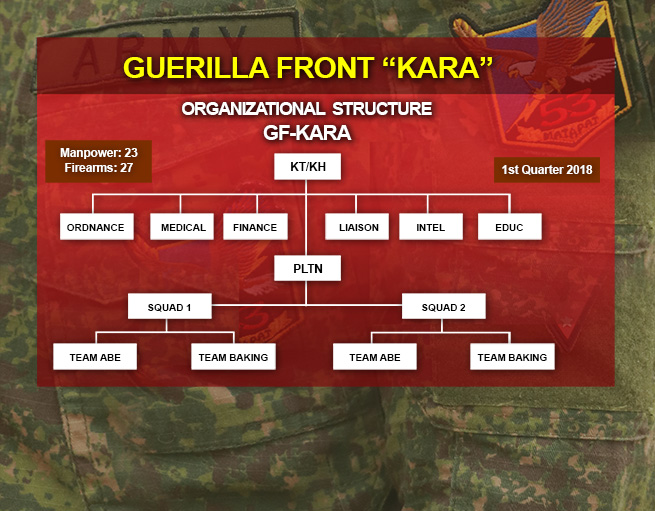
The 53IB immediately unleashed its massive force against the WMRPC and other lawless groups proliferating in the province. After some time, the turn of events went in 53IB’s favor. In 2010, it downgraded FC-KARA into a SECOM after several of its members were neutralized and went on lie-low. It was left with 11 members, making it an undersized platoon of only two teams. By this time, all other FCs of the WMRPC were also downgraded into SECOM while two others were dissolved.
However, in 2013, Matias Gaquit, who had led SECOM-KARA since 2006, was transferred to SECOM-SENDONG. He was replaced by Felimon Suazo aka Nathan from the Davao Area. Under his new leadership, SECOM-KARA was restored as a guerilla front after its strength was re-established. Its SDG and SYP were again operating, with the SDG covering Midsalip and the SYP, mainly the areas of Lapuyan and Kumalarang.
GF-KARA sustained its expansion work and carried out tactical offensives in the next few years. Notable atrocities by the group during this period were the disarming of the barangay chairman of Barangay Dalapan in Guipos and the barangay chairman of Barangay Mandeg in Lapuyan; the ambush of Staff Sergeant Danilo Saavedra of 53IB in Barangay Datagan of Guipos and Private First Class Botz Malalis of 53IB in Barangay Bagong Oroquieta of Guipos; and the harassment of troops conducting feeding program at the Day Care Center in Barangay Maralag of Lapuyan.
The battalion became even more determined to destroy the armed group and dissolve their mass bases. Lieutenant Colonel Alvin V. Luzon deployed his teams to conduct Bayanihan Team Activities (BTA) in GF-KARA’s influenced areas in 2014 to target the enemy’s guerilla bases in San Miguel and Lapuyan areas and to isolate the masses from GF-KARA’s SYP. 53IB regained 13 barangays in Kumalarang, four in Guipos, and four in San Miguel. To prevent GF-KARA’s SDG from executing tactical offensives in the area of operations (AO), 53IB troops were deployed in 14 barangays in Tigbao and 22 in Bayog. This resulted in a series of government-initiated encounters and CNT neutralization by 2014-2015. They accomplished five total armed clashes with four CNTs captured while 25 total CNTs surrendered. The campaign reduced the GF-KARA’s manpower to 12. Its SDG, then led by Romanito Sumasay aka Gusman, was forced to retreat at the town of Dumingag in ZDS and Sergio Osmeña in ZDN. This eventually led the WMRPC to divide SDG-KARA, with most of its key personalities leading the reorganization of GF-BBC, which was deactivated in 2009. Aka Gusman was also transferred to GF-Feliciano A where he was named as commander.
However, military formations were significantly reduced during the bilateral ceasefire and peace talks between the government and the CPP-NPA in 2015. This paved the way for the recovery by GF-KARA of its mass bases and boosted their strength from 12 to 43. At the onset of 2016, Ronie Nuñez aka Nilo assumed the leadership of GF-KARA with Felimon Suazo aka Nathan as its secretary and at the same time their political instructor. The group regularly roamed the areas of San Miguel, Lapuyan, Guipos, Tigbao, and Kumalarang. During this time, the 53IB led by Lieutenant Colonel Virgilio C. Hamos Jr. redeployed Bayanihan team operators in far-flung areas of the once cleared barangays and positioned combat troops along critical key terrains and mobility corridors of the CTG. Throughout 2016 to 2017, the government forces regained significant accomplishments, including neutralizing its commander, aka Nilo, at the area of Barangay Kanipaan, Bayog, ZDS during an armed encounter. He was then replaced by Samy Pardillo aka Andoy as commander. The unit encountered the CTG ten times, captured two CNTs, and negotiated the surrender of 16 others. Because of this setback, the GF-KARA retreated to the area of Diplahan, ZSP, where most of the members of the WMRPC met.
Another round of peace talks and ceasefire with the government and the CPP-NPA allowed GF-KARA to replenish its lost members. In 2018, the GF-KARA’s strength stood on 33 manpower. To help GF-KARA recover its mass bases in Lakewood, Tigbao, and Pagadian City, the WMRPC tasked its Platoon Basil of MRGU to occupy the area of Midsalip. To counter the IPO efforts of GF-KARA, the troops of 53IB, then led by Lieutenant Colonel Marlowe E. Patria, settled at the GF- affected areas. Mobilizing the Community Support Program (CSP) to deradicalize the CTG influence in those communities. The CSP covered a total of 26 barangays, which properly educated the populace on the government’s good governance and raised their awareness of the lies and deceit used by the CPP-NPA. During these CSPs, former rebels from GF-KARA joined the troops’ immersion at the barangays. They helped uncover the remaining CNT supporters and organized groups to deny further recruitment and influence of the CTG in the community. Lieutenant Colonel Patria relentlessly optimized civil-military operations and community engagements to gain the people’s trust in the hinterlands.
Through this strategy, 26 influenced barangays were declared as “cleared” by the end of 2019. This also resulted in four CNTs captured, 49 CNTs surrendered, and one encounter against the CTG. It was a debacle for the GF-KARA as most of its members abandoned the armed struggle. The group also suffered a big blow as around a thousand supporters at the barangays yielded and pledged their allegiance to the government. Only seven members of GF-KARA remained; others laid low in other regions. The seven members were subsequently subsumed by the ranks of Main Regional Guerilla Unit (MRGU), causing the deactivation of the GF. Finally, in September 2019, the GF-KARA was formally declared “DISMANTLED.”
HEADQUARTERS (HQ) KALAW
Successful operations of the RWAC in the region in 2015-2016, especially during the election period, brought several recruits who boosted the strengths of the territorial units. To secure the personalities of the white area immersing with the red fighters, the HQ-KALAW Platoon was slowly re-established. This was now a separate platoon and was tasked mainly to secure the WMRPC leadership. Secondly, they conducted IPO works since they had the capability from white area operators to organize groups in the hinterland barangays. Most white area personalities were groomed to become the next CPP-NPA Cadres inside the HQ-KALAW platoon. They were formally formed at Barangay Guinoman, Diplahan, ZSP, where the training series took place.
HQ-KALAW, as a vertical unit of the WMRPC, continued to organize in the barangays. In 2017, after celebrating the CPP Anniversary in Siayan, ZDN, they were sent to the area of Barangay Saad, Dumingag, ZDS. They were to help the newly-reorganized GF-BBC in its expansion and education of newly recruited members. They took advantage of the peace talks to propagate their ideology to recruit vulnerable communities in the hinterland barangays of Dumingag, ZDS, and Sergio Osmeña, ZDN. They even successfully sent additional members to GF-SENDONG in the Misamis Occidental area and the new expansion unit GF-13 in the Kalawit, ZDN area. That year, they were able to evade the operating government forces. They also exploited the Marawi Crisis to expand more territories in the Siayan and Leon Postigo areas of ZDN.
Owing to its efficiency as a CPP-NPA unit, HQ-KALAW was designated as the third platoon under the ROC headed by Rowil Muñasque aka Jotham in 2018. It was led by aka Rocky while they operated mainly at Dumingag, ZDS, and Leon Postigo and Siayan of ZDN after the area was vacated by the GF-Feliciano A.
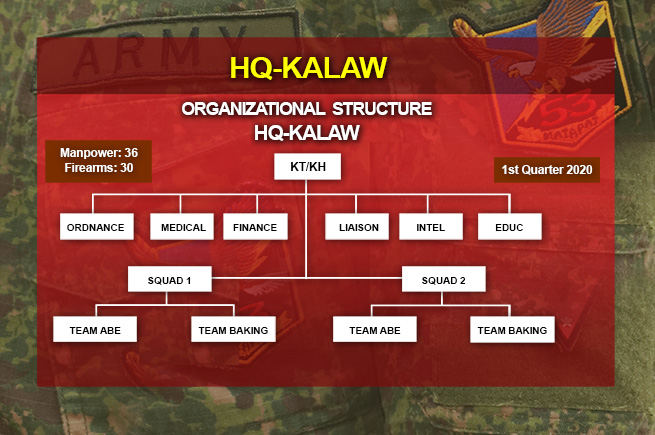
Government forces clashed with HQ-KALAW twice in 2019 along with the MRGU in Siayan, ZDN. Several platoon members then surrendered to the government after a series of focused military operations (FMO). By the start of 2020, HQ-KALAW stood with 36 rebels, including the nine former members from GF-13, which was deactivated in 2019 due to insufficient manpower.
The HQ-KALAW platoon was eventually separated from the MRGU, which retained only one platoon, Platoon Basil. HQ-KALAW was then headed by Joel Gumatang aka Peewee and Romanito Sumasay aka Gusman. Both units were operating under the leadership of the ROC led by aka Jotham. Both MRGU and HQ-KALAW operated side by side. They tried to recover the lost guerilla bases of the defunct GF-KARA in ZDS.
MAIN REGIONAL GUERILLA UNIT (MRGU)
The MRGU was a vertical unit of the WMRPC. It was tasked primarily to plan out and implement their tactical offensives. The group has been responsible for the various raids, ambuscades, liquidations, and disarming activities of the WMRPC over the years. The seasoned guerilla fighters of the region made up the group and conducted 80% military and 20% on IPO work.
Before the MRGU, the WMRPC organized the ROC in 2006 under Antonio Anding aka Atoy/Brix as its directly controlled armed component. Since WMRPC’s establishment, it only had a striking force as its central armed unit. In contrast, the FCs had its MGU. This was restructured in 2006 when the regional party recognized its growth in manpower and firearms. Under the ROC were two Regional Sentro De Grabidad units (RSDG). These RSDGs were tasked mainly to assist the territorial units in conducting their tactical offensives. The party’s territorial units were not yet interconnected through its mobility corridors. Antonio Anding aka Atoy/Brix headed the ROC during its creation.
Through 2007-2008, both RSDGs under the ROC continued to perform their tasks; however, no CNT-initiated actions were recorded from the group. In the second half of 2008, WMRPC suffered irreparable setbacks when many of its cadres and regular members were neutralized due to government troops’ sustained intelligence and combat operations. WMRPC further suspected that their rank and file had been infiltrated by the government agents, causing the neutralization of several solid personalities and numerous members. This created two SRPCs that controlled sets of contiguous territorial organs or fronts. These SRPCs were designed to ease the burden of the regional secretary in its command and control of numerous organs in a wide area. At the same time, it sought to reduce the risks of security problems during the conduct of meetings and plenums.
In 2009, RSDG-1, led by Matias Gaquit aka Eugene, was divided to reorganize the HQ-Force AGUILA to secure aka Coco, then the WMPRC secretary. RSDG-1 and HQ-Force AGUILA remained under the ROC control. RSDG-2, on the other hand, was deactivated after the neutralization of several leaders and members. Only two members of the RSDG-2 remained who were transferred to SECOM-JOJI. The following year, SECOM-TRAKK of the WMRPC was dissolved due to the loss of members. FC-KARA was downgraded into a SECOM. In 2011, WMRPC changed its leadership from aka Coco to Afrecia Rosete aka Bambam as the former was then nursing his injury. In 2012, however, aka Coco resurfaced and was designated as an advisor for FC-Feliciano A.
Despite continuously losing members, the ROC remained active in its conduct of military work. They successfully led the ambush of government forces and the burning of two pick-up trucks from Toronto Ventures Incorporated (TVI) in Barangay Guinoman, Diplahan, ZSP. TVI then was a company conducting mining activities in the area.
In 2012, WMRPC finally restructured the ROC, renaming the RSDG to MRGU. They are now tasked to assist the front committees in conducting tactical offensives in its territories since they have established interconnected mobility corridors in the provincial boundaries. The guerilla unit was still composed of seasoned fighters and aka Brix headed the unit until 2013. The group’s significant violent activity, along with FC-KARA, was the raid on the Philippine National Police (PNP) Station of Tigbao Municipality in ZDS and disarmed the police officers in April 2012. MRGU also disarmed the former mayor of Pitogo, ZDS on August 2013 at the highway of Barangay Mati, San Miguel, ZDS.
In 2014, aka Dexter headed the MRGU. During this time, they secured the SDG-KARA in its transition to reorganize FC-BBC in Dumingag, ZDS. FC-KARA had a manpower of 66, which is why the WMRPC decided to reactivate another front and expand its area. MRGU maintained their armed posture at Midsalip, Lakewood, Dumingag of ZDS, and Siayan and Sergio Osmeña of ZDN. During the year, some of its elements were tasked to conduct special missions on other fronts. These encountered the government troops at Barangay Owayan, Tangub City, Misamis Occidental, and Barangay Macalibre, Sergio Osmeña, ZDN. Fortunately, no CNT member was harmed.
In 2015, Loreto Dagpin aka Elyong was designated as the vice commander of MRGU, with Rowil Muñasque aka Jotham and Joel Gumatang aka Peewee as its new Platoon Logistics and Finance Officer. They maintained their posture at Midsalip, Tigbao, and Pagadian City of ZDS to cover up the areas left by the former SDG-KARA. Which became the members of the newly reorganized FC-BBC in Dumingag, ZDS. During this time, aka Jotham also became MRGU’s political instructor.
In 2016, aka Jotham was placed as the MRGU commander, while aka Dexter was demoted because of recurring diseases. Elvie Dukto aka Nanang then replaced aka Jotham as a political instructor. They led the basic military training and education of recruits in Siayan and Leon Postigo of ZDN and Diplahan, ZSP.
In 2017, all front committees were restructured into guerilla fronts, combining a CPP unit (Front Committee) and an NPA unit (Operations Command). MRGU also divided its elements into two platoons: Platoon Andoy and Platoon Basil. Aka Lakan from Davao Area led the MRGU, ROC during this time. Platoon Andoy, led by aka Jotham, covered the area of Siayan, ZDN. Platoon Basil, led by aka Rocky, supported GF-KARA to recover the areas of ZDS after it was pushed back by continuous military operations. They first targeted the areas of Midsalip, Lakewood, and Tigbao of ZDS. They moved toward the area of San Miguel and Lapuyan. Both units expanded their area during the year. MRGU then went back toward the area of Siayan. Shortly after that, they successfully conducted the ambush against military troops in Barangay Biwa, Sindangan, ZDN. They returned to ZDS area to evade the military forces.
However, by December 2017, the military decisively engaged MRGU and GF-KARA at Barangay Gasa, Lakewood, ZDS. Both units were preparing to attack Nangan-Nangan Patrol Base in Tigbao and Lisson Valley Patrol Base in Pagadian City when their whereabouts were reported by the civilian populace in the area. The military was able to encounter the joint elements of NPA units, which resulted in the capture of firearms and the neutralization of two of its members. Several members of GF-KARA then gradually surrendered to the government forces while MRGU suffered disarray in its members. This led to the relief of their current commander, aka Lakan, who was sent back to Davao, and aka Jotham completely handling control of MRGU.
In 2018, both platoons of MRGU regrouped at the area of Siayan, ZDN. After they were pushed to retreat outside ZDS area, many of its members escaped and went on to lay low. Due to diminished manpower, the commander aka Jotham restructured the MRGU into one platoon. At the same time, the HQ-KALAW joined the ROC as one of its regular units. HQ-KALAW, then headed by aka Peewee, was then tasked to cover the areas of Leon Postigo, ZDN. At the same time, MRGU, which absorbed the remnants of the defunct GF-KARA, continued in its recovery of the ZDS territories. These territories were crucial since it is where most of their cadres were recruited, and the families of their leaders resided. But the MRGU was not able to recover their lost grounds. Government forces even engaged them in a firefight thrice in the area of Midsalip and Pagadian City, ZDS.
In 2019, the GF-KARA was declared by the WMRPC as deactivated since they were unable to recover its manpower and guerilla base. However, the MRGU remained adamant in recovering its territories in ZDS area. They were able to penetrate San Miguel and Lapuyan of ZDS. They recruited two new members and some elements of HQ-KALAW.
However, during the year, CSP teams were deployed in the CTG-affected barangays. This forced the MRGU to withdraw toward the area of Siayan, ZDN. Along the way, they were again engaged by government troops at Mount Linugon in Barangay Piwan, Midsalip, ZDS. One of its members surrendered to the government, turning in two AK47 rifles.
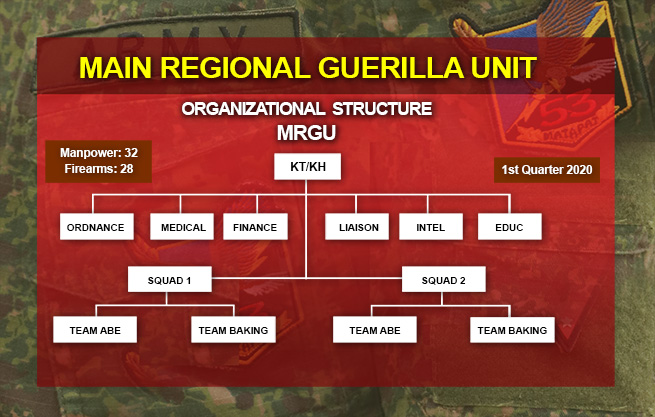
In 2020, MRGU remained in the Siayan Area of ZDN, whose manpower strength stood at 32. Another military campaign was launched by government forces that recorded numerous armed encounters against the CTG, totaling 17 during the period.
REGIONAL URBAN COMMITTEE (RUC)
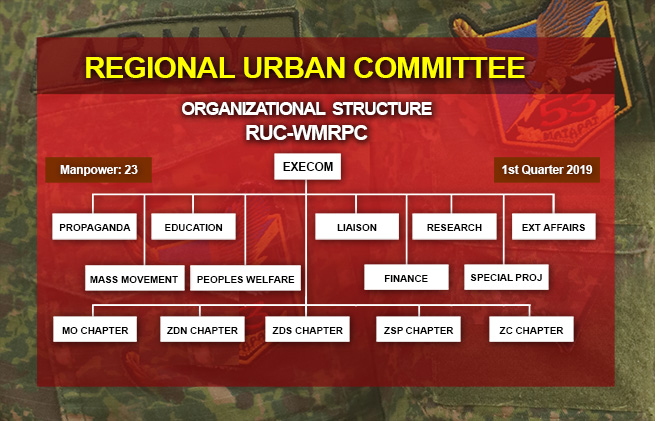
The RUC is the propaganda machine of the WMRPC responsible for building a mass revolutionary movement in the urban areas. The primary objective of the WMRPC’s white area work is to form the legal mass organization and the underground mass organizations in order to generate technical, material, financial and manpower support to the countryside operations and IPO works. The targets of the urban mass work are the peasants/farmers, fisherfolks, laborers, youth/students, professionals, religious and health sectors. Below are the CPP affected mass organizations in the area of operations of 53IB:
- National Union of Students in the Philippines (NUSP) based in Western Mindanao State University- Pagadian City
- Kilusang Mambubukid ng Pilipinas (KMP) based in Western Mindanao Region
- Kabataang Makabayan (KM) in Pagadian City
- Alliance of Concerned Teachers (ACTs) in Pagadian City
- Salabukan Nok G’Taw Subanen (SGS) in Dumingag, ZDS
53IB UNDER NEW LEADERSHIP: Challenges at the Turn of the New Decade
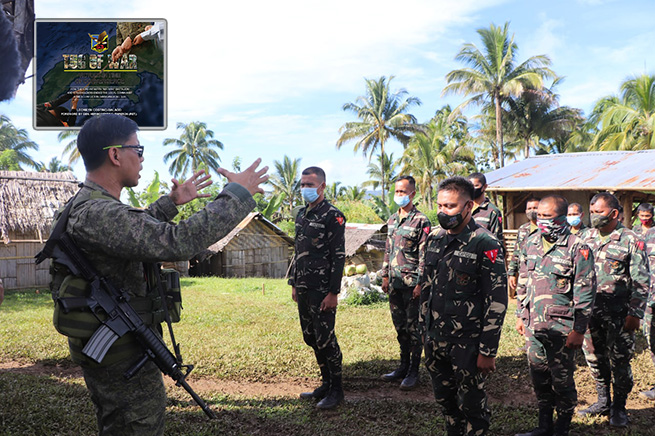
The 53IB leadership changed hands in March 2020 when a new battalion commander was installed. Everyone was in high spirits, including the new commander.
On the ground, the threat posed by the CTG persisted, although it was greatly diminished. The situation was still very vulnerable. The battalion regained many of the CTG’s stronghold communities.
Still, the battalion knew the CTG could easily win the people back if the Army cannot sustain its presence and activities in those areas.
By the start of 2020, HQ-KALAW had a strength of 36 manpower, including the nine former GF-13 members that were deactivated in 2019. The HQ-KALAW platoon was separated from the MRGU, which retained only one platoon — the Platoon Basil. HQ-KALAW was then headed by Joel Gumatang aka Peewee and Romanito Sumasay aka Gusman.
The MRGU remained in the Siayan Area of ZDN with its manpower strength of 32. They were still both units operating under the leadership of the ROC, aka Jotham. Both MRGU and HQ-KALAW operated side by side. They were relentlessly trying to recover the lost guerilla base of the defunct GF-KARA in ZDS. However, the 53IB troops were eager to crush the enemy down to its last man. After the transition, with a new strategy and renewed fervor, they knew that it would only take a little time to get a taste of victory.
AUTHOR’S NOTE
I was a child who grew up during the height of the CPP-NPA atrocities in my province. My father was a policeman and it was not a good time to be one. I did not really understand what was happening back then, but I knew many of our neighbors were “masa,” which means that we could not trust them, we were told. One morning a group of men came to our house and took my father’s uniforms, arms, and grenades. He took everything except for my father’s service pistol. The police station had just been raided by the CPP-NPA. Following the raid, there were killings everywhere – with both civilian and military casualties. Every weekend, a policeman was murdered — and that it included my father. The CPP-NPA quickly owned up to the killings to show power and instill fear. Justice was elusive. I was left with my mother and a younger sister. We continued to live in fear.
I turned to books. The stories became my refuge, my escape. It was when my dream to write a book was born. The desire to write was my inner child’s wishful thought. Fast forward: the opportunity to write this book fell into my lap. It was a realization of a long-forgotten dream. I jumped in with my eyes tightly closed for that little child’s dream and the memory of her father.
The decades-long fight against the insurgency has cost many lives of civilians, policemen, the military, and the enemy. The war has unnecessarily dragged on for too long, leaving children growing up without a father or a mother at home.
This book presents a beacon of hope that the battles will soon end and peace is just at arm’s length. I tried to narrate the dedication and heroism of the 53IB to free the province from the clout of the CPP-NPA. They will teach the lessons gained from their experience and show how excellent leadership and impeccable strategy could win the war.
END OF CHAPTER 1