“A nation that will insist on drawing a broad line of demarcation between the fighting man and the thinking man is liable to find its fighting done by fools and its thinking done by cowards.”
— Sir William Francis Butler
War is both timeless and everchanging. The fundamental nature of war encompasses the human dimension, a political pursuit, the contest of wills, and the existence of uncertainty. Tacticians and strategists uphold and command an endless combination of conventional and unconventional actions to achieve victory. The goal of any war is to control your enemy and overcome them at any cost. According to Sun Tzu, a war theorist, “All warfare is based on deception.” This phrase is enduring, and it has never stopped being read.
War is more than a contest of wills. War is armed politics. Achieving goals means victory is as much political as military. Fighting an insurgency is a strategy game. You do not need to win battles to win the war. The people-centered strategy and the Whole-of-Nation Approach of the Philippine government to end local communist armed conflict outlines the direction of President Rodrigo Duterte’s Executive Order 70 to accomplish political, social, military, and economic goals. Resonating with the communities in the rural areas, President Duterte integrates development, governance, and security efforts mobilizing the entire nation. The socio-economic goals of land distribution, social welfare, housing, and livelihood successfully complemented political and military objectives.
The government also implemented a comprehensive local integration program for rebels covering their basic needs such as shelter, employment, legal support, education, and livelihood. This convergence among government agencies, police, military and the people has impacted our victory in the tug of war against CTGs to win the peace in Zamboanga del Sur. As a result, the Whole-of-Nation Approach isolated and disintegrated the CNTs and cut off their logistics, supplies, and financial resources leading to the defeat of the CPP-NPA organization, members, and supporters in the province.
Victory Belongs to the Cunning, Not the Radicals
The 53IB revolutionized its strategy and mobilized the people to dislocate the enemy from holding critical terrains, vantage defensive positions and free masses, and communities from the enemy’s hateful ideology — the theories of Marxism-Leninism-Mao Zedong Thought (or Maoism). The main narrative for the continued indoctrination and radicalization of young people, including students. They were required to master the theoretical concepts that enabled the CNTs to possess the necessary theories, knowledge, and foresight to advance the armed struggle. These obsolete theories embody class struggle and the class dictatorship of the proletariat, dialectical materialism, and political economy opposing capitalism.
The communist ideologies were exploited by the CTGs to influence the communities to take arms and promote violence to achieve political goals. But their means have further trodden the communities to impoverishment and hardships. In hindsight, the CPP-NPA stage party building and rectification movement, people’s war, and the continuing revolution under proletarian dictatorship through a cultural revolution.
Operationalizing the Whole-of-Nation Approach, the 53IB applied and revisited war concepts and principles, doctrines, lessons learned, and best practices to outsmart the enemy. The hard power approach across joint and combined arms operations pummeled and rendered the CTGs irrelevant and eroded their will to fight. The impact of integrated fire and maneuver outpaced the enemy’s morale. They reduced its capability to conduct offensive actions and counter-attacks. The art of maneuver, including deception, feint attacks, airmobile operations, and maneuver of forces, helped in the positional dislocation of the enemy from its traditional maneuver space and mass bases. The combined arms operations synchronized and complemented the physical means to destroy the enemy’s critical vulnerability.
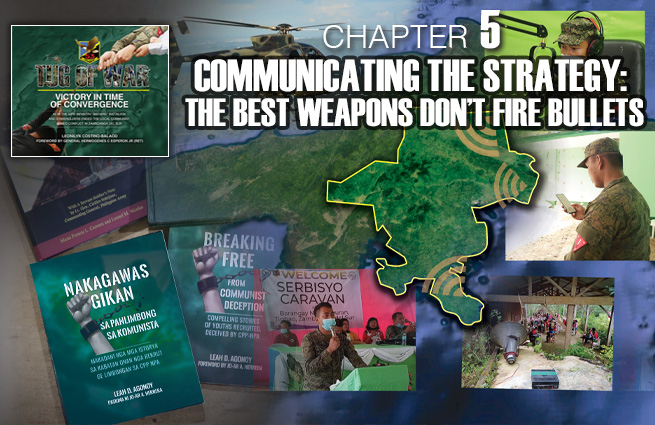
The multiplied use of the soft power approach involving community engagement, information operations, and communication strategy was critical in attacking the enemy’s cognitive, emotional, and psychological components. The goal is to insulate the people and vulnerable sectors from the venomous communist ideology and propaganda. Information operations will continuously play an essential role to sustain the peace in the province and ending local terrorism in the country.
Hybrid Leadership is Indispensable in Future Warfare
Leaders must seek to prevent violence, not simply wait for them to happen. Army leaders, including government officials, must require reinventing themselves to efficiently identify problems lurking within the communist insurgency with levels of elasticity and broader picture thinking. Leaders and stakeholders must discern to understand the new rules of warfighting. Conventional war might be dead when dealing with insurgency warfare. Unconventional warfare must maximize to contend with evolving warfare. The hard and soft power approaches will endure disrupting the CPP-NPA’s physical and human terrain control, including terrorists’ space and time.
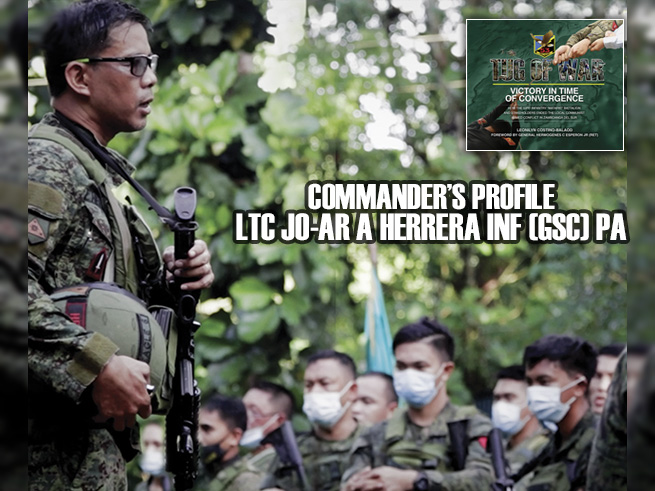
The critical components of an effective stakeholder engagement require transformative leadership to build constituency and alliances. Army leadership is the most essential combat power. It remains a significant factor in winning in a volatile, uncertain, complex, and ambiguous environment. Transformational leadership is decisive and plays an essential role in stakeholder engagement. Values and competencies are ‘game-changers’ in the performance of stakeholder engagement concretizing the success stories of 53IB in implementing ELCAC programs. Calculatingly, the leaders of 53IB adjusted from a flexible nonconformist mindset to an outside-the-box attitude — to ensure success in military operations and win in other aspects of non-military functions such as community engagements and diplomacy.
Improvise, Adapt, and Overcome
The 53IB strategy emphasized the application of a hybrid leadership mindset and an attitude to win battles and wars. Linked with new technology, weapons system, and innovative tactics are crucial in warfare. These competencies, such as improvisation, innovation, disruptor, flexible adaptation, ingenuity, and effective communication, would be essential in sustaining the ELCAC program anchored on respecting and understanding the local culture and history of communities in the area of operations. Young officers and emerging leaders must continue to read books and enhance their knowledge and skills to continuously improvise, adapt, and overcome challenges through enriching comprehension of leadership and history literatures. Further, they should develop strategic mindsets and be able to contend with the evolving challenges and future crisis.
Victory Will be Won and Lost in the Information Environment
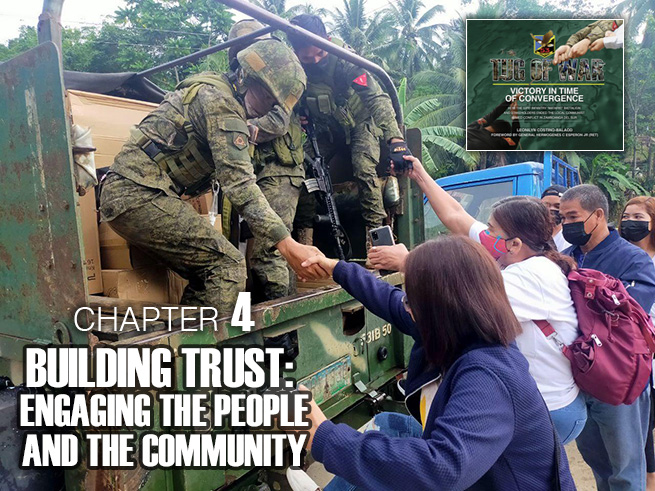
In the future, victory will be won and lost in the information environment, not on the physical battlefield. Engaging communities, undertaking humanitarian operations, and informing the public about the government’s success in ending the local communist armed conflict is a must for an army battalion, including platoon and squad leaders and patrol base commanders. Troops will continue to demonstrate competency in combat, understand cultural nuances and communication, render humanitarian assistance, and mobilize active support of the population through community engagement.
The AFP is highly appreciated for garnering government agencies’ highest approval and trust ratings. The survey, conducted in the 4th quarter of 2021 by independent pollster PUBLiCUS Asia, Inc., manifests the people’s confidence and trust toward the military. The 53IB has been stalwart in improving outcomes and services to the people of ZDS, adopted a person-focused approach, and strived to generate trust and confidence among its constituents and stakeholders.
Information dominance is critical in the implementation of any strategy. 53IB demonstrated how information operations interplay with various lines of operations such as intelligence, CMO, and combat. The importance of translating tactical gains to strategic influence will sustain the victory and beyond the future. It is well-meaning to communicate the strategy and success to all stakeholders, key players, and the people. The defeat of the Regional Urban Committee of the WMRPC totally reduced the enemy’s narratives, disinformation campaign, propaganda, and political agenda. Popular support, especially from the enemy mass bases, is achieved through the reinforced legitimacy of Army operations.
In the future, we will need more than warriors — we will need more warrior diplomats. Start with liberal arts; learning how to think is more important than knowing what to think. Our country must learn to fight anew; the insurgency war has already changed and evolved into more irregular and hybrid warfare. Leaders must possess a disruptive mindset and thinking to contest the will of the antagonist. Training, awareness seminars, and understanding of history, culture, language, and tradition are bold steps to increase compassion, tolerance, and empathy toward the afflicted communities in the operational environment.
Convergence Magnifies Strength
The future holds a brighter future for the province and the country. The 53IB will hold the line and bring more people into the Whole-of-Nation Approach process that will perpetually integrate all sectors from counterinsurgency to peacebuilding methodology. The differing interests, motivations, and agendas are critical to building an outlook of seamless relationships, community, and consensus toward a shared insurgency-free province. The 53IB experience of winning the peace in ZDS will carry the importance of community engagements through convergence and collaboration.
Implementing various programs under the E.O. 70, such as the BDP projects in ZDS, demonstrated a range of valuable lessons and worthy reasons why stakeholder engagement is decisive in the execution of development, governance, and security agenda. Convergence with the community is necessary to achieve shared goals and sustain the gains to improve outcomes and services.
Essentially, the highest form of humanity highlights the strong partnership between the soldiers and the communities in preserving dignity and respecting the rights of the vulnerable. In implementing the ELCAC programs, gaining the stakeholders’ trust and confidence is a must, including traditional leaders and elected officials. The convergence and involvement of various LGAs and NGAs formed the core to pursue progressive and sustainable peace in the province. Boosting convergence will drive multipliers of victory and critical lessons. Shared interests and compel coordination of differing priorities will be magnified. The implementation and processes involving trust and confidence-building among the stakeholders over time are crucial. Ensuring power-sharing to recognize strengths and reliability of cooperation, a mechanism will be in place to ensure ownership of the programs.
The civilian component is a must to win the future with uncertainties and insecurities. The 53IB and stakeholders shall maximize the Whole-of-Nation Approach through continuous adaptation and innovation of strategies, techniques, and tactics. Your MATAPAT troops would continue seizing opportunities to strengthen our relationship with the communities we serve to sustain the gains we have achieved for peace and security in the province of Zamboanga del Sur.