“We cannot predict the future. But we can create it. I desire no future that will break the ties of the past.”
— George Eliot
The long haul has finally come to an end. The province was declared insurgency-free and development-ready by the ZDS Provincial Board through Sangguniang Panlalawigan Resolution No. 1357-2021 on April 29, 2021. The painstaking strategy has given them the most awaited victory. The 53IB has regained peace and stability in the province after dismantling the last communist terrorist group.
“Military operations alone can win battles but will not end the war, and disproving the enemy’s narratives requires a political approach.”
— Lt. Col. Jo-ar A. Herrera
Yet, for Lieutenant Colonel Herrera, the task does not end in winning the war. The true measure of the mission’s success lies in the ability of the battalion to sustain the peace. The challenge is enormous, but of course, the 53IB is up for the task. Their strategy has to adapt to the changes in the operational environment. While maintaining the hard and soft power approaches, they devote more time and effort to pursuing its sustainment operations.
“The eligibility of winning the future is how best you play the present.”
— Backeru Kpaka
Bringing the Fight Inward
The Army Transformation Roadmap (ATR) is a long-term comprehensive reform program developed to address the challenges and controversies confronting the Philippine Army. Its vision is to transform itself into a world-class Army that is a source of national pride. It anchors on the Performance Governance System (PGS), which is committed to pursuing an authentic transformation program in the Philippine Army.
The ATR covers all facets of the organization, like personnel, resource management, internal processes and systems, and mission accomplishments and outcomes. It essentially promotes good governance and performance excellence. The ATR continues to redefine the character of the Philippine Army from the leadership down to the last man in uniform as part of its sustainable solution to address the controversies haunting within its ranks.
The ATR is composed of three key components. The first, the Army Governance Chapter, defines the strategic direction of the PA. The Army Strategy Map, the second key component, outlines the strategy and goals to be attained to realize the vision. And last, the Commanding General, Philippine Army (CGPA) Performance Governance Scorecard facilitates strategy execution, monitoring, and evaluation.
The battalion’s quest for organizational excellence has always been the goal. It was also the force that propelled the 53IB to achieve more remarkable milestones, gaining recognition and awards while faithfully discharging its mandate and pursuing its mission.
Reaping the Fruits of the Toil

All the hard work and concentrated effort which the officers and men of the battalion had poured into improving the organization had paid off when the 53IB was presented a “Gold Trailblazer Award” for reaching the proficient stage in ATR Revalida and Audit ratings in 2021. The award was a confirmation of the high organizational excellence that the battalion had achieved. It spoke of how they were able to cascade to the lower levels of the organization the level of professionalism set by the leadership and the champion’s mindset that they upheld. For Master Sergeant Mayo the award was an important milestone of the battalion. “It manifested the steadfast determination of the 53IB especially the commander to improve the organization in all aspects of its administration,” he indicated.
The Army Governance Pathway (AGP) Proficiency Stage Eligibility Requirement involves several different elements which represent the complex nature of unit management. It includes among other things the effective implementation of the strategy, emerging best practices, and the prudent use of resources. “It is not easy to reach that high level of performance. We would not have been able to achieve this stage had we only focused on one mission or line of work. It was primarily because of the direction set by our battalion commander,” Master Sergeant Mayo emphasized.
Getting the New Image
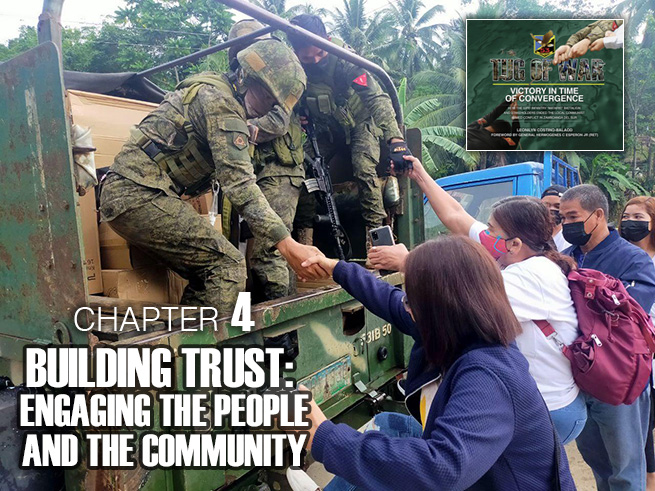
The 53IB redeveloped and outlined strategic initiatives to ensure an insurgency-free area of operations while continuously improving its organization to achieve professional and competent MATAPAT troops respected and supported by the people. The battalion was able to change the public perception toward the Army in their area of responsibility. Mayor Elmer M. Soronio of Midsalip, ZDS attributes a big part of the success of the anti-insurgency campaign in his municipality to the change of the image of the troops.
“The people are no longer afraid of the Army. Unlike in the past when people avoid the soldiers, now even the children are not afraid of them. They were also able to establish a good relationship with the local leaders. It is crucial that we know that we can rely on their support and protection,” the mayor expressed.
Mayor Vicente P. Cajeta of Guipos, ZDS vividly remembers his experience as a local official when the 53IB first came to Camp Sabido. “We did not have a very nice impression of the 53IB just like the other battalions which stayed in Camp Sabido before them. But I could not blame those soldiers because the battalion just came from the war-torn Sulu Province. There was even retraining that happened,” the mayor recalled.
Since then, the 53IB has continuously improved its organization and established a strong relationship with the community. They had come a long way to get to the level of professionalism that they display today,” the mayor emphasized.
The 53IB will endure upgrading its public image to maintain the people’s trust towards its soldiers. The leadership will ensure that the excellent relationship they have built with the local leaders and communities will continue to flourish by continuously improving its organization.
Strengthening the Core
The 53IB’s leadership has always emphasized improving the capability of its troops in combat and CMO. Their prowess is an indispensable factor in the continuance of sustainment operations. The success of their efforts lies heavily on effective and responsive leadership and competent personnel.
The battalion will continue to upgrade its knowledge and skills by providing adequate training management and ensuring responsive logistics support. The conduct of Small Unit Leadership Development Training and Sustained Warfighting Evaluation Enhancement Program will increase warfighting capabilities, empower NCOs, upscale small unit leadership skills, squad permanency, and sustain readiness and proficiency.
As it takes a holistic approach to promote its troops’ morale, welfare, and discipline, it will continue to champion the well-being of its officers and men. The Better Life: Adopt a CAFGU Project will continue to recognize the unparalleled heroism of the CAFGUs and their selfless service to their communities. It will constantly initiate programs to improve their lives and their families. The battalion takes initiatives to ensure the continuing program to uplift the physical and psychological state of health and well-being of its troops through its Project Best Life: Care for Soldiers, CAFGU, and family.
The battalion’s effort to provide an all-inclusive development approach to its personnel has favored them with remarkable achievements. Lieutenant Colonel Herrera has successfully instilled an excellent mindset and winning attitude within his soldiers. He has developed dedicated officers and personnel and exceptional performers who continue to bring honor to the battalion.
Never Leaving the Ground
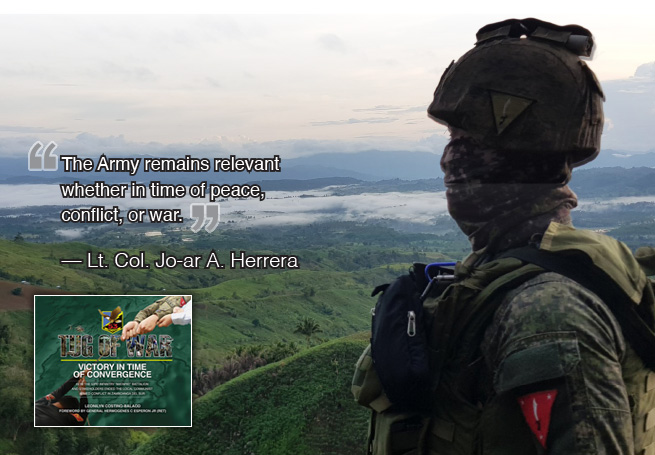
The battalion commander believes that “the Army remains relevant whether in time of peace, conflict, or war.” Different situations call for a different response. At the height of the campaign against CPP-NPA, the 53IB had proven adroitness in battle and unbreakable dedication to their mission. After dismantling all the CPP-NPA units in ZDS, the battalion continues to deploy its troops in the hinterlands to sustain their tactical gains. Patrol base operations continue controlling the terrain to constrict the enemy’s movement and restrict the activity of their supporters. The likelihood of the remnants reorganizing and gaining back their strength is a sure possibility. Though the 53IB intensified its focus on community relations, military operations will not be held. They continue to secure the province, track the remnants of the dismantled CTGs, and prevent them from coming in strength from the outside.
The town of Dumingag, ZDS which for a long time was a CTG stronghold, borders Sergio Osmeña, ZDN. The solid mass support to the CPP-NPA and its geographical setting makes it the most vulnerable part of the battalion’s area of responsibility. True to its sustainment efforts, troops continued to guard the very remote regions of the municipality. They are committed to preventing the CTG from proceeding from the adjacent province in the north to protect the people. Indeed, the troops delivered their mission when they clashed with CTG crossing the boundaries from the adjacent province on two occasions on November 2021. The troops overwhelmed the enemy and successfully brought them down to their knees. Two CNTs were captured and war materiel was recovered from the clash site.
Lieutenant Colonel Herrera vowed to relentlessly pursue the CTG remnants and protect the people by hitting hard on the nemesis. The 53IB will continue to protect the people in Dumingag and the entire Province of Zamboanga del Sur. They will continue their hard and soft power strategy by performing various military and non-military activities. Secure and control the population to isolate them from the enemy’s radicalization and recruitment.
Keeping Friends Closer
The deciding factor of the battalion’s success in its fight against the CTGs is the support of the people. They were able to free twenty-eight barangays, two barangays in Siayan, ZDN, from CTG influence through their CSP. They maintained the communities through community engagements and sustained information campaigns. They restored the civilian’s trust in the military and the government. To enhance the support of the masses, the 53IB intensified its CMO activities by converging with different government agencies and other non-government organizations. It will keep at undertaking humanitarian operations. It will continue to coordinate, facilitate, and secure government projects to the most vulnerable communities. It will pursue to play its active role in igniting inter-agency cooperation under the ELCAC to deliver Barangay Development Program (BDP) projects and to ensure that the intent of the Whole-of-Nation Approach is achieved.
Local peacebuilding activities will continue to be conducted for the Moro people and the Subanen tribes. “The battalion built mutual trust and confidence with the cultural minorities, especially the Moro people, through constant and sincere consultation and understanding cultural nuances,” said Captain Camsa. With consistent effort and negotiations, the battalion has dramatically improved its relationship with the people. They were able to establish friendship and cooperation with the tribal leaders and elders. The hostilities and criminal activities ceased as community leaders volunteered critical information to the unit. Captain Camsa will continue to lead and initiate these activities for as long as he is with the battalion.
Youth Leadership Summit (YLS) is initiated by the 53IB and funded by the LGUs. It is a venue where young people from different communities and ethnicities converge for peace and leadership education. It is an initiative to change the preconceived notion against the military, which were passed on from their parents. “When we cannot change the mindset of the elders because of the long years of conflict, at least we can have hope from the youth through the YLS,” Captain Camsa expressed. The YLS is a crucial component of the battalion’s sustainment efforts that will indeed have a beneficial impact in the near future.
Nelvin C. Belen is a YLS alumni from Pagadian City. “Before YLS, I was not aware of the CPP-NPA recruitment that was happening in schools. I think that it was a good thing that students were made aware of CPP activities and propaganda so that we will not be easily framed by their emissaries,” he said. “The experience had also changed my perception of the Army, I used to be afraid of them because of the stories I was told about them. Through YLS, I learned of the importance of what the Army is doing to maintain the peace in our province,” he continued. Most notably, the YLS introduced servant leadership to the participants which boosted their self-confidence and their desire to serve their communities.
Helping Communities Hold the Line
According to John A. Nagl in David Galula’s Counter-Insurgency Warfare: Theory and Practice, the political loyalty of the people more than the physical space is the critical terrain in an insurgency. The CPP-NPA crept and flourished in the hinterlands for several decades because they had the people’s support. Who has the help of the civilian population controls the information and, therefore, the battle.
The 53IB strategically uprooted and removed the mass base of the CTG. However, the fight against the CTG will not end unless the people will feel safe and protected. An insecure community will not give information to the military for fear of retribution until the CTG power is completely broken. Aside from maintaining sufficient presence in the area of operation. The battalion will continue to organize the Barangay Defense System in every community and train them to protect themselves and their families and properties. They also collect and relay intelligence to the battalion.
Bringing More People In
Winning the support of people entails the integration of governance, development, and security efforts. The CTG capitalized on the people’s socio-economic situations, injustices, and distrust of the military, which resulted from long years of fighting the CPP-NPA. Military operations alone can win battles but will not end the war, and disproving the enemy’s narratives requires a political approach. The battalion engaged the various local government units, national government agencies, and local leaders to pursue progressive and sustainable peace in the province. It intensifies its cooperation with these key partners to sustain its victory over the CTGs. In doing so, the battalion seizes every opportunity to support its stakeholders with its own resources and equipment to show its commitment and sincerity to them.
Teaching the Lessons
Communication is a critical component of the 53IB’s strategy to end the CTGs’ influence in the information landscape. The battalion leadership promoted the importance of translating tactical gains to strategic influence. They communicate the strategy to all their stakeholders and key players by integrating everyone in the program. Aside from attending Peace and Order Council meetings, the 53IB shares its strategy during sectorial symposiums, peacebuilding forums, and community-based training, including the YLS. They also utilize various digital and social media platforms to promote peace narratives. Creatively combining adequate words, appropriate actions, and powerful images to create a strong impact in the information environment.
Preventing the enemy from recruiting and regaining its strength is crucial in sustaining peace in the province. A well-informed community is hard to influence. They cannot easily be dissuaded by the CPP-NPA propaganda. Such is the primary importance of continuing information and education activities. The battalion must continue to lead and influence the information arena to empower and educate the communities.
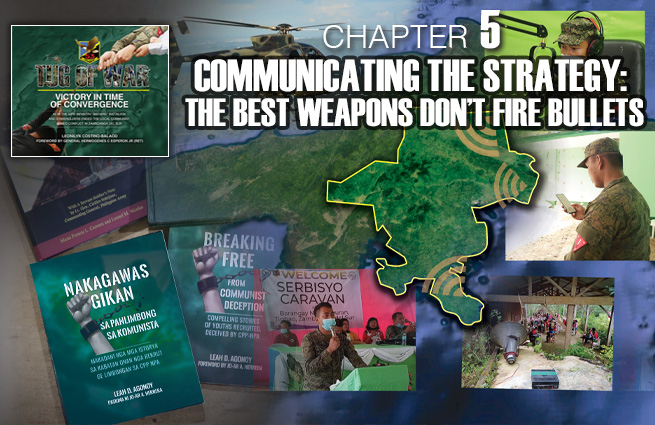
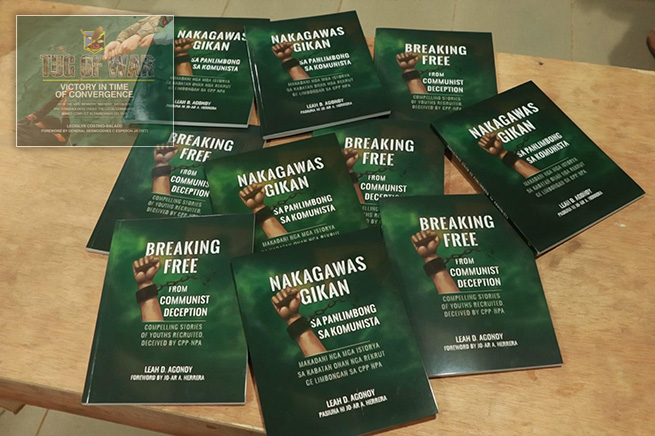
Book publication is another breakthrough in the 53IB’s public information campaign. The “Breaking Free from Communist Deception” book narrates compelling stories of youths recruited and deceived by CPP-NPA. Through this book, the battalion will continue to enlighten generations about the deception used by the CPP-NPA to lure the youth into the miserable, nonsensical arm struggle against the government. The 53IB will continue to publish books to inspire and educate the people, local leaders, and future military officers to sustain and pursue what the battalion has achieved in the fight against insurgency in the province. “These books will inspire today’s youth and the next generations,” said Lieutenant Colonel Herrera. “They will know what the 53IB had done, and they will learn from our experience.”
For Ms. Leah D. Agonoy, “Being a journalist, it was pure curiosity that prompted me to write the book.” As a daughter of a soldier and having spent her childhood inside a camp, she had a preconceived image of the CPP-NPA. “I grew up thinking that they’re just inherently bad, murderers, and extortionists. I did not care what prompted them to join the fight against the government back then. I also had many questions,” Ms. Agonoy declared. However, listening to the FRs whose lives were featured in her book completely changed her view of these people.
Many of them were helplessly pushed by their circumstances and the hopelessness of rising from poverty. “They had their reasons, and in that situation where they were in, the reasons were real and valid,” she said. She believes the book will serve as an eye-opener for everyone, especially the people in government. She hopes that through her book, people will not outrightly judge the FRs and understand their predicaments. Hopefully, find a lasting solution to address the issues that the enemy used and exaggerated to lure these people into a miserable life in the CPP-NPA.
Holistic Strategy to End Insurgency in the Country: Military Commanders and Regional Line Agencies on Whole-of-Nation Approach
“The Whole-of-Nation Approach is the solution to the problem of insurgency that we were waiting for. The AFP has been advocating this strategy, but it is only being implemented now because President Rodrigo R. Duterte believed in the concept. Since its implementation, the trend of insurgency in the entire country has been going down. In four years, it was able to accomplish the task that we were trying to achieve in the last twenty or thirty years,” Brigadier General Nicolas accentuated the relevance of the new approach. The insurgency used to be viewed as a purely military problem. But under EO 70, it is now being treated like everybody’s concern. The EO pulled together all agencies of the government, the local government units, and even the civilian sector to the whole campaign.
In the Zamboanga Peninsula, the fight against insurgency has been going for almost five decades. Numerous lives were claimed, and enormous resources were poured to no avail. Colonel Villanueva explains why the government has been successful this time than it was in the past. He thinks that “With the advent of the Whole-of-Nation Approach, the LGUs already understand their role in the anti-insurgency campaign.” Their role in the entire effort is very critical to its success. It was difficult for the Army to ultimately stop the CTGs without the active involvement of the LGUs and other agencies of the government because many of the issues and concerns of the people cannot be addressed by the Army,” the officer said.
It was clear all along that the solution to the problem is not purely military. In the past, when the military curtailed the CTGs in an area, and after they left, the CTG would be back again and regain the people’s support. It has been a vicious cycle that lasted for decades. “With the line agencies and LGUs joining in the campaign, it legitimizes the work of the Army. When it was them who presented the programs of the government to the people while they were delivering their services, they are viewed as more believable than when it is us telling the people about it. We are easily perceived as biased because we are directly the enemy of the CTGs, and many in these communities were supporting them,” Colonel Villanueva continued. Although everyone has a stake in the efforts to end the armed conflict in the Whole-of-Nation Approach, the Army remains the primary force to counter the insurgents and the compelling catalyzer for other stakeholders.
Lieutenant Colonel Filven S. Noche, the battalion commander of the 44th Infantry “AGILE N’ STABLE” Battalion, outlined the ingredients of a successful anti-insurgency campaign. He thinks that primary to the success of the different battalions operating in the Zamboanga Peninsula and Misamis Occidental is the effective quality leadership of the 102Bde Commander and the support of the 1ID leadership.
Secondly, he pointed to the dynamic role that other government instrumentalities played in the current approach. The commander emphasized that “Before EO 70, the military seemed to have the sole ownership of the counter-insurgency campaign. But now, with Task Force ELCAC from the national to the municipal level, regional line agencies and local governments have ownership of the mission already. Our local chief executives and line agencies are very active in supporting and complementing the efforts of the battalions.”
Thirdly, the success on the ground resulted from the courage and vigor of the soldiers and the good working relation and cooperation of the battalion commanders in achieving a shared goal.
The cooperation of the DILG with the AFP was by virtue of EO 70 – the Whole-of-Nation Approach in Ending Local Communist Armed Conflict, whereby the President directed a holistic approach in the fight against insurgency.
DILG was included in the 12 clusters in the lines of effort as the lead agency in delivering basic services, local government empowerment, sectoral unification, capacity building and mobilization, localized peace engagement, E-CLIP, and amnesty program. Moh. Taha S. Arakama, the Provincial Director of DILG Zamboanga del Sur believes that EO 70 has finally presented a true solution to the insurgency problem in the country. “If not for EO 70, the fighting would still be there; it provides a strategy that not only focused on combat arms but in investing in human capital.” PD Arakama expounded, “Our role in the Whole-of-Nation Approach is already within our mandate, but the programs are clearly laid out. All our efforts under the EO are still founded on our programs in the department like empowering barangay-based institutions and strengthening local institutions in the municipal and city LGUs.” The DILG initiated several programs intended for CTG influenced barangays like the Retooled Community Support Programs and Sebisyo Caravans. They pool together several agencies to bring their services to the barangays.
According to the PD, they will continue to support the implementation of ELCAC in the province as one of the lead agencies. The Province of Zamboanga del Sur is in the right direction in fighting insurgency. The mayors and barangay officials are very supportive of this new approach, including the regional line agencies. The DILG has been working closely with the 53IB, especially Lieutenant Colonel Herrera, whose sterling quality of leadership in the battalion, he thinks, was instrumental to the province’s declaration as insurgency-free.
Office of the Presidential Adviser on the Peace Process
The Office of the Presidential Adviser on the Peace Process (OPAPP) sits as the co-chair in Localized Peace Engagement Cluster. The OPAPP is responsible for conducting workshops for consultations and dialogue with the communities to forge an agreement with the government. They provide and facilitate convergence to develop an agreement between the local government and the CTG. Eventually, they will also monitor if what was agreed was fulfilled by the responsible agencies.
“We are doing that for sustainment. There is a tendency for the FRs to be recruited again if the identified issues during the consultations will not be addressed,” explained Mr. Peter P. Cheng, the Program Manager of the Area Management Office in Western Mindanao. In identifying projects under BDP, OPAPP ensures that there will be peacebuilding components included.
“In some instances, the entire BDP funds are programmed for infrastructure projects only. We do not want that, so we need to constantly communicate with the representatives of the FRs.” he professed. Program identification for the BDP can sometimes become a source of conflict among local leaders, so the role of OPAPP becomes indispensable in safeguarding the interest of the FRs. Around seventy percent of the CTG fighters are IPs, so for OPAPP, their specific needs must be given attention. OPAPP also has its own funds, which are focused on the human component of the program.
But they partner with other line agencies for implementation, like the National Commission on Indigenous Peoples (NCIP) for its scholarship and livelihood programs for the IPs. For Mr. Cheng, the most critical role of their office is to ensure that nothing will be left in the implementation of the Whole-of-Nation Approach, and if there are nuances that are overlooked, they have to see to it that these are addressed by concerned agencies.
Poverty Reduction, Livelihood, and Employment Cluster
The TESDA sits as the chair agency in the PRLEC of PTF-ELCAC. Dir. Dan N. Navarro is the Regional Director of the agency in Region 9 who is very actively pursuing and implementing the department’s initiatives under the Whole-of-Nation Approach. “President Rodrigo Roa Duterte’s way in solving the insurgency problem in the country is a fatherly approach. Instead of using all-out force to go after the CTGs, thru EO 70, they are peacefully won back to the folds of the law by the programs offered by the government.
They are provided with all the opportunities so they can reintegrate and become productive members of society. It is where PRLEC, as chaired by TESDA, comes in,” the RD explained. For him, the essence of the Whole-of-Nation Approach is to end hostility through peaceful means, which made him very excited to contribute to the President’s vision. Although he genuinely believes in the very sound strategy, he also has seen some weaknesses in implementing the programs, especially in the BDP. “The people have started to appreciate this new approach by the government, but unfortunately, local politics can affect the fair implementation of some of the programs.
“As I go to the remotest of places, I could see how some people are alienated or excluded from our beneficiaries because of political or personal alignment, so I encourage the TESDA PDs to include everyone, especially those who really need our services the most,” declared the RD. Given the mandate of TESDA and its significant role in the TF-ELCAC, the RD is very passionate about seeing the program achieve its ends. “The program is almost perfect, but there are challenges that need to look into and improved, like the identification of barangays to receive the BDP, and more importantly, to minimize political intervention on the ground,” he continued.
Overall, RD Navarro believes that the Whole-of-Nation Approach will ultimately end the hard-won war against the insurgency in the country, and he will do his part to help ensure that the program will continue in the next administration.
Legal Cooperation Cluster
The Provincial Legal Office (PLO) heads the Legal Cooperation Cluster of the PTF-ELCAC. Atty. Jackielyn Krystyl Bana sits as the Legal Cooperation Cluster chair. The cluster primarily offers free legal assistance to the FRs so they can receive the benefits under the E-CLIP. “The role of the cluster is very important in the government’s campaign to encourage the CNTs to surrender.
The FRs must be legally cleared so they can avail of the benefits offered by the government but if we will not assist them in that long process, they might think that the program is just another hoax” explained Atty. Bana. She wanted to show a concrete proof of the service that the CNTs will receive to convince them of the local government’s sincerity in ending the local insurgency problem in the province.
Lieutenant Coronel Herrera also took it as a moral responsibility to help the FRs in facilitating and processing their benefits under the E-CLIP. “We need to have this convergence with the Legal Cooperation Cluster to further the battalion’s efforts against the Communists-NPA Terrorists” he said.
Legal Cooperation Cluster was officially launched in September 2020 at Camp Sabido, Guipos, Zamboanga del Sur. It was attended by lawyers from the PLO, the provincial prosecutors, PNP, NICA, and othe stakeholders. “The camaraderie of the members of the cluster is very important in getting our mandate done. The hard part was in engaging the stakeholders to come together because the legal cooperation clusters is a new concept under the Whole of Nation Approach. So, we started with the PLO and hopefully we can engage more lawyers to provide free legal assistance to our FRs,” Atty. Bana said.
The Legal Cooperation Cluster is currently holding nineteen FRs with several cases attached to each one and many more from other provinces come to the cluster for legal assistance. For her, “bringing more private practicing lawyers in the Legal Cooperation Cluster is very important as cluster provides hope and security to the rebels that the government is willing to help and make them realize that the fight in the hinterlands is no longer working and the fight is no longer needed.”
Coming into the Light:
Legal Cooperation Cluster Milestone
“I only have all gratitude to the 53IB and the Legal Cooperation Cluster for helping me. I could not have regained my freedom and live without fear with my children today without them.”
— Mavic Abuhon aka Chabi
Mavic Abuhon aka Chabi spent fifteen dark years of her youth in the CPP-NPA accumulating thirteen criminal cases with standing warrants of arrest. Having married an NPA leader and borne three children while continuously cheating on death amidst the intensified military operations, she realized that it was not the kind of life she wanted for her family. She had long thought of living and raising her children in the “normal way” outside of the CTG. However, the thought of torture and imprisonment for the crimes she had committed made her resolve to continue fighting until she was captured by the 53IB.
Everything that she feared would happen to her when she was captured never did. The battalion took care of her and referred her to the Legal Cooperation Cluster. The PLO helped her in her legal battle until the last case was dismissed after only eight months. “I was detained but I never felt abandoned because Atty. Ruel A. Saniel of the PLO visited me to check on my condition and inform me of the status of the cases pending in the courts,” Mavic recalled. She never had any regret that she trusted the 53IB and the Legal Cooperation Cluster despite her fears.
“I only have all gratitude to the 53IB and the Legal Cooperation Cluster for helping me. I could not have regained my freedom and live without fear with my children today without them,” she said. Mavic is hopeful that her experience will encourage her former comrades in the CTG to accept the offer of the government and trust the battalion and the Legal Cooperation Cluster’s sincerity to help them start a free and peaceful life.
Sustainment is a Civilian Component in the Whole-of-Nation Approach
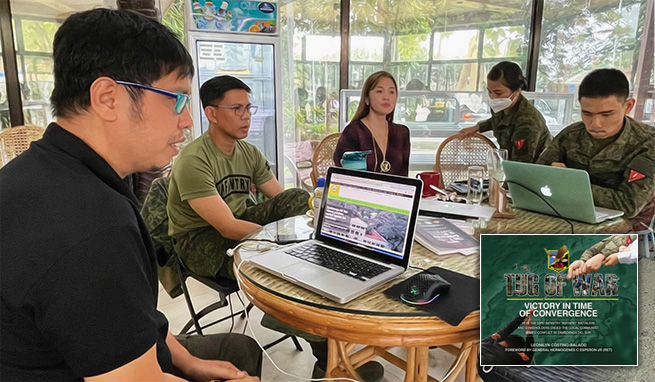
“The fight against the insurgency is won at the grassroots with the people taking ownership of the whole effort.”
— Lt. Col. Filven S. Noche
“When a conflict-torn community can sustain the peace and their way of life on their own after the Army has left, then the Army has done its job,” Colonel Villanueva stressed. “The presence of too many military forces in full combat gear with assault rifles along our highways and in our urban centers does not presage a peaceful community. It even connotes a fickle peace and order situation in the area,” the colonel explained. For him, sustainment is a civilian component in the campaign. CMO should continue and be prioritized, but they should be transferred to the local leaders to take the lead.
Lieutenant Colonel Noche also believed that the accurate measure of mission success is when LGUs have taken the lead in the continuing effort to suppress the insurgency. “After the Army has established the left-behind forces by organizing, capacitating, and mobilizing the CAFGUs and the BDS. The local peace and order councils are taking charge of the campaign, and you will see us at the sidelines. That is when we can truly say that we are at the sustainment phase,” Lieutenant Colonel Noche elucidated. “The Army will go where it is most needed. So, after we have done our part in the CSP, we help empower especially the barangays because the fight against the insurgency is won at the grassroots with the people taking ownership of the whole effort,” the officer continued.
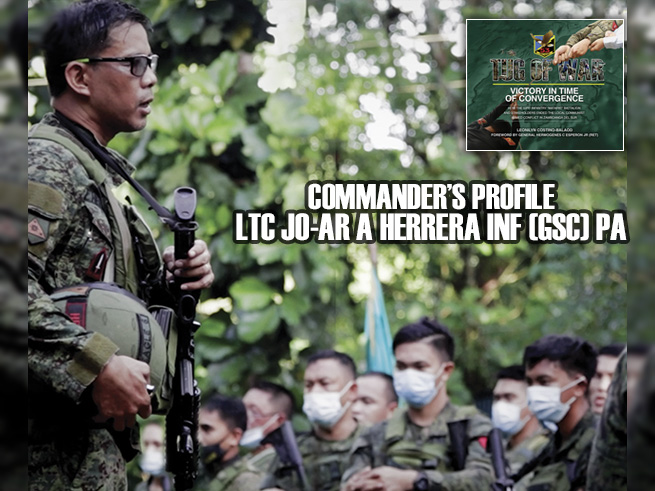
For Lieutenant Colonel Herrera, the battalion will always play an essential role in sustaining the peace in ZDS. The MATAPAT troops should respond to the community’s needs in times of war or in times of peace. The role of the battalion will be to assist the LGUs and the line agencies in aggressively pursuing developmental efforts at the hinterlands.
The 53IB has expanded from its sole conventional role of being the combatant into a hybrid military force. With its human resources and mobility assets, it has become an indispensable partner in many programs of the LGUs and line agencies. To him, building trust is a never-ending process that should be worked out every day. While the civilian sector endeavors to sustain the fruits of ELCAC, the battalion will always be there to secure and help them bring their services to the farthest communities.
Stakeholders Commit to Taking Lead in Sustaining Gains in Whole-of-Nation Approach
For the Army, it is a no-brainer that they will push for the program’s continuance. The line agencies also realized the importance of their role and the leverage they could bring into the whole campaign.
Local leaders also believe in the spirit of the Whole-of-Nation Approach. They have seen how this novel way of ending the insurgency positively impacted their communities. The challenge is whether the national government under the new administration will appreciate the concept of ELCAC and will continue with the program. They agree that the best way to sustain the program is a supportive national leadership. However, local politics can somehow play a role in realizing the campaign in the province, especially the BDP projects.
The 53IB, including other stakeholders, must learn to deal with the political association and different political nuances. But for every Local Chief Executive (LCE) who commits to the campaign is a significant assurance that the gains of the strenuous strategy have a better chance of sustainment.
Complementing Efforts to Maximize Gains
“The failure of the government to deliver basic services to very remote communities is the main ground of the insurgency,” said the Lakewood town Mayor Domingo Mirrar. He believed that this failure by the government had given the CTG a great advantage to convince the people to turn against the government. As the mayor, his inability to deliver the needed services at the people’s doorsteps was also due to hostile armed groups in his municipality.
He appreciates the 53IB for reaching the far-flung communities and bringing the people’s needs and concerns to the government. “Their counter-insurgency campaign had become very effective because of the EO 70, which mandates all entities of the government to take part in solving the problem,” the mayor expounded.
With the 53IB aggressively supporting the local government in bringing its programs to the people, the LGU can effectively carry its mandate. “I could not have freely moved around in my town if not for the 53IB. The CPP-NPA infiltrated all barangays in Lakewood in the past. We should even have the entire municipality covered under ELCAC. But with us working closely and smoothly with the battalion, we have reached far in improving the peace and order situation in the municipality,” he emphasized.
Mayor Angelito L. Martinez II of San Miguel, ZDS also has high regard for the efforts of the 53IB in accomplishing its mission. “I am encouraged to give full support because I can see their sincerity and consistency in their efforts to end the problem,” he said. However, the sustainment of the battalion’s achievements through its military and CMO lies primarily in the leadership of the LGUs. “This is primarily lodged at our barangay leaders being at the front of our lines of effort. Yet, the barangay needs the support of the higher LGUs and the national government,” the mayor expounded.
“On the other hand, the Whole-of-Nation Approach has remarkably changed our mindset towards the insurgency problem. As local leaders, we are placed at the center of the campaign, and we are made to realize the indispensable role that we play in the whole campaign.” EO 70 laid down a sure-fire strategy, but the implementation of the ELCAC efforts is still a subject of local leadership. To the very end, sustainment lies on who’s holding the reigns of the LGUs and the battalion.
Primarily, “The shift of the mindset of the national government and the AFP has catapulted the anti-insurgency campaign to the unparalleled success that it has reached today,” professed Kumalarang Mayor Ruel A. Molina. “All because of the leadership of the President and the AFP,” he added. The EO 70 is, for him, a very sound approach to solving the problem.
“It completely turned around how we view the problem and the solution. Realizing that it cannot be solved solely by hard power approach,” he explained. The government recalibrated its strategy and focused on development at the barangay level. “It is only this time that the national government gives the barangays so much support,” he observed. He also noticed that the 53IB has become very aggressive in its soft power approach in military operations. “It is where the LGU should come in. We need to support their efforts and complement their programs to sustain the peace in our communities,” he emphasized.
Not being identified as an ELCAC municipality is an erroneous appreciation of the criteria in identifying ELCAC barangays; still, he had several ELCAC projects. He works with the 547EBn and the 53IB to secure the projects in his municipality, which he funded from his local sources. It is when to be resourceful and innovative that local leadership is most critical.
For Mayor Vicente P. Cajeta of Guipos, ZDS, his relationship with the military has dramatically helped him provide for his constituents’ needs. When he came to office, he learned that many of the barangays in the municipality were not accessible. With the meager resources available to him, he worked with the 547EBn and the 53IB to maximize the utilization of funds.
They were able to rehabilitate and improve access roads to many far-flung communities. “Roads catalyze development in the communities,” the mayor said. For him, good roads will positively impact security, livelihood, and the self-concept and morale of the people. It’s a domino effect that is why he is steadfast in his commitment to support and sustain the peace efforts in his municipality.
The mayor also thought highly of EO 70, especially the BDP. He lauds the idea that the DILG leads RCSP with the people deciding what developmental projects they most need. However, he believes that the Army engineer battalions would best carry the infrastructure projects to maximize the funds. Given his experience working with them and the 53IB, he is in no doubt that they will best implement the projects.
Aligning Programs for Sustainability
“With ELCAC, they have reached even the remotest barangays in our town to bring their services which were what we wanted all along.”
— Mayor Joan Pacalioga-Abejuela, Dumingag, ZDS
“The IPs hold a profound sense of indebtedness to anyone who had helped them. They are also very willing to offer anything they have to help in return,” gasps Mayor Joan Pacalioga-Abejuela while explaining the seemingly slow progress in totally removing the CTGs hold in her town Dumingag, ZDS. The CTG has been there for a long time, helping and befriending the communities where the government won’t dare go.
Aside from its geographical location and the rugged terrain that provided an ideal haven for the CPP-NPA, poverty was critical. “We developed the Genuine People’s Agenda (GPA) when my father became the mayor of the town. It is our program of government that encapsulates the aspirations of our people,” the mayor professed. The GPA was meant to address the peoples’ needs that the CTG manipulated to gain their support.
With the advent of EO 70, support of the line agencies started pouring in. “We used to go to them in their offices to ask what they can do to help us. With ELCAC, they have reached even the remotest barangays in our town to bring their services which were what we wanted all along,” she smirked.
However, with all the agencies aggressively coming in to deliver their services, the local leaders had difficulty monitoring everything that happened on the ground. They needed to be abreast with the developments so they could assess them in terms of their GPA. “That is when we came up with ‘Oplan Amuma,’ which serves as a catchment program for all services that the other agencies bring to our people,” the mayor explained. Oplan Amuma plays a very crucial role, especially in sustainment efforts. It rationalizes all the programs under EO 70 and incorporates them into the GPA to become a sustainable local government program.
National Government Support a Must
“The LGU in Lapuyan, ZDS is committed to supporting the efforts of the 53IB in sustaining peace in the municipality.”
— Mayor Joel B. Sulong, Lapuyan, ZDS
Lapuyan, ZDS is the stronghold municipality of the peaceful Subanens that dates back to history. It is the only town where Subanens hold vital positions in the local government. Unfortunately, Lapuyan has also served as the sanctuary for the CTG for a long time. And, many FRs were from the town. Mayor Joel B. Sulong points to its geographical location as the primary factor for the proliferation of the CTG in the area.
“Because we are an interior municipality, many of our barangays were very hard to reach. There were no roads, so communities were isolated and left on their own,” the mayor explained. Poverty is the norm in many Subanen families in very remote villages.
“They have food because Subanens are very hardworking. But they lack services like health care, higher education, and livelihood, which do not reach them,” the mayor said. It’s a combination of many factors, including lack of funds, inaccessibility, and security issues that made delivering essential services in those areas difficult.
Although the immediate solution to the problem is to open these barangays to make them accessible, the LGU does not have the resources to fund road opening projects. “We rely on ELCAC to continue in the next administration. We are also hoping that more barangays in Lapuyan will be identified because many relatives of CNTs are living in these areas,” the mayor emphasized.
The LGU is committed to supporting the efforts of the 53IB in sustaining peace in the municipality. They will also continue with their own efforts to deliver essential services and road maintenance projects. Still, they can only do so much, so they need the continued support of the other government agencies through EO 70.
Better Roads Pave the Way for Better Lives
“The roads had the most impact not only on livelihood but on security administration in our municipality. The CPP-NPA automatically left the communities because our military forces will easily reach them. The roads constricted their playground through the road network, which made our town accessible from a different direction.”
— Mayor Elmer M. Soronio, Midsalip, ZDS
Congressman Leonardo L. Babasa Jr. stood firmly on the government’s side even when he was still the mayor of the town of Bayog, ZDS. “When the CTG asked for my support, I told them that I could not help them unless they would come back to the folds of the law,” the Congressman recalled. This conviction landed him at the CTG’s order of battle, but he never backed down. As a House Representative, his role, especially in ensuring the sustainability of the government’s efforts, is to help in totally removing the CPP-NPA ideology from the people’s minds. Encourage them to fully embrace the programs and initiatives of the national government. “The Army, the LGUs, and my office works in harmony and complement each other to address the needs of the people.” He thinks ELCAC is very timely and comprehensive because of its livelihood and infrastructure components. Still, it is also minimal and specific to the intended and pre-identified barangays. “We complement ELCAC through our road projects linking barangays and municipalities in the district. We will continue to do so until we can address poverty which is the root cause of the insurgency,” the Congressman affirmed his full support to the campaign.
Mayor Elmer M. Soronio is a first-term Mayor of Midsalip, ZDS. He recounts his observations on how the anti-insurgency campaign in his town had been very effective. First, the people truly felt the sincerity of the government in developing their community. The people used to feel neglected by the government, but essential services were brought to their doorsteps this time. Second, they were contented with their relationship with the 53IB. The people used to be afraid of the Army, but now they feel safe around them. They also trained the Special CAFGU Active Auxillary (SCAA), which also helped in securing our communities. Lastly, the opening of roads by the 547EBn has solidified the people’s support to the government and the 53IB.
“The roads had the most impact not only on livelihood but on security administration in the area. The CTG automatically left the communities because our military forces will easily reach them,” the mayor said. “The roads constricted their playground through the road network, which made our town accessible from a different direction,” he added. The mayor believed that sustaining the gains of the anti-insurgency campaign comes naturally as a function of the local government with the support of the line agencies.
Mayor Eleazar C. Carcallas of Tigbao, ZDS deeply understands the insurgency problem as former chief of police of the town. “Tigbao had the worst insurgency problem. The CTG overran our police station before,” the mayor recalled. Having survived an ambush by the CTG, which almost took his life, he will not hold back in removing them from his town. Politics was not his cup of tea, but he decided to seek public office to change the radical mindset of the people because of too much poverty inflicting the communities.
“We needed reforms and development to make the people change their mind about the government,” he said. He started by opening and rehabilitating roads. It was the clamor of the people. “With EO 70, basic services from the line agencies become unexpectedly available. The BDP will also have a huge impact once it starts its road projects,” the mayor added. He believes that lasting peace can easily be achieved if we can sustain the Whole-of-Nation Approach. He banks on the cooperation of the provincial government and the 53IB in ensuring continuity of the programs.
Good Governance Entice People’s Support
For Governor Victor J. Yu, the primary solution to all the community problems, including the insurgency problem, is good governance. Good governance, according to him, is the ability to maximize resources so that the people will truly benefit from the administration.
“The people will know and can feel if they can trust their leaders. How can we convince the CPP-NPA to come down if not by our sincerity to help them and deliver the services that they need,” the governor explained. “Life in the armed struggle is not easy, so if they have a chance to surrender and that they are assured of their lives and the assistance of the government. I am sure that they will come back to the government,” he continued.
“When the people benefit from the programs, they will even help the government,” he concluded. The provincial government will always support the initiatives of the national government and the 53IB. By reaching out to the barangays to actively participate in the campaign and whatever we can augment to the resources needed to fund the programs.
Delivering Social Services at the Doorsteps
“The root cause of insurgency is poverty,” according to Congresswoman Divina Grace C. Yu, “so the solution is delivery of social services.” For the lawmaker, the elusive peace in the province was caused by the presence of the CTG for more than fifty years. It hampered development and enormously affected the economic condition of the people. “If we can sustain peace in the province, more economic opportunities will start pouring in,” she emphasized.
As a congresswoman, she has access to the programs of the different line agencies, which she will continue to help bring to the communities. She is committed to the whole effort of TF-ELCAC and will continue to push for its continuance. “The road network that we are creating thru the BDP would open for a lot of opportunities for our people, and it only happened because of EO 70,” she said. Congresswoman Yu lauds the 53IB for the programs they have initiated and will continue to support their programs. She hopes that the next 53IB leadership will carry on what they have started.
Looking Far Ahead: Give the Children Hope
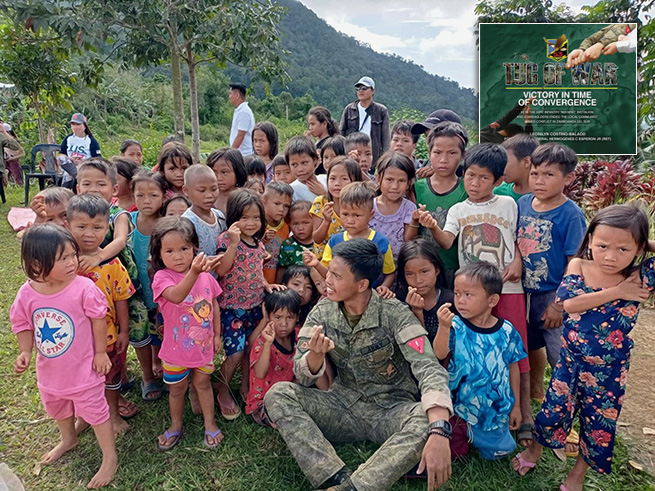
“Insurgency on a national scale is hard to eradicate because it is rooted in poverty. And, because there is real evidence of corruption,” Mayor Junaflor Cerilles of Dumalinao, ZDS expressed her view on the insurgency problem. For her, there will always be people supporting the armed struggle as long as these issues are not entirely addressed. However, she believed that the province was very close to solving the problem locally. She attributes the gains to the leadership of the 53IB in putting more effort into community engagements and forging partnerships with LGUs and other sectors. “However, the success that we have reached today was started by those who came before us — the local administrations and battalion leadership in the past — because fighting the insurgency takes a long process,” the mayor clarified. “It helped that the battalion has emphatically communicated their message. They ‘want peace beyond firefighting,’ and it shows in the programs that they initiated,” she went on further. The LGU has been supporting the 53IB detachments and the FRs and will continue to sustain the program. For the constituents of Dumalinao, she will continue to hear them out and deliver the essential services of the LGU.
As a community worker, the mayor believes that the children in the far-flung communities will be our better chance to sustain the peace. She goes to very far and secluded communities for the children. “We need to show the children the beautiful another side of their miserable situation. We will make them smile and hope. We need to let the children dream so that they would not think of war,” the mayor emphatically stated. Indeed, a hopeful person who believes that better things will come to him would not risk it for anything that can shatter that dream.
Teaching Children the Love of Country
“I appreciate seeing the 53IB doing non-combat operations, engaging the people, and delivering social services in our communities.”
— Councilor Sam Tyra F. Co, Pagadian City
The luxury of time of the young compensates for the wisdom of the old. Sam Tyra F. Co, the very young councilor of Pagadian City, believes that sustainment is a long-term process, in fact, a never-ending one. “Of course, for now, we can assess what we are doing right to address the insurgency problem and continue doing them,” she candidly said. She referred to the excellent relationship and cooperation of the 53IB and the civilian sector in bringing development in inflicted communities, supporting the idea that the fight cannot be won through guns.
“I appreciate seeing the 53IB doing non-combat operations, engaging the people, and delivering social services in our communities.” She thinks that the 53IB has successfully improved its public image and listened more to its stakeholders. She agrees that this new strategy by the battalion to focus more on peaceful means could have better and more lasting gains.
The young councilor affirmed that educating and raising awareness among more people and getting them involved will sustain the efforts in maintaining peace. It will take a long time, but it is the most sustainable. Of course, it should be done along with other more immediate actions. “Yet, when we speak of educating people, we do not only educate the adults, but most importantly, we need to teach the children. We need to instill in them the love of country,” she emphasized. Hon. Co is looking far ahead in sustaining the gains some twenty years from now, but it is what sustainment should be about. It’s a long haul. The effect might not be felt very quickly, but it is more lasting.
“For me, patriotism is a significant value that we should all possess. A person who loves his country would not destroy it, nor would he allow anyone to.” That is on a larger scale, but she needs to start somewhere. She thinks that she can begin by promoting love for her city. “As a city councilor, I want the children to learn more about Pagadian City and Zamboanga del Sur. They must learn to appreciate our history, culture, and our people. It’s a way to teach them to love and be proud of being Filipinos.” She has laid out her plans and being young, she has the time to pursue and realize her vision.
Encapsulation
Ending insurgency will lead us to question why it began and how it flourished in the province for decades. In addressing the problem, we need to think like the enemy and put ourselves in the people’s shoes to gain an overall perspective. The CPP-NPA was able to sustain their recruitment not because they had the support of the local officials or that they had more resources than the government. They thrived over long years of battle not because they were more substantial than the government. They flourished through the massive support of the people. They prospered because their issues and narratives remained relevant. Where the government was absent is where the CTG had a strong presence. Where the government failed to deliver its mandate is where the CTG succeeded.
Yet, it is not impossible to end the insurgency. The 53IB has defeated the enemy in its AO. The experience and lessons of the 53IB exemplify quintessential strategy. Exceptional leadership, audacity, and sheer commitment combined can topple even the most elusive and deceptive enemy. The 53IB had dismantled all their nemesis, yet the work is far from over. The true challenge begins after the last bullet is fired. It lies in the military and the community’s ability to sustain its advantage.
The war may be far from over, and it could easily find its way back in the province. The CPP-NPA is still actively recruiting and creating havoc in the rest of the Zamboanga Peninsula and the entire country. The end of this war might not even come soon for the nation with its political and social landscape that provides a green pasture for the insurgents. Yet, the success of the 53IB exemplifies proof that it is doable.
Soldiery is not a job for everyone. It is not for the faint of heart. It is reserved for the strong and the brave. Those who are willing to face and look at death in the eye. It is not the only measure of patriotism, but there is nothing nobler than to be willing to lay your life for your country. The story of the 53IB is of all men and women in uniform who continuously offer themselves to secure the independence and sovereignty of the State. It is for every civilian who is called to take an active part in the government’s efforts to put an end to this decades-long threat to our democracy. Finally, it is for the hope that what we do today will help us win the future for the Filipinos.
The success of the 53IB is the success of the government. It is the success of every Zambosurian. It is our hope for a peaceful Zamboanga del Sur. It is our pride.
Author’s Note
The fight against insurgency in the country has been in its high and low in the course of history. There were years when the government was gaining, and there were also times when it was at the losing end. We might wonder what was wrong with the whole campaign. It could be a faulty strategy or a lack of consistency. The government is yet again on the winning side of the war but whether it will go down again in the coming years like history repeating itself depends on what they will do after the win.
Just like in our lives, we have our highs and lows. Losing battles is an inevitable ingredient of life. But as we continue to lose, we learn what works and what does not. It won’t matter how many battles we lose as long as we prevail in the war. And yet, in the course of life, the challenges are never really over. We cannot avoid setbacks even if we have the best strategy. Even how much we try to be consistent, there are times that we become tired. Sometimes we lose sight of what we are fighting for, and we lose the will to fight. But just when we hit rock bottom that we find no other way out but up. It is what we do after every defeat or victory that will determine how hard or easy the next move will be.
The secret to winning is to come prepared. Preparedness for what is coming and not only for what is at hand. We will never know when the biggest challenge in our life would come. It is most distressing when we realize that we are short of what it takes to win. Thus, never settle on our old self. Continue to learn. Challenge ourselves. Be famished with new knowledge and skills. Be hard on our self. Shed off those thoughts and habits that kept us from reaching our goals. Many times, the battle is won in the mind before it even begins.
The government has repeatedly reached out to the CPP-NPA to bring their issues to the table. Still, the negotiations had failed all the time. The peace talks initiatives were even used as a chance for the embattled CPP-NPA to recuperate, become more robust, and gain more ground.
Realize that, like the insurgency, our biggest enemy is within us. It is an inside job. We often negotiate with ourselves to avoid the painful process of transcending. We fear going beyond our comfort zones. We constantly seek comfort, balance, and constancy. Yet, there is a very thin line between stability and stagnation. Progress never comes from comfort zones. When we habitually avoid confronting the enemy within us to evade the inner conflict, we will reside on mediocrity. The truth is we only remain average until everyone has passed us then we realize that we are already at the bottom.
We should not be fixated on our failures or successes of the past because nothing in life is permanent. Never linger too long on the agony of losing nor bask endlessly on the memory of your last triumph. Celebrate every success and learn from every failure, and then move forward. Many of us got stuck on the memory of our last achievements failing to realize that excellence is a lifetime pursuit. Every day is a new battle — a new beginning. Life is where it excites us.