“Wars may be fought with weapons, but they are won by men. It is the spirit of men who follow and of the man who leads that gains the victory.”
— Gen. George Patton
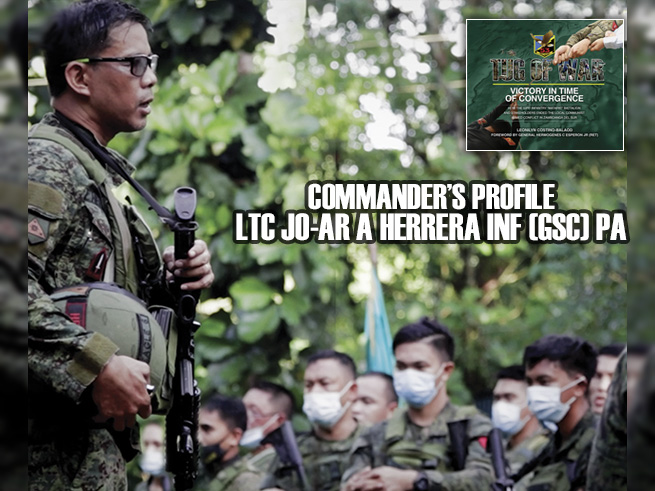
Lieutenant Colonel Jo-ar A. Herrera came to 53IB on March 5, 2020, as the 16th battalion commander. Tasked to lead the battalion in serving and securing communities from CTGs and lawless elements, he was bent on getting the job done the soonest possible time. His first guidance was to take down all the CTGs in the AO within six months. With the decades-long history of insurgency in the province, it seemed like an ambitious stunt to pull off.
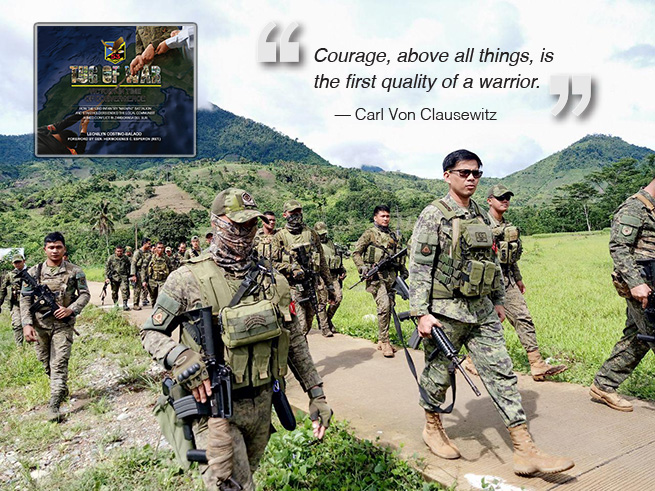
But it was a conviction backed by years of extensive training and formidable experience. It was a goal that he set for himself, and he was determined to accomplish it. Assessing the stakes, he knew he had the resources that he needed to carry on the mission. He had a group of young, motivated, and well-trained staff and officers who could provide him with significant and material information from the ground up. They efficiently carry and execute his decisions during critical situations. All that was needed then was a strategy that would ensure their success.
He had an army willing to follow his orders to the letter, but more than that, he wanted them to own the fight against the enemy and to rally behind their cause. The mission was to pursue counterinsurgency operations along with new techniques in warfighting, diplomacy, and influence operations to restore peace in the area. They sought a revolutionary approach to warfare, focusing on gaining positional, organizational, and moral advantages. Along with this strategy, the commander infected his troops with burning commitment and grit to achieve their goal.
THE THREE-PILLARED STRATEGY
“No one wins a war.” Brock Chisholm, a World War I veteran, once said. “It is true, there are degrees of loss, but no one wins.”
The government’s counterinsurgency effort has always focused on waging war against the enemy for a long time. And yet, the proliferation of the enemy and the never-ending conflict has time and again proved its futility. War is costly; it depletes resources and distracts progress. Peace-building is a much wiser option than going into battle.
But if war cannot be avoided, it is only won through audacity and strategic cleverness. The strategic element comes in crafting ways to achieve the goal and thinking it through in intense detail. It requires a revolutionary design, an art that requires a divergent way of thinking and an entirely new approach to warfare.
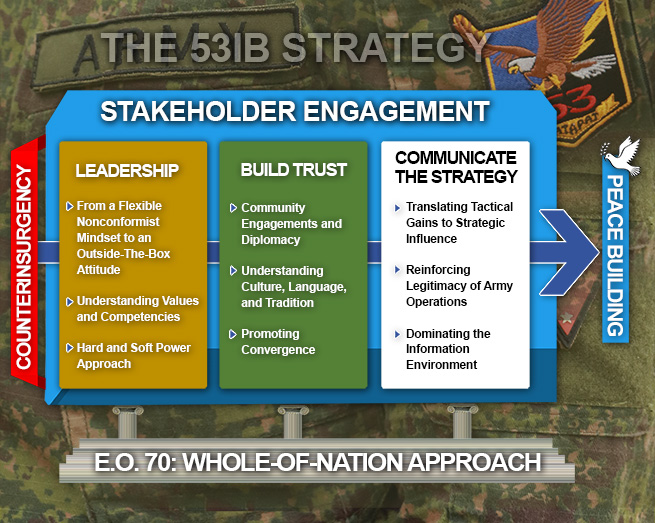
The 53IB strategy was held tightly by three pillars: transformational leadership, building trust, and communicating the strategy. The pillars stand firmly on the thrust of Executive Order 70, which provides for the Whole-of-Nation Approach, converging all government entities and the community in a holistic national anti-insurgency program.
TAKING A NEW APPROACH TO LEADERSHIP
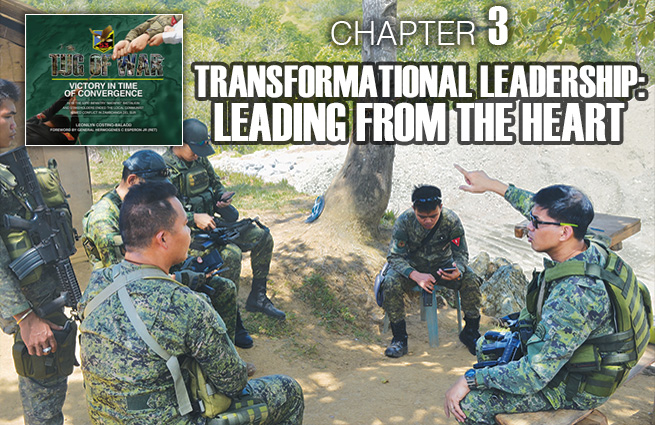
Lieutenant Colonel Herrera started a hybrid military leadership necessary for success in warfare and other aspects of engagements and diplomacy. Shifting from what he describes as a “flexible, nonconformist mindset” to an “out-of-the-box attitude” wherein he championed a type of leadership that conforms to situations rather than traditions. His administration is characterized by extraordinary adaptability, which sometimes requires a departure from orthodox thinking favoring new and often untried procedures. Using conventional wisdom about what should be or should not be done but plotting a different and novel course of action by complementing external and internal efforts.
UNDERSTANDING VALUES AND COMPETENCIES
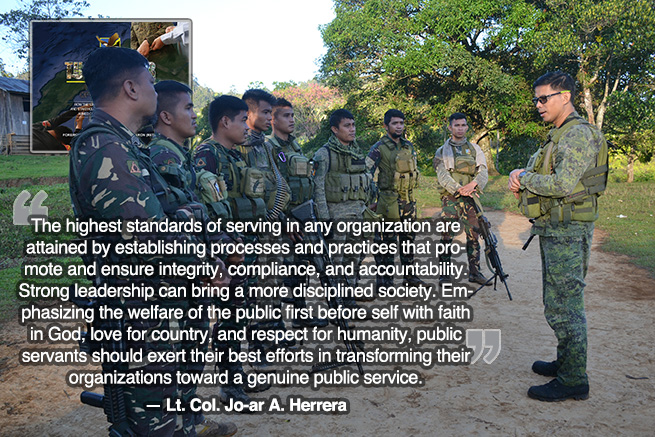
The first approach was self-directed. It was aimed inward at the battalion itself, recalibrating its soldiers’ perceptions and expectations, re-teaching organizational values, and requiring a high level of competence from within the ranks. They focused on knowing how to understand the enemy and conquer the battalion’s organizational weaknesses. Adapting to the leadership style was critical in maintaining the proper chain of command and the control of the leader. More importantly, boosting the troops’ morale turned them into crusading fighters.
Through the 4Cs which he coined, the battalion commander instilled the values that will guide their actions individually and collectively. The 2Cs stands for their unwavering commitment to their mission and unfaltering courage in the face of the enemy. The other 2Cs represent the battalion’s fervor to collaborate with the people in the AO and their drive for convergence.
COMPLEMENTING COMBAT AND PEACEFUL MEANS
Finally, transformational leadership called for the effective use of hard and soft power approaches. Perfecting the two approaches would lead to the most advantage and the most significant gains at the frontlines. The strategy involved two lines of operations which were delineated as to whom the operational activities were directed upon.
Firstly, the Enemy-centric Line of Operations (LOO) aimed to defeat the enemy by denying them their mass base support, preventing further recruitment, and neutralizing the CTG remnants. It involves dislocating the enemy from the communities where they thrive by cutting their supply source. Prolonged dislocation and isolation eventually broke their morale, causing them to desert the group and surrender. And being in a crisis situation, the CTG was easily destroyed during follow-up combat operations.
Secondly, the Community Governance-centric LOO was directed at the stakeholders and the communities. Desiring to institutionalize sustainable peace, security, and development efforts to support EO 70 by empowering line agencies of the national government and the local government units. The activities under this line of operation were tailored toward achieving developed and conflict-resilient communities where the people are insulated from CPP-NPA radicalization.
The main goal of the Community Governance-centric LOO is to effect behavioral change among the locals to achieve its desired end. Community engagement activities were designed to mobilize people of different perspectives and levels of appreciation of their role and contribution to the government’s anti-insurgency campaign. The battalion acts as the force that compels, controls, and influences. It supports the communities until they align their efforts toward a sustainable unified localized anti-insurgency campaign.
BUILDING TRUST
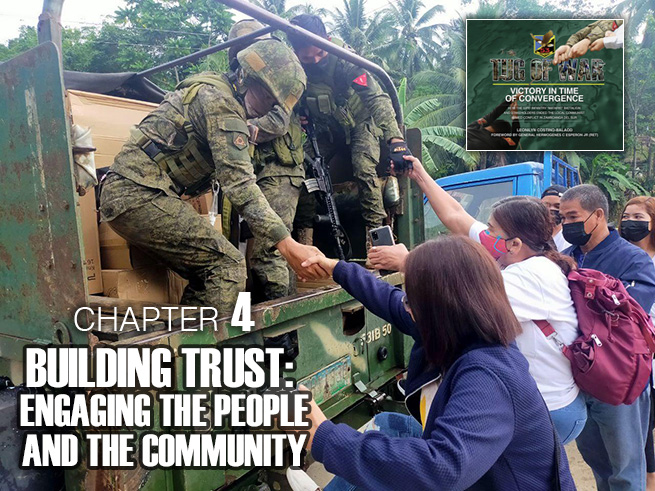
Another critical pillar of the strategy was to gain the trust of the community. The soldiers made consistent stakeholder engagements, promoted convergence, initiated dialogues, negotiations, and other peace initiatives. They took severe measures to understand the people’s culture, learn their language, and take part in their traditions until they eventually won the heart of the community. Instead of avoiding the people, especially in CTG-influenced communities, they enticed them and rallied them behind their cause. Getting them involved in the fight at the government’s side and cutting their support to the enemies turned the table against the CTG.
COMMUNICATING THE STRATEGY
Raising awareness and bringing the battalion closer to the people by sharing its efforts and triumphs placed the 53IB ahead of its game. The work of the Army has always been marked by secrecy. It is remote and restricted information reserved only for those who are part of the organization. The public knew very little about their efforts except for news of encounters and reports of casualties on either side. The 53IB strategy was to dominate the information environment. They took conventional and digital media platforms to make the people informed about the battalion’s efforts. They highlighted success stories and their challenges to draw people’s support.
“We communicate to the public what we, the 53IB are doing through information operations,” said Second Lieutenant George V. Yu Jr., who manages these operations. “If we do not communicate our efforts, it would seem that we are doing nothing,” he added. In going after their enemies, they combined peaceful solutions with aggressive action. Conducting these two power approaches simultaneously, complementing each other without ceasing, never leaving the ground, creating relentless pressure on the enemies from all sides, and closing off their access to their support base.
GOING BEYOND THE GUNFIRE
Behind the crossfire, there are enemies; but there are also victims and unwilling enemy supporters. Communities are helplessly living with the enemy because the government is just too far to reach them. In 2019, the 53IB cleared 26 CTG-influenced barangays through their CSP. These barangays were identified through massive intelligence efforts as dominated by the enemies, located in far-flung areas where information and government services could barely reach. The CSP marked the start of the Army opening up and embracing the people. The soldiers marched through the barangays not as warriors going to battle but as friendly forces offering goodwill. They went beyond their way to feel the plight of the people behind the frontlines. The mission was to regain the people’s trust and win them back.
CSPs were aimed at identifying the root causes, needs, and issues that the CTG exploited to sway people’s emotions. The Army facilitated their concerns to appropriate government agencies. Addressing their problems significantly increased their chances of returning to the government and ceasing support to the enemy. Covert CSP activities were conducted to determine the extent of the enemy’s influence in the community, identify the politico-military organizations, and expose the primary enemy supporters in the area. These activities paved the way for the Army to dismantle the province’s guerilla front, eventually releasing the people from their clout.
KEEPING THE COMMUNITIES FREE
The last CSP happened in May 2020. Twenty-six barangays in ZDS were declared insurgency-free. It was only the beginning though a significant step toward neutralizing the enemy. However, the CTG is still lurking in the area, which poses a lingering, imminent threat. The likelihood that they would reengage and win back the communities is still high. And, the challenge to sustain these communities is vital to the success of the whole strategy. To maintain the gains of the CSP, Mass Base Operations (MBO) took off from where CSP has left. Moreover, it took different roles in the new approach to warfare.
For many years, the Army relied heavily on military activities to end the war against insurgency. It was ostensibly the most direct route toward the goal. They tried to win the war by winning as many battles as possible. They use their highly skilled warriors and superior weaponry to kill as many enemies as possible to gain control in the countryside. They thought that demonstrating strength and power would force the enemies to give up the fight, which never happened.
The 53IB strategy looks at the war very differently. They saw the conflict with the CTG from a much broader perspective. Even as they prepared and strengthened the troops for encounters, they also worked on weakening the CTG defenses. They found that the hard-won fight against insurgency was sustained by massive support of the people to the enemy in these communities, whether voluntary or forced. For a long time, CPP-NPA members lured the people, manipulated their predicaments, twisted their perceptions, and convinced them to go against the government. And for those who did not buy their rhetoric, they threatened, hurt, and even killed the poor townsfolk.
“Don’t go near the community” – this used to be an old tactic. Platoons walked on the sides of trenches, avoiding the people while pursuing the enemy. “The people would expose you. They are not on your side.” This conventional mindset has proved itself wrong and has to be rethought. It was time to use one of the CTG’s schemes to their disadvantage and expose their deceptive ideology.
The Army used to alienate the people in the communities where there was massive support for the CTG. They were suddenly in their midst, making allies, bringing government services to the people, and promoting the Philippine Army’s services. They turned them into partners and supporters.
Mass Base Operations are not entirely what they appear. In a typical MBO, a squad is composed of a command group, the Psychological and Special Operations (PSO) team, the Civil-Military Operations (CMO) team, the Special Intelligence Operations (SIO) team, and a security team. The Special Intel Team is embedded to acquire meaningful information from the ground. They talk to the people while the CMO team conducts peace-building activities to uncover remaining contacts of the enemy. They visit houses at night when all family members are home and sometimes dine with them. The squad would be in the barangay for weeks and get involved in voluntary community works. They would help in clearing roads, cleaning schools, or building chapels.
In many of these engagements, residents would come clean about their ties with the CTG. They volunteer information and commit to supporting the Army in intelligence efforts. They are acquired as quality action agents or become part of the Barangay Intelligence Network (BIN). By winning the people’s emotions and getting them to act in the government’s favor, MBO brought significant gains to 53IB’s peace-building efforts.
MISLEADING THE ENEMY TOWARD THEIR DEMISE
When an MBO is conducted in a community, it sends out a message to the CTG that the Army has rekindled ties with the people and regained control over the place. This move demoralizes the enemy and forces them to eventually refrain from returning to these communities for fear of being sold out to the Army.
In many MBOs conducted in different critical areas in the province, the soldiers give flags to sitios and puroks. With the Philippine Flag hanging in community centers, the enemy would think twice about their loyalty. They may temporarily cut ties with them. These would make financial, logistics, and enemy intelligence more challenging to acquire, making them more vulnerable.
The MBO also plays a vital role in military deception during offensive operations. When used in the offense, deception could help achieve the element of surprise and greatly enhance the troops’ offensive capability.
MBOs are conducted to complement ongoing FMO. Their presence is intended to divert the enemy’s attention from what was truly happening on the ground. They are deployed in areas with strong CTG ties to block supplies and mislead reconnaissance. By gaining control over these areas, the enemy’s intelligence capability becomes more and more degraded. Consequently, they would have difficulty assessing the probable intention of the Army. As they maneuver away from these areas, they are more likely to move to a position where commando operators or blocking forces could destroy them.
CONTROLLING THE TERMS OF THE BATTLE
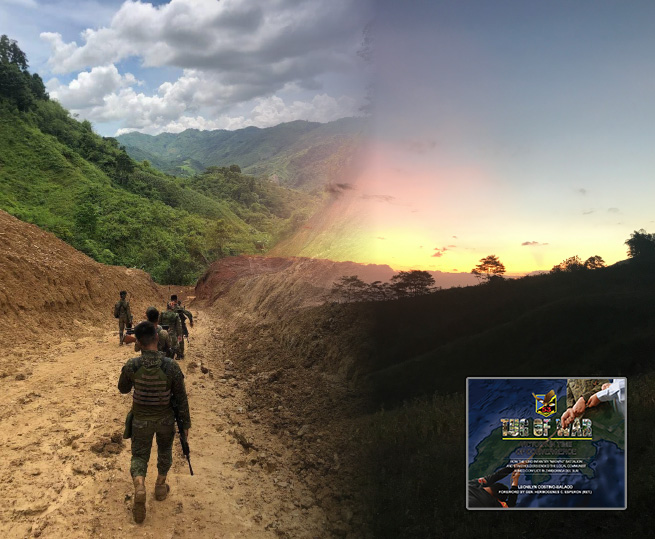
The hard power approach is marked by continuous and sustained combat operations directed against the enemy. Gaining advantage through speed and surprise; advancing faster than the enemy could process what was in store for them. Maneuvering them into their weakness and not giving them time to breathe until they are left with only one choice – to disintegrate.
This strategy is an entirely new approach in the fight against insurgency by the battalion. “We used to send out a squad on a mission, and when the enemy was not on the site, the team would come back,” said First Lieutenant Jonathan C. Cernitchez, the Battalion Operations Officer (S3). “In this new approach, we chase them, suffocate, and constrict their playground until they lay down their arms and surrender or be neutralized.” The 53IB has had seventeen encounters during FMO since 2020, using this new approach in ending the conflict. These encounters brought significant milestones in the war against the CTG in the area.
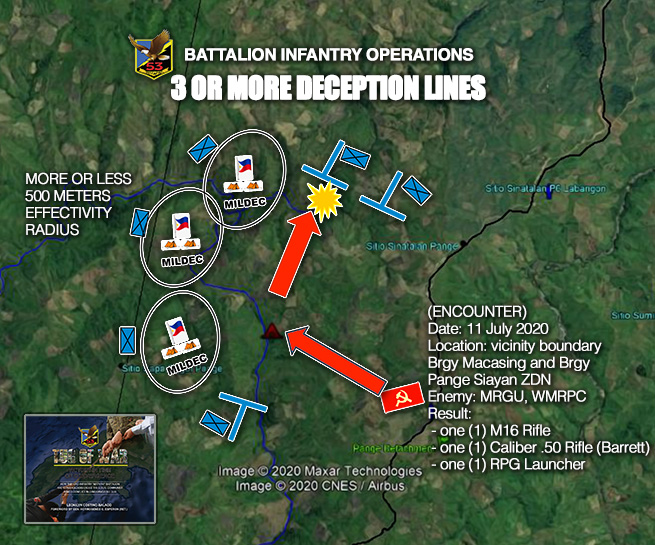
When an Intelligence Collection Team (COLT) reports a CNT sighting, the Battle Staff defines the area of operation. They establish a blockline, a deception line, and the vacuum area where troops pursue the enemy. These are imaginary lines that define where and what forces will be deployed. Along the blockline, blocking troops are mobilized. They stay hidden and invisible as they wait for the enemy to fall into their ambush traps. While blocking forces lay in wait, a team is deployed to set decoys such as tents and flag poles inside the deception area. “Deception was a new strategy introduced by the commander. At the start, we were only following orders until the strategy was giving us more hits that we realized its importance and usefulness,” Second Lieutenant Yu declared.
Patrol Base Operations (PBO) is also maneuvered opposite to where the blocking troops are. They make themselves visible to enemy reconnaissance to deter the enemy. They are also there to hold the line if the enemy goes in that direction. Simultaneously, MBOs are conducted in communities where support for the target CNT would most likely come from. MBO operators will monitor the activities of the people in the area while doing their CMO functions.
MANEUVERING THE ENEMY INTO WEAKNESS
The usual strategy in military operations is to set up ambush traps along the enemy’s course. “This was not at all very effective because the enemy knew it is the most likely to come to them so they were always prepared for it”, First Lieutenant Oliver B. Carmen said. He was the former S3 of the 53IB at the height of the campaign against the CTG. The battalion commander’s direction to dismantle the MRGU and HQ Kalaw seemed impossible at first. First Lieutenant Carmen had real reasons to doubt. He had been in the AO as Platoon Leader to Company Commander and had encountered the enemy several times before. Still, he eagerly took the challenge and prepared himself to learn. “For the first month as S3, I was learning new concepts of operations from my commander and from the books which he told me to read”, he recalled. First Lieutenant Carmen learned novel techniques in planning the operations which gave him an edge over the enemy. “After a while, with what I learned and the guidance of Lieutenant Colonel Herrera, I was confident that we would be able to end the MRGU and HQ Kalaw; victory was imminent”, he declared.
They complemented what they were doing with new techniques in deception and maneuver warfare. Most importantly, unity of command was restored in the Battle Staff. The control of the military operations was concentrated in the battalion. It maximized its combat power. Utilizing the line companies, there were fifteen to seventeen groups operating simultaneously performing different roles toward the common mission. “We improved our strategy in military operations. We did what was not usual and the CTG was left dumbfounded,” he explained. The troops never left the ground especially when they were pursuing the enemy, helicopters dropped their supplies at their location so they need not move ground. Other groups were sent for visibility in the mass base to deceive the enemy; to let them think that the troops were far away so they would stand down not knowing that another group was tailing them. Without any idea of the closing danger, many times the CTG succumbed to the troops during encounters.
On-point intelligence, new tactics, and innovative conceptualization of operations led to the defeat of the CTGs. Instead of orchestrating ambush scenarios in areas where the enemy had an advantage on the ground information and terrain familiarity, they used the art of maneuver to deny the enemy’s space and time. The 53IB employed blocking forces and feint attacks to deceive the enemy exposing their weakness and constricting them. While constantly avoiding the blocking forces, the enemy unknowingly place themselves in vulnerable situations where the troops easily demolished them.
WHEN DISGUISE, STEALTH, AND MOBILITY DETERMINE SUCCESS
Clad in the enemy’s uniform, a Special Warfare Group (SWG) is inserted inside the vacuum area to track the CTG to carry out commando operations. Comprising a team leader, two fire teams, and trackers, they take advantage of stealth and mobility. These information collection operatives are highly skilled in disguise and deception. They hound the enemy until they locate and engage the enemy or push them toward the kill zone.
The SWG conducted many successful operations of the battalion. One SWG callsign (CS) “Vendetta” stood out in commando operations. “Because of their success in many encounters, they no longer go back to collecting information. They are now concentrated on commando operations,” said First Lieutenant Maverick Rey C. Mira, in charge of the group. While intelligence information about a CNT sighting is developing, the SWG would slowly move to detachments nearest to the area to be deployed as swiftly as can be.
VICTORY IN THE HILLS
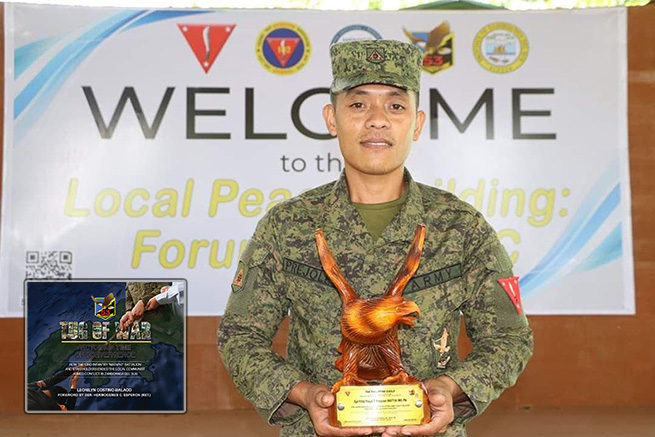
A routine day for an SWG is to wait for an order to be deployed, which could happen any day at any time. Preparedness is always the business of the day. It was a fine morning of September 20, 2020, when SWG “Vendetta” received theirs. They were to respond to a CPP-NPA sighting in Midsalip, ZDS. Intelligence Platoon led by Staff Sergeant Salvador D. Borces intercepted two CNT couriers at the vicinity of Barangay Kahayagan, Midsalip, ZDS. The couriers revealed the location of the enemy hideout. The battle staff quickly conducted deliberate mission planning and then deployed “Vendetta” to the area. They could only send out their best team in situations like that.
Shortly before noon, the group left the headquarters. It was led by Corporal Fritz Floyd T. Prejoles, two regular soldiers, and eight Citizen Armed Force Geographical Unit (CAFGU) comprising the Alpha and Bravo teams. At 2:00 pm, they arrived at Barangay San Juan in Dumingag. The cold breeze and dark clouds covered the skies indicating the coming rain. They were met by the two other CAFGU trackers who served as their guide. Without delay and not stopping to have their meal, they hurriedly started pursuing the enemy. They discovered the first enemy post shortly after they jumped off. It was in a sparingly covered area beside a cornfield, not so tricky to notice. From there, they followed the tracks left by the enemy. They found the second enemy post not very far from the first. It was still in a semi-open terrain where the only cover were cornstalks in the nearby field. Apparently, the terrorists spent the previous night there, but they were no longer in the area. Inspired by the progress of their search, the group continued to follow the tracks.
At around 3:00 pm, the heavy rain poured. Soaked in the rain and still without a meal, “Vendetta” continued following the trails along the river. They munched on some crackers to sustain their energy, which they brought with them from the headquarters. Shortly after the hefty rain started, the river was already flooded. They were aggressively walking, knowing the enemy was not far ahead. They had the cover of rain and thick fog, and the footprints were more visible on the wet ground.
The rain went heavier and washed out some of the enemy’s trail, making the pursuit a little more complicated. Still, they held on to any slight sign of the enemy until they completely lost them at the foot of a waterfall. The waterfall branched into several rivers; the enemy could have gone through any of those. They could have also climbed along the waterfall, but it was so steep. It was hard to tell. The group was forced to stop.
The squad did not move from where they lost the enemy — not until the trackers could see any sign of them. Brownie, their best civilian tracker, took hold of a leaf floating down from the waterfall. He told Corporal Prejoles that the enemy went up the cliff alongside the waterfall. Brownie saw markings of mud boots on the leaf; the enemies wore mud boots. Corporal Prejoles could not see anything on the leaf but had to rely on Brownie. They decided to climb the slippery cliff while being drenched. Some of the troops barely got to the top because of the strong current pushing them down. It was a challenging ascent, but when they reached the top, the tracker found some signs of the enemy, so they were back on the trail.
They continued until they reached the end of the cliff overlooking Barangay Marangan, Dumingag, ZDS, then went down to another creek. It was just five in the afternoon, but the range was almost dark because of the rain and fog. It was muddy all over, and they could not see a sign of the enemy. It was the second time they lost them. The trackers hurriedly and desperately looked for clues. They were sure that the enemy was not far, but they needed to know what direction. Then a strong smell of a medicating “Efficascent” oil came to them; they knew it was the enemy. At 6 o’clock in the evening, they were trailing the enemy again.
The troops could sense they were close as they could smell the liniment oil and see the grasses swaying back after somebody had stepped on them. It was already dark and were still walking until 7:00 in the evening, Corporal Prejoles decided to stay for the night. It was already dangerous to continue in the middle of darkness, knowing that the enemy was not far ahead and knew the terrain better. They found clear water in a brook nearby, and it was not flooded. They went to fetch some water to cook something for the night.
A strong smell of kerosene came out from the water, and it was not potable, not even suitable for cooking. The enemy spilled the kerosene, which no one else could have done. They had to skip another meal, and without water, it was even more difficult. They only had coffee from the little water they had left, and it was just enough to keep them warm.
The squad might just be a stone’s throw away from their target. But with all the blinding darkness around, they would not certainly know. The men stayed on the low ground to avoid being seen if one of them needed to open a flashlight. They could not risk being seen, so they just laid their hammocks on the ground and tried to rest while dripping wet. It was difficult to relax in such conditions — thirsty and starving. But they needed to muster all the energy left in their tired bodies. The enemy could not move far at daybreak, and they would be able to keep up with them and engage them in a firefight.
They heard a man talking on his phone not very far from them at around 9 o’clock in the evening, and he was heading in their direction. How could someone be there at that hour of the night with the rain pouring down? They knew the enemy sent him. They waited for him to come near and held him up. They offered him a cup of coffee. They could see the man was also drenched. He was holding three cell phones. Corporal Prejoles confiscated the cellphones and saw some coded messages. The man could no longer talk straight; he was pretending to be insane. Corporal Prejoles grew even more suspicious. They did not let him go.
On September 21, 2020, they had food at last and even had clean water to drink. After breakfast, they continued in the direction of the enemy, tagging along the terrorist they captured the night before. They recovered the place where the enemy spent the night, and it was barely 200 meters. Had they continued tracking them that night, it would have been bad. The enemy could have been waiting for them as they approached, and it could have been a disaster.
They followed the tracks for another hour until they reached a river, which branched out into two creeks. There were no footprints on the sand. For the third time, they lost the enemy again. The terrorists could have walked on rocks in the creek, maybe that is why they left no trace. It derailed them, giving the enemy some more time ahead. They stayed in the place for another hour while searching the area for clues. They were almost convinced that they had lost the enemy.
But around 8:30 in the morning, the tracker found a trail of tiny holes on the sand. It looked like sharp wicker continuously stabbed the ground, leaving a trail. Finally, they had something to follow again. The tracks were going to Barangay Marangan, Dumingag, ZDS. At 10:00 am, they reached another creek where they saw very recent tracks of the enemy. The rocks were still wet. They could have left that place a few minutes ahead of the troop. On one side of the creek was a hill covered with some coconut trees, a few lumber trees, and plenty of shrubs. These would not give them a good cover, but there was no other way to go from the creek.
It was obvious that the enemy was still in the area. With their adrenaline rising, they could hear their heart pumping: they knew it was the time. Not far from the creek, about 70 meters up the hillside, the tracker saw one terrorist. He was shirtless and was taking a rest. The tracker fired at once and then stopped. The enemies returned fire. It was massive. The troops were a few meters behind, right below the enemy. They took cover from the two gmelina trees nearby. Corporal Prejoles with another CAFGU was behind one tree, and the rest of the men were at another tree below them. Thinking that the tracker was hit, Corporal Prejoles called him to come down. But it was impossible to go up to his location. The enemy was relentlessly spraying bullets at them. After a while, they saw the tracker frantically running down towards them, bullets flying over their heads. He was not at all hit, but he rolled over an anthill after being fired upon. The ants were biting him all over. Corporal Prejoles was relieved. Looking at the CAFGU, he was amused. It would be a good story to tell.
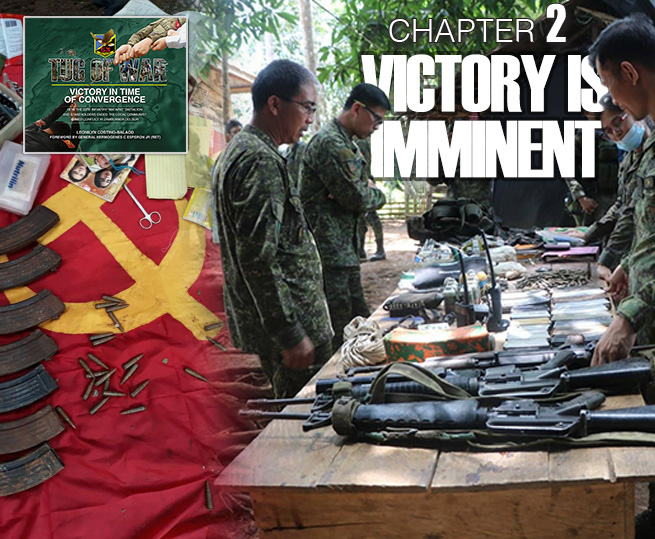
Corporal Prejoles, now with the tracker and the other CAFGUs, started to fire back. The Bravo Team below maneuvered up towards the side to avoid the group of Corporal Prejoles from their line of fire. When they were in position, they exchanged fire with the enemy in great volume. Corporal Prejoles was joined by another two from the Alpha Team. They started assaulting the enemy from below. They were going up the hill while heavily under fire; not the best position in a firefight, but they endured. The Bravo Team approached the enemy from their direction. Coming from much higher ground, they arrived at the site ahead of the Alpha Team. The enemy retreated, but they left various ammunition, supplies, and one dead body of a CPP-NPA terrorist.