“Marawi City is a source of inspiration for unity and bravery against foreign intruders. The City played an important role in the country’s history as it stood strong against the Spaniards and other invaders – values that are truly worth emulating.“
— Gen Eduardo Año
Chief of Staff, AFP
The exodus of people fleeing from the MBA was impossible to downplay. Even business establishments had to close shop, its owners unmindful of whether their goods could be salvaged or not, because what mattered most was that they got out of Marawi alive. The once lively trading center inside Marawi City suddenly stood still, fading into oblivion where only rubble remains.
The Marawi crisis widened the divisiveness and mistrust of the Maranaos for the military and the government. Understandably, the Maranaos felt betrayed and viewed the military operations as nothing but a show of might and insensitivity to their needs which were exacerbated by the enemies’ disinformation on the declaration of Martial Law. Majority of Maranaos abhor the extreme violence applied by the ISIS-Maute Terrorist Group. Getting caught in between fires, the Maranaos had to seek refuge in IDP centers, flee to their nearby relatives in the adjacent city, or even go as far as the island of Luzon where at least they felt safer.
Even the local governments had to take a backseat and let the AFP and the national government take the lead as they implemented Martial law. How could Marawi City LGUs discharge their functions when their key public infrastructure had been captured, burned, and completely destroyed as a result of the fierce fighting between the lawless terrorist group and the security sector?
Now that the battle has ceased, how do we envision Marawi after all these unfortunate events? For the military, despite the negative sentiments from the community, because of what they have lost in the battle, we initiated dialogues with the Maranaos, specifically in Mindanao State University (MSU) to show our willingness to mitigate this.
To demonstrate our commitment to the rebuilding and rehabilitation efforts of Marawi City, the Philippine Army, in partnership with Tarlac Heritage Foundation, was the first to complete and turn over housing projects through the Bahay Pag-asa Phase I in Bgy Bito Buadi Itowa, and Bahay Pag-asa Phase II in Bgy Mipaga, Marawi City for the IDPs. These developments took into consideration the comfort, well-being, cultural sensitivity, and the dignity of its intended recipients.
“The Bahay Pag-asa Project is a great collaborative effort between the Tarlac Heritage Foundation and the Philippine Army who came together to create these shelters, ‘temporary’ though they may be, but still they were created for the people to be able to live with dignity and have a semblance of stability which makes it a very good project.”
– His Excellency Jaideep Mazumdar
Ambassador of India
“The facility is well planned and built in accordance with the cultural sensitivities of the people. It also provides a clean and comfortable living environment for its intended residents.”
– His Excellency Dr. Aman Rashid
Ambassador of Pakistan
Bahay Pag-asa Phase I was made possible through the donations of the following stakeholders: 1st Infantry (Tabak) Division; 1st Post Engineer Detachment, 1ID; 54th Engineer Brigade; 547th Engineer Construction Battalion; Mechanized Infantry Division (MID); Tarlac Heritage Foundation Isabel and Isa Cojuangco Suntay; the Chinese Filipino Business Club Inc.: William Chua (President), Allan Wong But Loy (EVP), Tomas Ang (Hon. President) Cristino Lim (President Emeritus), Johnny Lee (VP), Alejandro Co (VP), Stephen Sia (VP), Samuel Ong (VP), Emilio Tan (VP), Samuel Lee Uy (VP), Albert Abaya (VP); Corvill Agricom Inc. Anthony Cortez; East-West Seed Company Inc. Michael dela Paz, Ronald Tolentino, Jerrylou Pamunag, and Glynn Alumbro.
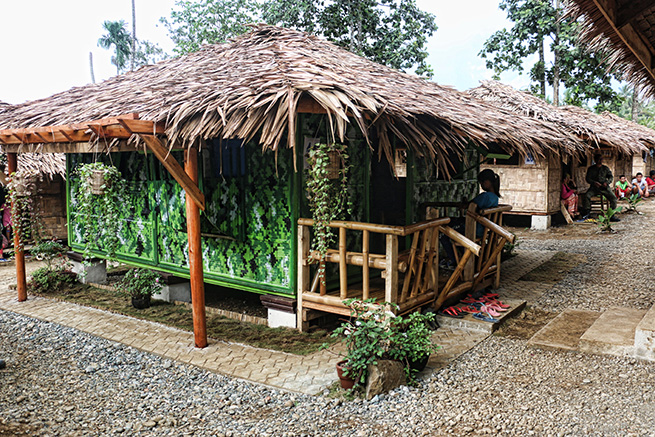
Bahay Pag-asa Phase II was made possible through the donations of the following stakeholders: Philippine Army; 1st Infantry (Tabak) Division; 1st Post Engineer Detachment, 1ID; 54th Engineer Brigade; 547th Engineer Construction Battalion; Mechanized Infantry Division (MID); Mr and Mrs Carlos Chan (Oishi); Tarlac Heritage Foundation (THF) Isabel and Isa Cojuangco Suntay; the Chinese Filipino Business Club Inc.: William Chua Yap (President), Allan Wong But Loy (EVP), Tomas Ang (Hon. Pres), Cristino Lim (President Emeritus), Johnny Lee (VP), Alejandro Co (VP), Stephen Sia (VP), Samuel Ong (VP), Emilio Tan (VP), Samuel Lee Uy (VP), Albert Abaya (VP), Carlos Chan (Director), Nolly Ty (Treasurer), Pascasio Ang (Auditor), Directors: Richard Alviar, Robert Ong, Willy Chua, Willy Uy, Juan Go, Henry Lim, Paul Yeung, Gerald Chan, and Robert Tan (Senior Adviser); Corvill Agricom Inc. Anthony Cortez and East-West Seed Company Inc. Michael dela Paz, Ronald Tolentino, Jerrylou Pamunag, and Glynn Alumbro.
“I think it’s very good that the government, the Army, and volunteers came together. I think the displaced people from the crisis should be better off living in Bahay Pag-asa. I saw the people there and they seem very happy.”
– His Excellency Phoxay Khaykhamphithoune
Ambassador of Laos
“I think the Bahay Pag-asa project is an excellent initiative and is being carried out using the best of local products and skills, and I think it fills the necessary gap in housing of displaced persons.”
– Her Excellency Kok Li Peng
Ambassador of Singapore
“Our visit to the development of 60 houses complemented by a Hardin ng Lunas vegetable and herbal garden, 60 parking lots for the residents, a basketball court, a volleyball court, the Bahay Kubo playrooms and the Bahay Kubo Learning Center for children made us smile. This showed all of us how much the Government of the Philippines, the Philippine Army, Tarlac Heritage Foundation, The Chinese Filipino Business Club Inc, and Oishi care for the people of Marawi.”
– His Excellency Ly Quoc Tuan
Ambassador of Vietnam
“The Bahay Kubo which has been part and parcel of the uniquely Filipino heritage will hopefully ease the pain and suffering of the recipients as they weather the crises that confronts them.”
– Isa Cojuangco Suntay
“The Immediate Shelter and Accommodation Units can be prepositioned in strategically located Army camps for immediate deployment during times of natural disasters necessitating its use — typhoons, landslides, volcanic eruptions, fires, earthquakes, and others. When no longer needed, these units can be dismantled, folded, loaded into army trucks, and returned to their camps to store for future use. Their lifespan is anywhere from a period of five to ten years depending on the care of their end users.”
– BGen Rolly Bautista
“The Philippine Army in cooperation with the Tarlac Heritage Foundation has successfully developed and introduced two types of housing innovations: The Bahay Pag-Asa Immediate Shelter and Accommodation kubo which can be assembled in 30 minutes, and creates livelihood for farmers of bamboo, nipa, sawali and coconut. This Bahay Kubo is environmentally friendly, equipped with solar power and a rain water collection system. The Bahay Kubo is also called home by many of our countrymen and certainly more comfortable than living in a tent.
The second Immediate Shelter and Accommodation Bahay Pag-asa Phase 2 features a more permanent form of Housing, and is that which you see being inaugurated today. Once the clearing and groundworks are done, and the cement has been poured and allowed to cure for three to five days depending on the weather, this model house will be completely finished in three days time, provided that all the materials needed for the project are onsite and that there are 12 skilled workers assigned per house.
Once again allow me to thank the Philippine Army Team for their invaluable contribution to both Immediate Shelter and Accommodation Housing Complexes in the City of Marawi – the 1st Infantry (Tabak) Division; the Mechanized Infantry Division; the 2nd Mechanized Brigade; the 54th Engineering Brigade, Philippine Army; and the 547th Engineer Combat Battalion.” – BGen Rolly Bautista
A CHANGE OF HEART: A TESTAMENT FROM A MARANAO
The Military has no heart; they love to kill the Muslims. They came to our place to take away everything from us. This is the kind of thinking I had since I was a child. I could vividly remember when I was in Grade 3, I saw a group of soldiers pass by our house shouting “Mga Moros pamahawa mo diri kay pamatyon mo namo,” (Moros, you leave this place because we will kill you”).
My family feared for our lives, we had to leave our house and seek refuge in the municipal gym, or the church, or the school and even in the municipal wharf, because of fear of being fired at by both the government troops and the Moro fighters. We were frightened by the helicopters hovering over us. This made us paranoid that anytime a bomb would drop and the sea would become a sea of blood.
With this experience from those soldiers I grew up in fear. This fear never faded as no soldier would approach us and talk to us comfortably, unlike they did with the non-Muslims. There was a barrier of trust, a discrimination against us as a people that we could not understand. That is why whenever we see men wearing camouflage, we are terrified. I grew up with the belief that my community is excluded from the list of the priorities of the government in terms of protection. It was very difficult to be a Maranao.
The negative view I had of the military was transformed into appreciation when I met a military man who was very engaging. He organized the Multi-Sectoral Advisory Board in Lanao. He went to the municipalities and participated in the electoral reform campaign of the province. He engaged the local leaders, the civil society organizations, and the residents themselves. He was a well-loved soldier in Lanao. The community and the military had a very good relationship during his time. The brigade was open to us civilians, there was a hotline that could be reached if there were any security problems. It was a very good working environment for the military and the civilian communities. This opened my eyes as to what the military is all about though it could change a little depending on who engages the community. The influence of the late BGen Daniel Lucero made a huge impact in the Maranao community. Even my personal reaction on how the military should be regarded during this Marawi crisis was changed because of the positive impression made by the late General in terms of his community engagements with the various sectors.
EXERTED EFFORTS AT MSU: VICE PRESIDENT FOR ADMIN AND FINANCE,
ATTY. BASARI MAPUPUNO
We learned a lot of things during the Marawi crisis. We were surprised by the intense fighting which we thought would just last for a few days. We did not expect that it would last more than five months. It is so disheartening to see our lives being affected so much. We are now trying to rebuild and start all over again.
We are thankful that our university was spared from the destruction and our students were able to continue with their classes even during the crisis. We take pride that MSU accommodates both Christians and Muslims as students. Imagine the effect if the MSU was damaged and torn down? The military met our utmost expectations. They have not only secured our university from the ISIS-Maute Terrorist Group, but they also assisted us with all the help that they could offer. Our students were able to attend school last June even at the height of the crisis. They guarded our university for everyone’s safety. The military personnel now are far more different from the military that we used to know during the Martial Law era of the 70s. Those who survived the trauma and suffering that they endured during the war in Mindanao remember the abuses committed by the soldiers then. Now, the soldiers are more professional and they respect the Maranao women. We are thankful to the AFP, especially the Philippine Army who never left us. They are one with us in rebuilding and helping us recover from the crisis. Our university will continue in our quest to educate our students as instruments of peace and to mold them into becoming good community leaders.
A HOME OF HOPE (BAHAY PAG-ASA) FOR THE INTERNALLY DISPLACED PEOPLE OF MARAWI
I am Joto Banisil Jr and this is my wife, Joanne. We live in Bgy Mocado Colony. We are one of those families whose houses were destroyed. Our house got burned. Before, our means of livelihood was to sell cellphones in the Market of Padian and I have a pedicab rented by my friend, while my wife stays at home. Currently, we are settled in Bahay Pag-asa and we are grateful to the donors of this project. Before, we used to live in tents. It was difficult, since the weather is unpredictable, especially when it rains. But in Bahay Pag-asa, houses were well built and ventilated. We have our basic needs here such as water and electricity. We are able to sleep soundly and we don’t have to worry when it rains. Whereas inside the tents, we can feel the scorching heat at 9 o’clock, I just let my children play outside because we cannot stand the heat. At 4 o’clock the cold weather comes, but we still struggle because of the frequent rain. We are thankful for your help, because this project helped us, evacuees. Thank you very much.
“I was so impressed to see how much details have gone into Bahay Pag-asa project in order to uplift the morale and to re-establish the livelihood of the people. I pray for the people of Marawi to have strength and courage to rise above the crisis and begin rebuilding Marawi City into a place as beautiful as it was before.”
– His Excellency Aruni Ranaraja
Ambassador of Sri Lanka
ON THE MOLDBOARD: MILITARY ENGINEERS
Amidst their war fighting duties on the side of the PA, we could see the effort that the Engineer Brigades, particularly the 54th Engineer Brigade, under the leadership of BGen Arnold Fernandez, exerted in making their ideas of rehabilitation become a reality.
Pursuant to Administrative Order 03 issued by the Office of the President, which intends to create an Interagency Task Force for the recovery, reconstruction, and rehabilitation of Marawi and other affected localities, we deployed engineer construction battalions (ECB) to take part in the immediate repair and rehabilitation of public schools, national roads, bridges, and government buildings. We also utilized the ECB in humanitarian assistance and disaster response operations by restoring basic services and utilities such as: water and electricity. In terms of securing the most affected area (MAA), we have seen the relentless effort of the engineering brigades in conducting breaching operations, to clear IED and other obstacles that pose a threat to the advancing forces.
ON THE GOVERNOR’S DESK: HONORABLE BEDJORIA SORAYA ALONTO ADIONG OF LANAO DEL SUR
Recalling the recently concluded Battle of Marawi makes me emotional. I thought I had seen all the pain and bitterness of life after seeing my children grow and later on, becoming a grandmother myself. Through the years, I always sought divine guidance to help me out in every crisis and always, without fail, coming out successful and jubilant for surpassing all those trials in life.
I was in the Provincial Capitol signing regular papers, including the salaries of employees, when the ISIS-Maute Terrorist Group started their rampage in Marawi City. In the face of danger, I remained in my office though I was already being warned about the ISIS-Maute Terrorist Group’s presence within the vicinity. I was being persuaded to immediately go home. Everybody in the compound was panicking. I asked my son to fetch me and he arrived eight hours later, which is unusual, compared to the normal one hour travel time. Martial Law in the whole of Mindanao was in effect immediately after the President Duterte proclaimed the decree. The military forces did the right thing. It was the most decisive action that needed to be done to address the situation. I can harbor hatred towards the ISIS-Maute Terrorist Group, but I need to forgive them as a good Muslim and move on with our lives.
On our current efforts, we have temporary shelters for the IDPs of Marawi and peripheral municipalities. There are also psycho-social programs to address the impact of the war or to heal the trauma that the people had experienced, especially that of the children. These efforts were anchored with the DSWD and supported by JTF Marawi. The JTG Tabang initiatives and the UNDP efforts helped alleviate the plight of the evacuees and affected communities during the Battle of Marawi.
After the liberation of Marawi, I went around the province and talked to the mayors, my constituents, stakeholders, and other displaced locals. I was soliciting their cooperation and help in mobilizing the rehabilitation programs for Marawi City. My immediate concerns were the children, hence, I was pushing for the restoration of the Madrasah. Next were the women, I wanted them to have a source of income or livelihood. There was a need for support from the national government, local government units, non-government organizations, to help us Maranaos to go back to our usual trading business, since my people are good traders. I envisioned a new Marawi City, expanding beyond its normal course.
On a bigger picture, there is a need to address the pressing problems besetting thousands of displaced individuals, damaged properties, health issues, including traumatic and psychological experiences, and environmental hazards. More importantly, there should be programs and sincere efforts between the people and government in the regaining their trust. Peacebuilding and a return to normalcy must be a recurring theme addressed to the community whose members lost everything especially in the most affected areas (MAA) of Marawi City.
The peacebuilding effort will focus on reconstruction, housing, health and social welfare, business and livelihood, and peace and order. The reconstruction will cover key public infrastructure, including the masjid (Mosque). The intention is to go back into the situation just before the crisis occurred and address key gaps and inequities. The health and social welfare effort will ensure that priorities will be given to the top five prevalent diseases in the evacuation centers, to keep every IDP disease-free and healthy. The social welfare office will provide assistance to the IDPs and this will include: cash, food, shelter, and psycho-social support. The business and livelihood effort will provide and enhance activities for producers, sellers, and consumers to improve economic well-being of the IDPs. It is important that markets are developed, new and existing enterprises are strengthened, and jobs are created. The peace and order council will initiate establishment of civil society organizations that will encourage participation of communities to find symptoms for violence and resolve the rido (dispute) due to land titling.
Admittedly, the war inflicted so much hate and misery among the people. It will be difficult to start rebuilding, but with everybody’s help, Marawi City will rise again.
THE ASSEMBLYMAN AND A SON OF MARAWI: ZIA ALONTO ADIONG
As member of a typical Maranao clan that is closely knit, the Marawi war somehow disconnected our family. The impact was very personal and collectively as a family, we were devastated. The frequency of seeing each other decreased. It was heartbreaking to see that the ancestral home where we held family reunions and get-togethers, and a place where more memories were nourished throughout generations was gone. For us, that home was like a north star. We already had a point of reference that whenever we would go, there would always be a guide. On the positive side, we also feel that the family members became more sympathetic to each other.
Thus, it is important that any development program to rehabilitate the City of Marawi should be rooted in the culture and tradition of Marawi as a family. The province of Lanao del Sur prepared recovery, rehabilitation, and peacebuilding plans for Marawi City in particular and for the province of Lanao del Sur in general.
Notably, these development plans are concerted efforts from key stakeholders: local, national, and foreign countries. These efforts are complemented with the cooperation from concerned individuals, civil society groups, business establishments, and other stakeholders who are willing to help Marawi stand up again from where it was before the crisis started.
The planning was also in reference to the Marawi City Government vision statement:
“Marawi City envisions itself as a socio-economically developed, clean, peaceful, orderly, and secure urban center inhabited by a God-fearing, morally upright, competitive, and culturally proud people under a caring, forward-looking, dynamic, and righteous leadership which strives to achieve the best quality of life for its constituents. It sees itself as a showcase for what it deems to be its best-vibrant, colorful, and unique Meranaw culture – to the region, the country, and the world.”
As the conflict was winding down, the declaration of the liberation of the City of Marawi was announced, I saw a glimmer of hope for the future. Someone is holding that glimmering candle that will wipe out the darkness. All I need to do is find that person and allow the renewed vision of the future of Marawi City to be shared, so others can hold on to it, cherish, and support it. I hope it will not take long for the unfolding of the new vision for Marawi City to become a reality. The unfortunate events of the siege of the City of Marawi will hopefully bring about a better cultural understanding among our people.