“Battles of high intensity in urban environments are won when troops possess a clarity of mind, an innate desire to win, the ability to do so, and the vision to succeed.”
— Lt Col Jonjie Luntok
One asks why is there such a thing as war? If the world almanac on war is to be revisited, one will find out that the history of war can be traced back to ancient times.
The global terror movement seems to have grown overnight; however, it would be a sweeping statement if one says that each day the global population seems to be anticipating what is going to happen next, because of the advancement and expansion of terrorism. Terrorism’s unpredictability puts the free world at risk. The terrorists’ numbers, strength, strategy, capability enhancement, tactics, propaganda, and adeptness at technology are occurrences to watch out for.
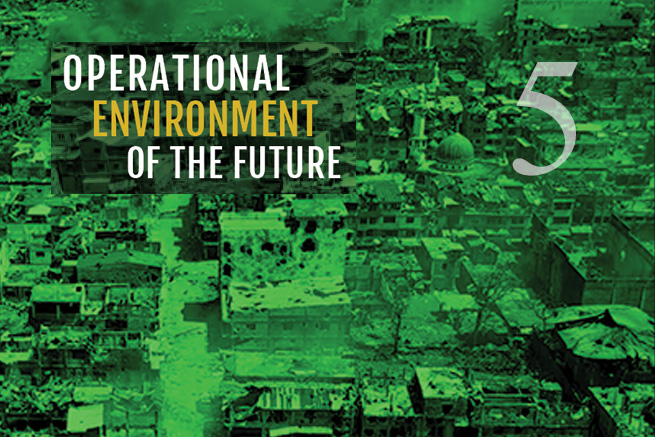
What happened in Marawi City may be a portent of things to come in the realm of global terrorism. The Philippine Army must put extra effort on developing and enhancing its capabilities and competence in order to be able to respond adequately should a need arise.
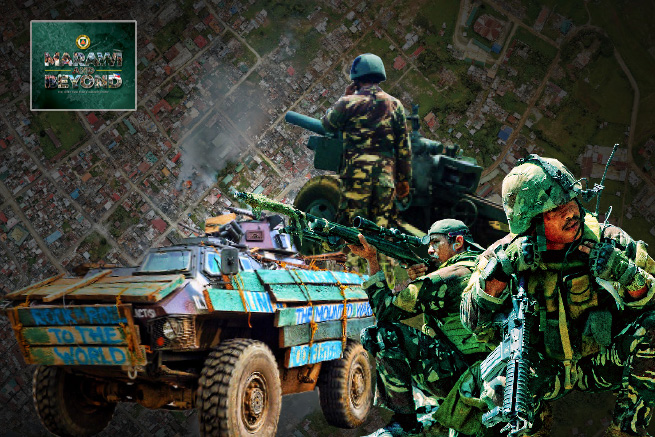
Although the ISIS–Maute Terrorist Group was defeated in the Battle of Marawi, it is imperative that the Philippine Army revisit its policies, doctrines, and protocols in order to better equip and train its personnel for the challenges that the times dictate – urban warfare, cyber warfare, and the global fight against terrorism.
As civilization progressed, tools and weaponry evolved, society grew in complexity, and people saw the need to defend themselves and their property from one another. Disputes amongst individuals, families, tribes, or clans, had to find an amicable settlement or inevitably sparked hostilities, which if uncontrolled, ultimately ended up in some form of war.
Through time a greater knowledge of self-defense and the fashioning of more sophisticated weapons developed. Simple familial and tribal wars were now upgraded to claims over rights and territory. People began conquering new frontiers as they were more capable of defending one another and their new lands. Leaders were elected amongst themselves and the concept of nations was born. New territories were discovered and nations protected their lands. A threat to one’s sovereignty or invasion of one’s territory resulted in war. To the victor went the spoils of war.
Prehistoric definitions of aggression from our forefathers resulted in conflicts of warring factions. War took on a new meaning as a result of its after effects – destruction, annihilation, and chaos, all of which could have been avoided if personal greed, ambition, the need for control, exploitation, self defense, invasion, and intimidation were not part of the human psyche.
Conventional and non-conventional warfare only meant a disruption or the loss of human lives, environmental destruction, societal discordance, internal or international disagreements, the triumph of evil, and greed beyond control.
The Battle of Marawi will always be remembered as the treacherous act of the Maute brothers headed by Omarkhayam and Abdullah, which put the Philippines infamously on the world stage in the year 2017. This put our part of the world also in peril as terrorists from the region and other parts of the world took part in the terrorist rebellion in Marawi City under the leadership of Isnilon Hapilon.
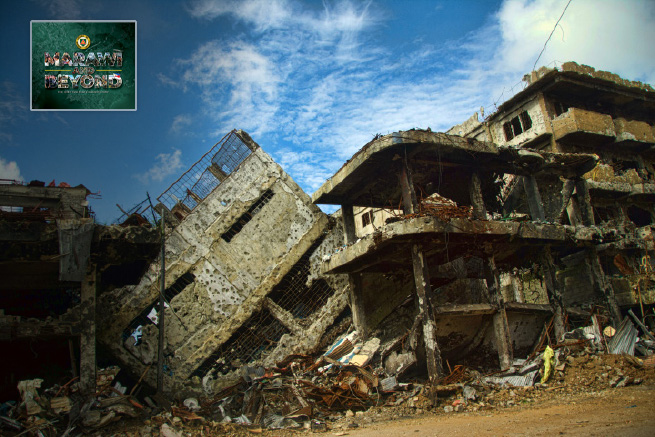
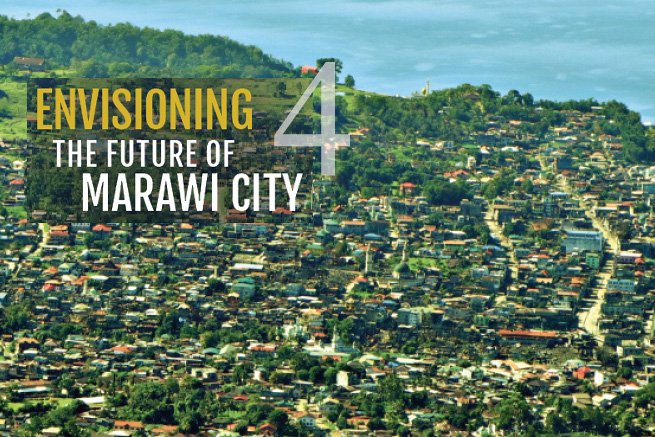
It is imperative that we revisit the history of Dansalan, as the City of Marawi was formerly known in order to be able to understand its people.
If one wants to see an authentic Muslim City complete with minarets, madrasahs, hijabs, skullcaps, brightly colored woven malongs, and mats, and Muslim-inspired arts and crafts, only one place comes to mind – Marawi.
Marawi, or the resplendent Dansalan as it was known before, is attractively situated on the edge of Lake Ranao or Lake Lanao or Meranau. It is blessed with cool weather due to its high elevation and is also referred to as the Summer Capital of the South.
Dansalan became the capital of the yet undivided province of Lanao in 1907 to 1940. It was converted into a City during the Presidency of Manuel L. Quezon by virtue of Commonwealth Act No. 592, which President Quezon approved on the 19th of August 1940. It was also the last City chartered under the Commonwealth of the Philippines, but the inauguration happened only in 1950 because of World War II.
On the 16th of June 1956, the name Dansalan was changed to Marawi through a Congressional Act under the Presidency of Ramon Magsaysay who signed Republic Act No. 1552 effecting the change.
During the time of President Carlos P. Garcia, Republic Act No. 2228 was approved, dividing the Province of Lanao into two provinces, Lanao del Sur and Lanao del Norte. Under the same R.A. 2228, the booming City of Marawi became the Capital City of the Province of Lanao del Sur.
Marawi is situated in the Autonomous Region in Muslim Mindanao (ARMM).
In Lanao del Sur, Marawi is at the center of the Islamic groups in the Philippines. The Maranaos are a breakaway group from Maguindanaoans who learned and imbibed the teachings of Islam. Sharif Kabunsuan introduced Islam in the region.
The spread of the Islamic religion in Marawi started when Arab merchants and Islamic missionary teachers came and traded with the Maranaos and intermarried. With marriage, the natives imbibed the Islamic education, culture, religion, customs, and traditions of the Arabs. Maranao chiefs were converted to the new faith; their people followed suit, and this facilitated the spread of the Islamic religion throughout the Southern part of Lanao. The Maranaos fervently embraced Islam and it eventually became deeply rooted in their way of life.
In April 1980, during the Presidency of Ferdinand E. Marcos, Marawi City was declared an Islamic City through a City Council Resolution and has remained as such up to the present time. Ninety-nine point six percent (99.6%) of the population is Muslim. A 2015 National Statistics Report revealed that Maranaos numbered 201, 785 in Marawi City alone.
As an Islamic City, Marawi is ruled by the old Muslim Law or the Sharia Law which existed in the olden times and is still being practiced; however, the Maranaos excluded the practice of stoning, amputation, flagellation, and other acts of punishment of this kind.
From 1639 to 1895, the Spaniards attempted twice to colonize the natives, whom they called ‘Moros’ after the Moors, but all efforts at religious conversion were denied. The Maranaos retained Islam and preserved their unique Maranao language plus Arabic, English, and Filipino, with their distinct culture and traditions. In the later years, Christians from other parts of the country settled in Marawi; however, their Malay-Arabic ethnicity remained firmly rooted in their people.
The ethnicity of the Maranaos is a blend of Malay-Arabic ancestry. They settled the lands way ahead of any historical explorations and occupations by the Spaniards and other foreigners chronicled in the Philippines. These natives inhabited the surrounding edge of the lake on the Bukidnon-Lanao side in North Central Mindanao giving them the monicker, ‘Lake Dwellers’ or ‘People of the Lake.’
Available data from the 20th century point to the Maranaoan community, numbering about 840,000, as being the largest of the Moro ethnic groups in Mindanao. Maranaos are very clannish. They live close to one another and around Mosques. They follow the Quran strictly. Wealth or stature are manifested in their elaborate clothing designs, embellishments, and jewelry. For colors, they veer towards bright colors like vibrant reds, purple, and gold as seen in their exotic textiles, woven mats, and ornaments. They love music and dance and the magnificent Royal Maranao Fan Dance, Kasingkil, with its resplendent costumes is truly a sight to behold.
Their unique culture is also reflected in their skills as seen in their brassware, goldsmithing, woodcraft, textile, and mat weaving. Since the olden times, the Maranaos were business people skilled in bartering. Their staple food consists of rice, corn, sweet potato, cassava, coffee, and peanuts. They cultivate rice in the hills and wet plains. They also fish.
As a people who have repulsed any form of foreign invasion and retained a culture distinctly their own, it is not unusual for Maranaos to want to have their own rules, laws, and form of government. Their quest for autonomy makes them vulnerable to extremism as evidenced by the crisis that gripped the City of Marawi on May 2017.
Sporadic insurgency issues in the countryside have kept the AFP busy through the years. The mission to keep our country free from insurgency has kept the AFP and PNP hierarchy occupied and our troops busy with training. Every so often, new challenges are encountered which demand the creation of new courses for the training of our personnel in order to meet these demands.
The propensity to rebel will always be around for as long as our Muslim brothers and sisters feel aggrieved, deprived, and neglected. These will also make them willing victims of terroristic cells.
Perceived threats come in various forms and the approach to them varies based on the perception of one’s self, as evidenced by his or her views on the prevailing social, political, religious, and cultural events of the times, which undoubtedly are in turn influenced by one’s family, peers, the community, one’s emotional well-being, and even his or her own intellectual ability. When desperation grips an individual, the seeds of fanaticism, and radicalism are easily transplanted.
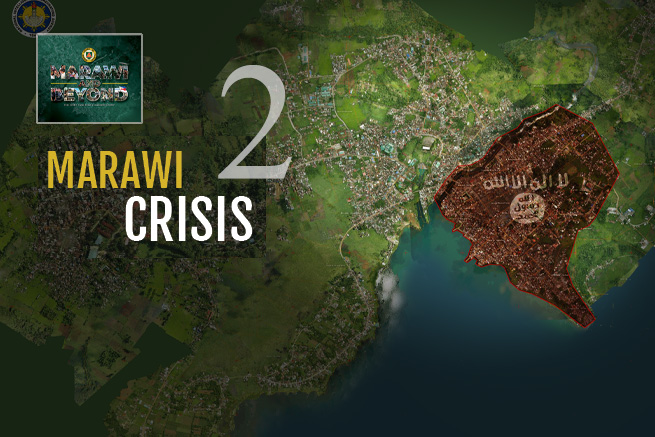
Being known as the Islamic City in a predominantly Catholic nation, it was not unusual that Marawi City was targeted by Isnilon Hapilon to launch his attack and establish a caliphate with the help of the Maute brothers and the Abu Sayyaf Group on the 23rd of May 2017.
The Islamic State of Iraq and the Levant (ISIL) was responsible for the terroristic activities in Iraq. They later on affiliated with terrorists’ cells in Syria. Isnilon Hapilon was identified with the former. Hapilon’s faction was based in Southern Mindanao and the Island of Basilan; later on, they moved to Central Mindanao to unite with ISIS supporters.
The Maute Brothers, Omarkhayam and Abdullah, were descendants of an influential and affluent clan of Maranao warriors based in Butig, Lanao del Sur. They were born to Cayamora and Ominta Farhana Romato Maute. They spent their adventurous childhood years in the town of Butig. The two brothers were described as bright, religious, and ambitious men. They both had the opportunity to study in Egypt and Jordan which furthered their knowledge of the Quran and made them fluent in Arabic and English.
Omarkhayam went to school in Al-Azhar University in Cairo, Egypt and married an Indonesian Islamic cleric’s daughter. As a son-in-law, Omarkhayam had the chance to teach in his father-in-law’s school in Indonesia; however, in 2011 he decided to return to the Philippines and settle down in Mindanao. This exposure in Indonesia and in the Middle East imparted a strong religious influence on the brothers. It was also there where they were able to establish connections with different terror groups.
The DAESH links in the country were first known through a video posted on social media on the 23rd of July 2014, showing the pledge of allegiance of the Basilan-based ASG leader, Isnilon Hapilon and his followers to DAESH Leader, Abu Bakr al-Baghdadi. Other militant groups including the Maute Group of Lanao del Sur soon followed suit.
In the latter part of 2015, the ASG and the Maute group strengthened their terroristic ties and alliances and emerged as a terrorist threat to reckon with.
Omarkhayam and Abdullah Maute were well-schooled, idealistic, and quite explicit about their ideology. They had the benefit of an education which made them adaptable to the ever changing world of information technology and were quite well versed in its use. They were comfortable moving in and out of the different strata of society. Their use of the Internet to widen their social propaganda came naturally. Their posts were quite vocal about their opinions and ideas and even went to the extent of discussing how to achieve an Islamic State.
Their father, Cayamora Maute, an engineer, was arrested in Bgy Sirawan, Toril, Davao City on the 6th of June 2017 when his Toyota Grandia van was stopped at a checkpoint days prior to the arrest of their mother. Later on, Cayamora Maute died inside his prison cell on the 17th of August 2017, due to fragile health.
Their mother, Farhana Maute, was a businesswoman and the financier of the brothers. She was also responsible for recruiting the youth into their movement. Her businesses ranged from owning real estate properties in Mindanao and in Manila, construction, furniture, pre-owned cars, and even jewelry. She was arrested on the 9th of June 2017 in Masiu, Lanao del Sur. Her arrest was a big blow to the Maute brothers’ plans.
Social media became the primary means of propaganda used by the Maute brothers to influence others to join them, to obtain funds, spread disinformation, send out appeals to the youth, to broadcast their ISIS ideology, and the setting up of a caliphate in the City of Marawi, Lanao del Sur.
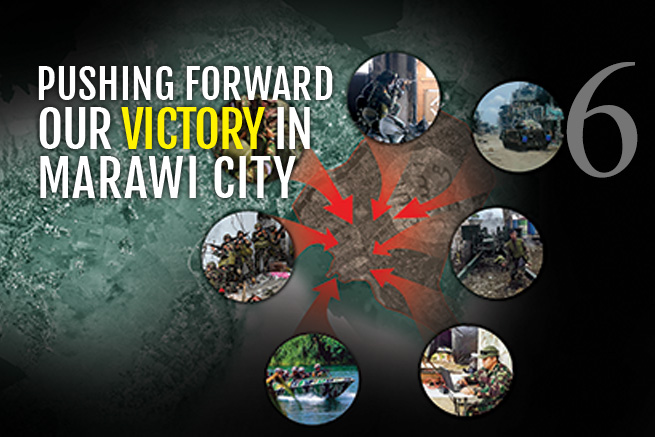
After the raising of the ISIS flag in Marawi City at the start of the siege, due to the dastardly acts committed by the Maute brothers and their supporters all throughout the five months of terror – looting, vandalizing, intimidation, carnapping, arson, molesting, rape, killing, bombing, shooting innocent civilians, and others, in the end, the Maute brothers and their followers achieved nothing but notoriety. The five-month-long Battle of Marawi against the combined military, police, and coast guard troops resulted in the deaths of Isnilon Hapilon, Omarkhayam Maute, and Abdullah Maute, which brought those seemingly endless days of fighting to a final halt, thus creating a leadership vacuum in their organization.