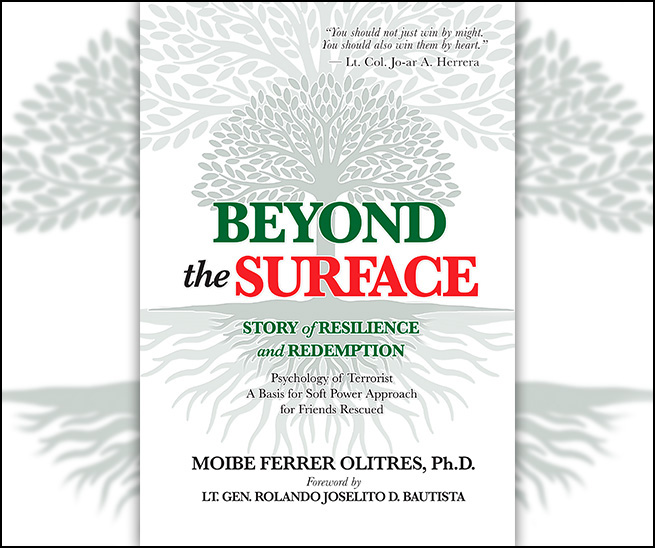
“A redemption of peace and security starts with the end of reign of terror. The effective operationalization and optimization of soft power approach bolster a significant amount of unconventionality and vitality to sustain the peace and a resilient nation.”
— Lt. Col. Jo-ar A. Herrera
The Philippine Army’s 53IB is one of the maneuver units under the 1st Infantry “TABAK” Division primarily involved in countering the insurgency and violent extremism in the Zamboanga Peninsula. Since 2016, the battalion facilitated the surrender of 216 former communist terrorists. The 53IB initiated numerous programs to help friends rescued regain their lost lives, endure new lives, and embrace mainstream society.
In 2018, President Duterte issued EO 70 to generate a method of inclusivity and sustainability to win peace on all fronts. The Philippine government adopted the Whole of Nation Approach, an overall plan with a clear political aim. It involves a wide spectrum of the society consisting of the national agencies and local government unit leaders, community and religious leaders, academe, influencers, and non-government officials supporting the mandate to end local communist armed conflict in the country.
The government, including the military, harnessed the hard power and soft power approaches to defeat the nemesis of the Filipinos. Aside from combat power, the national government mobilized instruments to solve the communists’ 53-year reign of terror by addressing the push and pull factors affecting insurgency and violent extremism. The EO 70 emphasizes socio-economic programs that contribute mainly to the upliftment of people’s quality of life, especially in the hinterlands. The inception of the BDP strengthened the goals of EO 70 in terms of socio-economic package. It fosters redemption and resilience among the previously affected communities. The enhanced comprehensive local integration program (E-CLIP) aims for the seamless reintegration of the friends rescued to mainstream society and boost their quality of life. Good governance, the heart of EO 70, shall aspire for the success of the political, socio-economic, informational, and military goals to address the root causes of insurgency and terrorism in the country.
The triumph of 53IB and stakeholders in Zamboanga del Sur against CPP-NPA-NDF is a product of hard power and soft power strategy. This victory in time of convergence amplifies security, good governance, and development cooperation among its stakeholders. Equally, the importance of sustainability and proactive programs, including socio-economic reforms, capacity building of local communities, infrastructure development, education, and peacebuilding mechanisms, among others, shall endure an insurgency-free province.
The creation of a national action plan for preventing and countering violent extremism guided our troops and stakeholders in yearning for a holistic approach and inclusivity. The key components of the plan are stakeholder engagements, strategic communications, and information operations that play essential roles in building the vulnerable sectors’ resilience and raising awareness of the venomous communist ideology and deceptive actions of the CPP-NPA-NDF recruitment and radicalization method. The CPP-NPA-NDF thrives in areas where significant tensions and divisiveness exist, and the risk of violence is high.
The government’s battle for ideas and narratives platforms were upgraded and institutionalized through the strategic communication cluster under the national, regional, provincial, and municipal task forces to end local armed conflict. The cluster intends to boost key messaging and effective use of persuasive narratives that are tailored to the experiences and sentiments of the targeted recruitment groups. The actions and groundworks on the ground complement the narratives used in various information-related capabilities such as radios, print, digital, and internet platforms.
The implementation of Project Good Life, a deradicalization program, highlights the psychology of terrorist in a much broader and deeper understanding beyond what is on the surface. It warrants significant factors to study and understand the phenomena of communist terrorists by focusing the lenses of psychology on uncovering the gaps of knowledge in examining the root causes of risk-taking behaviors and psychological motivations of the friends rescued.
The findings, lessons, and best practices in this project offer supplementary and alternative lenses on how to operationalize the concepts of preventing and countering violent extremism and deradicalization in the context of physiological and psychological features of the communist terrorist. Elaborating the trichotomy of human beings: the body, the soul, and the spirit, one must begin to understand the process of radicalization and its impact on the community and beyond.
Nobody is born a violent terrorist. They are made. Most of the time, conditions in the home and community fueled radicalization. Threats of radicalization in this book are primarily driven by hatred, confusion, trauma, distorted family, the culture of violence, poverty, and geographical factor. Stated below should be considered to advance our learning and worldview in preventing and countering violent extremism and deradicalization programs.
Multi-Level Convergence
The complexity of the push and pull factors is categorized as economic, political, cultural, social, psychological, and religious. They intertwine and reinforce one another. A multi-level convergence of various agencies and stakeholders is paramount to ensure that intervention programs are cascaded. The government entities should bind mechanisms, such as memorandum of understanding, to ensure the continuity and sustainability of the project.
Building Resilience
The importance of education, skills development, and employment are crucial to building young people’s resilience to recruitment and radicalization. Empowering them will foster a positive sense of identity, belongingness, and self-worth.
Youth Empowerment
Participation and empowerment of young people and students will create an environment of nurturing. The 53IB sustains its Youth for Peace programs through the conduct of Youth Leadership Summits. Government agencies and organizations should institute and organize youth leadership programs to create an enabling environment and youth participation toward peace and development. It also increases the youth’s sense of pride and love for community and country.
Positive Parental Guidance
Enhance and innovate programs to embolden the family as a basic unit in the community. A peaceful environment and a well-functioning family shun hatred and trauma among the children. Children are empowered to develop self-awareness, self-compassion, and a sense of family. And parents should capacitate about parent education programs focus on developing and practicing positive parental guidance to avoid child’s traumatic familial and social environment.
Gender-Culture-Responsive
Peacebuilding Intervention Program
Advancing gender and cultural diversity promote the protection of all forms of heritage and identity. It includes raising the understanding and respect for cultural diversity in peacebuilding initiatives. The 53IB advocates inclusivity in its programs. The conduct of a local peace forum on the barangay level enables the local and traditional leaders, women, youth, and indigenous people as active agents in building peace and securing and protecting their constituents from any threat of violence and terrorism.
Psychoeducation Program
The 53IB’s “Project Good Life” psychoeducation program is a 10-month school-like environment using an experiential learning system to deradicalize the friends rescued mindsets and behaviors to help them prepare for their reintegration into the community. The program intends to discover its signature strengths rather than weaknesses toward well-balanced mental health.
Assessment and Evaluation
The application of scientific method was implemented, where the participants underwent formal admission and a thorough pre-assessment and post-evaluation. Psychological tests with high psychometric properties were translated to local dialect to measure the psychological characteristics of the friends rescued. The assessment served as a baseline to monitor the progress.
Need-Based Curriculum
The program promotes a need-based curriculum on the basics of understanding the self, family, community, environment, spirituality, livelihood, and government. Partnering with government agencies, academe, non-government organizations, and other stakeholders stimulates convergence and shared responsibility in educating the participants.
Constant Experiential Learning
The participants receive constant experiential learning to reframe their radicalized mindset and behavior. Friends rescued developed a sense of community and belongingness through exposure to a peaceful environment and people who demonstrated care and love for them.
Sustainment and Institutionalization
For the sustainment and institutionalization of the program, the DILG, DepEd, JH Cerilles State College, Inner Wheel Club of Yllana Bay Pagadian City, and the Provincial Government of Zamboanga del Sur instituted agreements with the 53IB to sustain the program. The Project Good Life should also be adopted by the DSWD and other agencies involved in the rehabilitation and reintegration of the friends rescued.
Communication Strategy
The communication strategy plays a central role in converging, coordinating, and blending among the affected communities to defeat the communist ideology and sustain partnerships. The government agencies such as NICA, PIA, and other stakeholders should continue to foster collaboration to drumbeat key messages to degrade CPP-NPA-NDF narratives using various communication platforms.
Leadership Lessons
The leadership lessons include adaptation and innovation in the organization, which are critical in satisfying the demand for preventing and countering violent extremism and deradicalization programs. The creation of the NTF-ELCAC, a political solution, showcased a unified command, convergence, and dynamic leadership to achieve an inclusive and sustainable peace. Leaders must possess a hybrid leadership style and cognitive know-how to provide new ideas and innovations to propel a strategy in countering insurgency and violent extremism.
A redemption of peace and security starts with the end of reign of terror. The effective operationalization and optimization of soft power approach bolster a significant amount of unconventionality and vitality to sustain the peace and a resilient nation. Therefore, our engagement should be demonstrated with passion for genuine public service and leading from the heart to achieve a military, socio-political, economic, psychological, and geographical advantage in support of the strategic intent and policy of the government.
Lt. Col. Jo-ar A. Herrera
Commanding Officer
53rd Infantry “MATAPAT” Battalion
REFERENCES
- Ben-David, A. (2008). Iron Dome advances to meet Qassam threat. https://www.researchgate.net/publication/291628144_Iron_Dome_advances_to_meet_Qassam_threat. Retrieved: June 18, 2021.
- Schore, Allan. (2002). Dysregulation of the Right Brain: A Fundamental Mechanism of Traumatic Attachment and the Psychopathogenesis of Posttraumatic Stress Disorder. The Australian and New Zealand journal of psychiatry.
- Laqueur, W. (1999). The New Terrorism: Fanaticism and the Arms of Mass Destruction. New York, NY: Oxford University Press.
- Datt, M., D, R. K., & P, K. C. (2015). Review Article Psychology of Terrorism … A review. 2(2), 72–79.
- Fabe, A. P. (2013). The Cost of Terrorism: Bombings by the Abu Sayyaf Group in the Philippines. Philippine Sociological Review, 61(1), 229–250. http://www.jstor.org.proxy.uchicago.edu/stable/pdf/43486362.pdf. Retrieved: March 7, 2021.
- Global Terrorism Index (2018). https://reliefweb.int/report/world/global-terrorism-index-2018. Retrieved: December 9, 2021 .
- Global Terrorism Index (2019). https://reliefweb.int/report/world/global-terrorism-index-2019. Retrieved: December 9, 2021.
- Charles, K. & Theodorakis, K. (n.d.). The Marawi Crisis-urban conflict and information operations. Australian Strategic Policy Institute. https://bit.ly/3wO3Fot. Retrieved: February 19, 2021.
- Official Gazette, Republic of the Philippines (December 10,
2018). Executive Order No. 70, s. 2018. https://www.officialgazette.gov.ph/2018/12/04/executive-order-no-70-s-2018/. Retrieved: November 3, 2020. - Singh, J., & M.H. Jani (2020). Covid 19 Terrorism in the Southern Philippines: More Trouble Ahead. The Diplomat. August 26, 2020. https://thediplomat.com/2020/08/covid-19-and-terrorism-in-the-southern-philippines-more-trouble-ahead. Retrieved: December 3, 2020.
- Jacinto, Al (January 31, 2020). Malaysian terrorists link up with Abu Sayyaf. The Manila Times. https://www.manilatimes.net/2020/01/31/news/top-stories/malaysian-terrorists-link-up-with-abu-sayyaf/678630 Retrieved: July 5, 2021.
- Offcial Gazette, Republic of the Philippines (July 3, 2020). Republic Act No. 11479. https://www.officialgazette.gov.ph/2020/07/03/republic-act-no-11479/ Retrieved: September 3, 2021.
- Carreon, Maria Frencie L., Nicolas, Leonel M. (2020). Conquering the Hills: Best Practices in Countering the Communist-Terrorist Group and Other Armed Groups in Zamboanga del Sur, Sibugay and Misamis Occidental. Maven Media Asia.
- Garcia, T. (2020). Army, 2 NPA groups clash in Zamboanga del Norte. Philippine News Agency. https://www.pna.gov.ph/articles/1161797. Retrieved: December 09, 2021.
- Gallardo, F., & Alipala, J. (November 18, 2020). Death of top Mindanao NPA leader seen to weaken rebel strength. https://newsinfo.inquirer.net/1362106/death-of-top-mindanao-npa-leader-seen-to-weaken-rebel-strength. Retrieved: December 30, 2021.
- Sangguniang Panlalawigan, Zamboanga del Sur (April 29, 2021). Resolution No. 1357-20s20 Declaring the Province of Zamboanga del Sur as Insurgency-Free and Development-Ready Province.
- Martinez, V. (2018). The Life of a Rebel Returnee : A Testimony of Experiences. International Journal of Advanced Research in
- Management and Social Sciences Vol.7 No. 11 November 2018. https://garph.co.uk/IJARMSS/Nov2018/G-12.pdf. Retrieved: December 18, 2021.
- Philippine Army (2012). Handbook of Philippine Former Rebels.
- Borum, R. (2015). Understanding Terrorists. In C. A. Pietz & C. A. Mattson (Eds.), Violent offenders: Understanding and assessment (pp. 310–326). Oxford University Press.
- Borum, R. (2014). Psychological Vulnerabilities and Propensities for Involvement in Violent Extremism. Behavioral Sciences and the Law. https://doi.org/10.1002/bsl.2110. Retrieved: January 10, 2021.
- Alimi, E. Y., Demetriou, C., & Bosi, L. (2015). Dynamics of Radicalisation: A Relational and Comparative Perspective. Oxford: Oxford University Press.
- Horgan, J. (2008). From profiles to pathways and roots to routes: Perspectives from psychology on radicalization into terrorism. In Annals of the American Academy of Political and Social Science. https://doi.org/10.1177/0002716208317539. Retrieved: January 11, 2021.
- DeAngelis, T. (2009). Understanding terrorism. Monitor on Psychology, 40(10). http://www.apa.org/monitor/2009/11/terrorism. Retrieved: January 5, 2021.
- Adigun, L. (2002). Root causes of terrorism. International expert meeting in Oslo: Norwegian Institute of International Affairs.
- Akhtar, S. MD., (1999). The Psychodynamic Dimension of Terrorism. https://journals.healio.com/doi/10.3928/0048-5713-19990601-09. Retrieved: February 4, 2021.
- Herrera, J. (2010). An Organizational Leadership Assessment of the Philippine Military Academy. University of the Philippines – Baguio.
- Collins, M. (2001). Who Is Occupied? Consciousness, Self Awareness and the Process of Human Adaptation. Journal of Occupational Science, 8(1), 25–32. doi: 10.1080/14427591.2001.9686482 (p.29)
- Herrera, J. (2019). Multilateralism in ASEAN’s Regional Security Infrastructure: Focus on Countering Terrorism and Violent Extremism. CSC Paper Presented in Nanyang Technological University, Singapore.
- Seligman, M. (2011). Flourish: A visionary new understanding of happiness and well-being. Free Press.
- Olitres, M. (2021). Appreciative Inquiry (Ai) on Strength-based Sources of Well-being: A Basis for Community-tailored Model of Well-being among Older Adults in Pagadian City. Silliman University, Dumaguete City.
- Feldman, L. (2011). The Effects of Journalist Opinionation on Learning form the News. Development across the life span. 6th ed. Upper Saddle River, N.J.: Pearson/Prentice Hall. https://doi.org/10.1111/j.1460-2466.2011.01602. Retrieved: March 5, 2021.
- Papalia, D., Olds, S., Feldman, R., Martorell, G., & Papalia, D. (2012). Experience human development. New York: McGraw-Hill.
- Foster, D., & Milton, D. (2018). Children at War: FOreign Child Recruits of the Islamic State. CTC Sentinel, 11(8), 18–20. www.ctc.usma.edu/sentinel/. Retrieved: March 10, 2021.
- Berne, E. (1980). Transactional analysis in psychotherapy. London: Souvenir Press. (Original work published 1961).
- Adler, A. (2013). Understanding Human Nature (Psychology Revivals) (1st ed.). Routledge. https://doi.org/10.4324/9780203438831. Retrieved: April 18, 2021.
- Bronfenbrenner, U. (2005). The Bioecological Theory of Human Development (2001). In U. Bronfenbrenner (Ed.), Making human beings human: Bioecological perspectives on human development (pp. 3–15). Sage Publications Ltd.
- Department for Education, Republic of the Philippines. (2014). Keeping children safe in education: Statutory guidance for schools and colleges.
- McDevitt, T. M., Ormrod, J. E., Cupit, G., Chandler, M., & Aloa, V. (2012). Child development and education. Pearson Higher Education AU.
- Maruyama, K. (2018). The Science of Motivation. Multidisciplinary Approaches advance research on the nature and effects of motivation. American Psychology Association. https://www.apa.org/science/about/psa/2018/06/motivation. Retrieved: April 22, 2021.
- Bandura, A. (2004). Social Cognitive Theory for Personal and Social Change by Enabling Media. In Singhal, A.; Cody, M.; Rogers, E.; Sabido, M. (eds.). Entertainment-education and social change: History, research, and practice. LEA’s communication series. Lawrence Erlbaum Associates. pp. 75–96.
- Burgess, R. & Akers, R. (1966). A Differential Association-Reinforcement Theory of Criminal Behavior. Social Problems. 14 (2): 128–147. doi:10.2307/798612. JSTOR 798612.
- Samuel, T. (2012). Reaching the Youth: Countering the Terrorist Narrative. Child Terrorists (363.32). https://www.searcct.gov.my/wp-content/uploads/2020/03/Reaching_the_Youth_Countering_The_Terrorist_Narrative.pdf. Retrieved: April 29, 2021.
- Office of Legal Affairs, United Nations (2010). Rome Statute of the International Criminal Court, July 17, 1998. http://legal.un.org/icc/. Retrieved: May 4, 2021.
- Republic Act 8044 (June 7, 1995). National Youth Commission: The Voice and Advocate of the Youth. https://nyc.gov.ph/republic-act-8044/. Retrieved: December 06, 2021.
- Darden, J. (2019). American Enterprise Institute. Tackling terrorists’ exploitation of youth. https://www.aei.org/research-products/report/tackling-terrorists-exploitation-of-youth/. Retrieved: March 3, 2021.
- Waterman, A.S. (1985). Identity in the context ofadolescent psychology. In A.S. Waterman (Ed.), Identity in adolescence:Progress and contents: (New directions for child development, No.30). SanFrancisco: Jossey-Bass.
- Cherry, K. (2021) What is the sense of Belonging? Very Well Mind. https://www.verywellmind.com/what-is-the-need-to-belong-2795393. Retrieved: May 10, 2021.
- Chen, H., Lai, K., He, L., and Yu, R. (2020). Where You Are Is Who You Are? The Geographical Account of Psychological Phenomena. Frontiers in psychology, 11, 536. https://doi.org/10.3389/fpsyg.2020.00536. Retrieved: May 8, 2021.
- Deci, E., Ryan, R., and Koestner, R. (2001). The pervasive negative effects of rewards on intrinsic motivation: Response to Cameron. In Review of Educational Research. https://doi.org/10.3102/00346543071001043. Retrieved: April 18, 2021.
- Korbl, W. (2017). Terrorism: Motivation and Theory. The Journal of Public and Professional Sociology: Vol. 9 : Iss. 2 , Article 1.
- Cohen, S. (2012). Psychological Theories of Terrorism and Politically Motivated Violence. 10.1007/978-1-4419-0463-8_250.
- Civil-Relations Service, Armed Forces of the Philippines (2016). Strategic Communications Handbook of the Civil-Relations Service, Armed Forces of the Philippines..
- Maslow, A. (1968). Hierarchy of Needs. https://2.files.edl.io/.Retrieved: May 17, 2021.
- Dweck, C. S. (2006). Mindset: The new psychology of success. Random House.
- Coons, C., & Weber, M. (2014). Manipulation Theory and Practice. Oxford University Press.
- Wood, A. W. (2021). Coercion, Manipulation, Exploitation. DOI:10.1093/acprof:oso/9780199338207.003.0002 Retrieved from https://bit.ly/3i75clg. Retrieved: June 4, 2021.
- Posner, E. A. (2016). The Law, Economics, and Psychology of Manipulation. Journal of Marketing Behavior. https://doi.org/10.1561/107.00000017. Retrieved: April 11, 2021.
- Buss, D. M., Gomes, M., Higgins, D. S., & Lauterbach, K. (1987). Tactics of manipulation. Journal of Personality and Social Psychology, 52(6), 1219–1229. https://doi.org/10.1037/0022-3514.52.6.1219. Retrieved: May 18, 2021.
- Simon, G. (1996). In Sheep’s Clothing: Understanding and Dealing with Manipulative People. Parkhurst Brothers.
- Braiker, B. (2004). Who is Pulling Your Strings? How to Break The Cycle of
Manipulation. McGraw-Hill. Chicago. USA. - McCormick, G. (2003). Terrorist Decision Making. Annual Review of Political Science. 6:473-507.
- Abrams, A. (2017). The Psychology of Hate. Psychology Today. https://www.psychologytoday.com/us/blog/nurturing-self-compassion/201703/the-psychology-hate. Retrieved: May 14, 2021.
- Bandura, A. (2010), Self-Efficacy. The Corsini Encyclopedia of Psychology, American Cancer Society, pp. 1–3, doi:10.1002/9780470479216.corpsy0836.
- Duval, S., & Wicklund, R. (1972). A Theory of Objective Self Awareness. New York: Academic Press.
- Goleman, D. (1995). Emotional Intelligence. Bantam Books, Inc.
- Sutton, A. (2016). Measuring the Effects of Self-Awareness: Construction of the Self-Awareness Outcomes Questionnaire. Eur J Psychol. 2016;12(4):645-658. doi:10.5964/ejop.v12i4.1178.
- Silvia, P., & O’Brien, M. (2004). Self-awareness and constructive functioning: Revisiting “the human dilemma. Journal of Social and Clinical Psychology, 23, 475-489.
- Krasenberg, J. & Wouterse, L. (2019). Grooming for Terror-Manipulation and Control. (RAN Ex Post Paper). RAN EDU Academy:
https://ec.europa.eu/home-affairs/system/files/2019-06/ran_hsc_grooming_for_terror_25042019_en.pdf. Retrieved: April 11, 2021. - Zimbardo, P. (2007). The Lucifer effect: understanding how good people turn evil. New York: Random House.
- Official Gazette, Republic of the Philippines (2018). Executive Order No. 70, s. 2018. https://www.officialgazette.gov.ph/2018/12/04/executive-order-no-70-s-2018/. Retrieved: November 3, 2020.
- Operations Research Center (2018), Marawi and Beyond: The Joint Task Force Marawi Story, Philippine Army, Teramag Publishing, Quezon City. Philippines.
- Balaod, L., Esperon, H. (2022), Tug of War | Victory in Time of Convergence: How the 53rd Infantry “MATAPAT” Battalion and Stakeholders Ended the Local Communist Armed Conflict in Zamboanga del Sur. Teramag Publishing, Quezon City, Philippines.
- National Security Council, Republic of the Philippines (nd). National Action Plan on Preventing and Countering Violent Extremism.
- Agonoy, L., Herrera, J. (2021). Breaking Free from Communist Deception: Compelling Stories of Youth Recruited, Deceived by CPP-NPA. 53rd Infantry “MATAPAT” Battalion, PA.
- Toledo, J. A. (2019), Crossing the Red Line: Unmasking Covert Communists (Book 1). Honey Badger Publishing House.