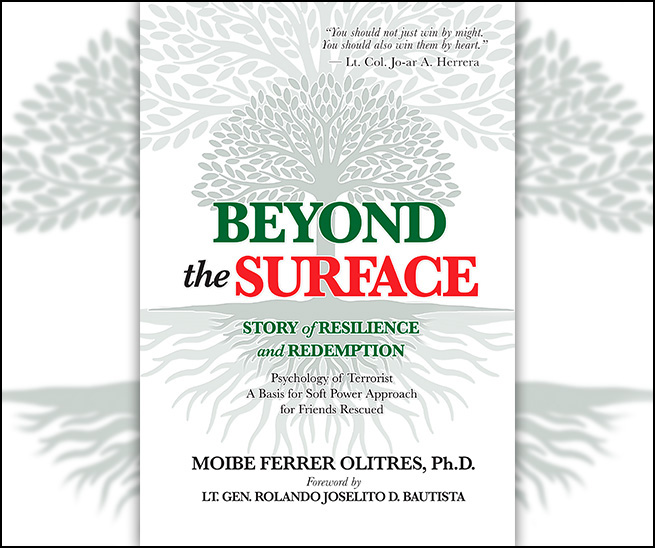
“People become terrorists in different ways, in different roles, and for different reasons. It may be helpful to distinguish between reasons for joining, remaining in, and leaving terrorism.”
— Randy Borum
When I set foot in the 53IB military camp in Guipos town, Zamboanga del Sur, I had mixed emotions of excitement and apprehensions. It was the start of my exploration to understand the psychology of the former CPP-NPA-NDF terrorists who surrendered and were captured by the battalion.
A group of 40 former CPP-NPA-NDF members were gathered. I observed that they were smiling at me, and it was so contagious I smiled back. It allowed me to be more at ease, giving me a feeling of being welcome in their midst.
As I observed their signature strengths and measured their state of happiness, I witnessed the happy countenance of the former terrorists who are now living together with their spouses and children. As an authentic happiness advocate, my mind speaks of that initial social observation with the former terrorists enabling me to map out their persistence, leadership, creativity, and love for learning, further motivating me to know them better.
The first encounter with the actors was a meaningful opportunity. The intention to lend a listening ear to those who want to regain their lives in peaceful communities was an exhilarating experience. The impulse of comprehending more of their life stories, including their motivations, beliefs, and experiences in the hinterlands, grew stronger. I thought of it as my first and last visit until I got the impulse to empathize with their desires and dreams for a good life.
Having been exposed to their chronicles, I have learned not just the interplay of social, economic, and political motivations but also the psychological factor contributing to understanding the quandary about terrorism. Beyond that, there is something more important psychological explanation behind a communist ideology. The ideology that is a part of, not separate from, the relational mechanisms at work in radicalization pathways, as well as the processes of social learning, collective memory, and other social constructs.21
I was exhausted when I returned home nevertheless. I was full of enthusiasm to offer my time to understand the psychological core of why they embraced the CPP-NPA-NDF ideology. For this reason, I developed an eager desire to search for literature that would support my preliminary discovery.
In the dawn of September 14, 2020, I came across the renowned researcher of the psychology of terrorism in my reading. He is the author of “Walking Away From Terrorism,” John Horgan, the Director of the International Center for the Study of Terrorism at the Pennsylvania State University.22
His book provides a comprehensive introduction to disengagement and deradicalization concepts. He also offers policymakers a range of considerations for developing counter-radicalization and deradicalization processes. In his messages carrying great weight, I became conscious that the former terrorists who surrendered and pledged allegiance to the government need a more scientifically-based intervention program to redirect them from being perpetrators of an ideology of violence to peace-loving citizens. This thought-provoking instance led me to a decision, and I will help my country be more informed about the importance of understanding the psychology of terrorist.
Without a doubt, terrorism takes place all over the world in different countries, rich and poor, with diverse tribes, cultures, and forms of government. However, there is minimal research interest focused on this ambit of psychology in the Philippine context because it is hard to access data from this group of interest.
And yet, several psychologists in the global setting are beginning to collect accurate data. Some researchers find it generally more helpful to interpret terrorism in terms of political and group dynamics and processes rather than focusing on the individual. In contrast, others explain terrorism because of basic psychological principles such as the subconscious fear of death and the desire for meaning and personal significance, which may help understand some aspects of terrorist acts and our reactions to them.23 While terrorists are generally elusive figures, we have been given some insights into this phenomenon by a few studies on captured terrorists.4 And, a deeper insight into the mind of the terrorist is the key to “realizing the capacity of modern science to discover the roots of terrorist violence and formulate an optimal counter-terrorism strategy.”22
Borum identified and analyzed the psychological and behavioral dimensions of terrorist behavior from major academic databases and mapped the notion of terrorism as applied to a wide variety of groups with different backgrounds and objectives. He concluded that there is, therefore, no single root cause of terrorism or even a standard set of reasons.20
Conversely, in the study of socio-psychological considerations in the emergence and growth of terrorism, Adigun pointed several preconditions and contingencies for the development of various forms of terrorism. He identified two core culture-dependent attributes of terrorists: dogmatism and a sense of helplessness. These are caused by a lack of a sense of independence, lack of assertiveness, and low self-esteem.24
The story of a former NPA terrorist helped to support findings like these.
A psycho-social gathering was taking place. At first glance, Lina’s presence and speeches manifest that she is perceptive, quick, and reserved. At the same time, my presence is defined by the fact that I am with her. I tried to establish a trusting rapport during a group process. She was in tears as we progressed. Starting from a position of being inhibited, she told her story when it was her turn. It became apparent that she was empathizing with the narratives of other participants. She was internalizing what happened in the past. As a counselor, it was my job to bring her back to the present. At the time, she regretted her incorrect decisions in the past because it was her dream to become a nurse. But she did not have the means to go to college, and instead, she allowed herself to be bound by her animosity toward the government when she was recruited by the CPP-NPA-NDF after high school. She believes her abilities, intellect, presence, and worth have been overlooked for a long time before she finally breaks free.
Lina narrated, “When I graduated from high school, I really wanted to go to college since I enjoy learning and attending classes. A group of people showed up in our impoverished neighborhood one day. I attended one of their gatherings out of curiosity. Because of my inquisitiveness, they saw that I had potential. The NPA members said I possess strong leadership and interpersonal abilities. In a group process, they started an insightful conversation with me. They were polite and open-minded and seemed to be welcoming conversationalists. When they asked me about my dreams and aspirations, I readily revealed to them my lifelong ambition to college. I knew I am nothing more than a nobody from a poor family who could not afford to send me to college. I felt so inferior, but I projected a strong personality. They promised to provide assistance for my college education to achieve my goals if I join their group. I was so convinced of their flowery words, as though they knew what was going on with the hardships of my life. Amid my sea of doubts on attaining my goals, I felt empowered for the first time at 16 years old. I felt that they were extremely supportive and sympathetic. It was only after a wish to leave that remote and impoverished place that I decided to connect with them with curiosity, courage, and anticipation of a better life that they said the government had failed and denied us. With my family’s financial hardship, I thought they were the ones who could help. I felt I had found my place in the world and an embracing family to save us from our difficult life. With the group’s display of interconnectedness and humanitarian intentions, as well as the spoken assurances that they would help meet my needs, I began to feel like my existence had a purpose. I was taught to despise and oppose the government. The CPP-NPA-NDF have their educational materials that defy the accepted norms of mainstream culture. They termed it a ‘weak justice system.’ I was eventually introduced to carrying firearms in the name of freedom and justice reform. My mind was trained to feel sorry for myself and humiliated because they demonized the Philippine government. I was agitated, and my heart was full of anger. The venom they instilled in my heart was heightened. I swore vengeance on the seemingly corrupt government bureaucracy. I want them destroyed. In addition, my party husband, an NPA leader, had his personal motives. His parents perished during the Martial Law implementation in the 1980s, when soldiers were known for being abusive. That has always been his stance. In the end, no amount of advice or money could persuade him to change his mind. The memories of the past haunted him. He even stressed, “I will die for justice and fairness for my parents, who suffered and died because of the government. And I am not going to give up.”
It dawned on me that she was spending a lot of time in the past, so I drew her back to the present and asked her what she wanted to recover for the future’s sake.
Lina said during our reflection, “But today, the more I thought about my past experiences, after being captured and decided to surrender, the more it became clear that my battle was motivated by dishonesty and anger. Also, the desire to gain power behind a lack of self and social awareness transpired. Although there were reasons for the ideology that the terrorist group put in place, the methods that they used devastated not only myself but my innocent children as well.”
Lina had left her children without her motherly care for many years, and she longed for a better life with more time with them. She missed out on the most crucial years of their lives because she was too busy serving the terrorist group.
While keeping her in the present, I asked Lina what she had learned as she was processing the past events and experiences with the terrorist group. When she consequently became aware and held herself, she returned to the present and started analyzing what was occurring to her at that particular time. She admitted, “Now, I am conscious that I need to be resilient and continue to move on without my husband. I am confident that my current situation is far more liberating and secure compared to the one I had before. To this day, I still yearn to learn more about the various government programs that could help me earn a living while I spend more time with my family.”
“I do not want my children to suffer the same experience because of misguided ideology. Because the government has given me a second chance, I would prefer to live in peace rather than in terror and bloodshed,” she continued.
“Every time I see the military, government agencies, and non-government groups that provided the assistance I needed to have a peaceful life, they inspire me to look forward and hope for the better. I know that with them, I am on the right path. I believe that God is helping me above anything else. God is always there for me. In the CPP-NPA-NDF, we could not read the Bible because it was forbidden. It seemed that God did not exist. We put all of our faith in our abilities for a long time, not from above. It is clear to me now that I committed a grave mistake,” Lina quipped.
When she spoke about her aspirations, Lina had a bright countenance. She is a learner, a warrior, and a strong-willed individual. Lina aspires to improve herself and her community despite the challenges of living in a remote village with limited access to resources. Because of her parents’ inability to send her to college, she felt alienated and inferior as a result of a lack of economic, social, and psychological resources. Alongside the desire to overcome those vulnerabilities, she also yearns to live a secured life. But despite the challenges, Lina continued to possess psychological strengths such as the love of learning and education, curiosity, inquisitiveness, leadership abilities, and interpersonal skills.
CTGs exploit their recruits’ core skills and vulnerabilities for their tactical advantage. Consequently, in addition to ideology and deception, a deeper understanding of the growth of terrorism would explain the fundamentals of identity formation, psychological strengths and vulnerabilities, and group or social cohesion. Others view the alliance with the terrorist group as meaningful and not immoral. It illuminates a macro-to-micro level of description of the primary building pieces that compel the recruit to embrace the CPP-NPA-NDF terrorist group for the purpose of acquiring safety and security, community, and belongingness, seemingly fulfilling the recruit’s goals to life.
Remarkably, most psychologists have emphasized the individual characteristics of terrorists, explaining their willingness to engage in violence.23 Although researchers now agree that most terrorists are not pathological in any traditional sense, several important insights have been gleaned through interviews with some 60 former terrorists investigated by psychologist John Horgan. The study concluded that people who are more open to terrorist recruitment and radicalization tend to: feel angry, alienated, or disenfranchised; believe that their current involvement in the government activities and programs does not give them the power to bring about real change; identify the perceived victims of the social injustice they are fighting for; feel the need to act rather than talk about the problem, and believe that engaging in violence against the state is not immoral.22
More so, other psychologists believe that the most accurate view of terrorism is through a political lens. But, Psychologist Clark McCauley, director of the Solomon Asch Center for the Study of Ethnopolitical Conflict at Bryn Mawr College, sees terrorism as “the warfare of the weak.” A means by which groups lack material or political power to fight against what they see as oppressive forces. As such, he believes that the terrorist actions and the government’s reactions to them represent a dynamic interplay, with the movements of one group.23
This is true in the Philippine context. The CPP-NPA-NDF terrorists use disinformation campaign and propaganda warfare to promote hate among the masses, resulting in anti-government sentiments and risk-taking behaviors to justify their subsequent actions.
On the other hand, the study of Akhtar about “the psychodynamic dimension of terrorism” postulates that the most significant players in a terrorist organization are themselves, the deeply traumatized individuals. As children, they suffered chronic physical abuse and profound emotional humiliation. They grew up distrusting others, loathing passivity and dreading the reoccurrence of a violation of their psychophysical boundaries.”25
In many cases, with my conversation with former terrorists, most of them disclosed that they had experienced traumatic circumstances even before they joined the CPP-NPA-NDF. General themes emerged such as:
- having chaotic and disconnected family dynamics;
- being geographically isolated;
- products of neglect and absentee parental figures;
- direct observers of violence and abuse; and
- malnutrition due to poor economic conditions.
These painful experiences motivated them to escape from a horrific childhood and familial environment. The stories found in succeeding chapters substantiate the psychodynamic explanation of Akhtar of why others who engage in terrorist behavior desire to recreate themselves, that is, to eliminate their overwhelming inner emotional difficulty because they were once victims of unfair treatment in their social environment.
The disclosure of former terrorists unveiled the psychological root causes of joining the CPP-NPA-NDF. The psychological nature of acts of terrorism derived from this book would provide a more deliberate understanding of the discourse of communist terrorism in the Philippines. Additionally, when I examined their reasons or turning points on surrendering and their experiences in the process of reintegration into mainstream society, I discovered their character strengths, skills, attributes, and desired life or plans in regaining their true identity. Essentially, this craft may aid as a basis for a contextualized program and strategy formulation for countering violent extremism and deradicalization.
__________
On a clear day in July 2020, at around 4 o’clock in the afternoon, I was inside a coffee shop in Pagadian City waiting for Mayor Junaflor Cerilles of Dumalinao. She invited me for a meeting to conduct a psychosocial activity for former terrorists. While waiting for her, she called me on the phone saying she would be coming later but she told me to talk to somebody unknown to me. I was somewhat inhibited when I learned that he is a military officer, the commanding officer of the Philippine Army’s 53IB, the military unit responsible for the province of Zamboanga del Sur as its area of operations. Lt. Col. Jo-ar Herrera formally introduced himself, then he asked my name, my profession, and how I could be a collaborator and a change agent for humanity.
In our conversation, I found out that we have common grounds in research and community service. We intertwined in the use of the appreciative inquiry approach in research. He also employed appreciative inquiry in his research for his graduate seminar paper at the University of the Philippines in 2010. In his paper titled “An Organizational Leadership Assessment of the Philippine Military Academy,” he introduced the concept of “Servant Leadership” in the academy as part of the cadets’ leadership philosophy and character development. His initiatives and creativity exposed the cadets to various professional disciplines and helped bring the academy in a strategic interest of producing selfless leaders for the nation.26
Both of us love stories of successes, challenges, and transformation. He believes in the psychology of man since he took series of trainings about Process-Oriented Psychology at Worldwork, Portland, Oregon, USA in 2011. It is a depth psychology theory and set of techniques process work method that applies the principles of deep democracy to large and small groups of people developed by Arnold Mindell and associated with transpersonal psychology applied in contexts including individual therapy and working with groups and organizations.27
He asked me if I could help implement psychosocial activities to heal the wounds of the former terrorists. Then I ran through the model of well-being and authentic happiness perspective.
That time, one profound thing was I talked to somebody whose interest dwells on what is common among people. Somebody who anchors to a growth mindset. The grit, the genuineness, the wisdom, the love for learning and excellence, the humility, and the leadership; are the signature strengths inherent and acquired through time, shaped the person I have met. I call him a warrior with a heart, a mentor, and a processed-oriented life coach. Our minds met, and that is when the psychology of terrorist begins with Lt. Col. Herrera.
Together with Lt. Col. Herrera, Cpt. Maverick Rey Mira, 2Lt. Rhomalene Custodio, and Marlon Magtira, we spearheaded the conceptualization of Project Good Life, a Pneuma or Spirit-Psyche or Soul-Soma or Body Holistic Well-being and Mental Health Psychoeducation Program for former terrorists who surrendered to the 53IB. This program focuses on developing a higher level of social, emotional, and spiritual intelligence among the participants. My good friend, the Department of Agriculture (DA) Region IX Executive Director Rad Donn Cedeño, coined the term “Project Good Life” to define genuine public service and care for the former CPP-NPA-NDF terrorists.
In Project Good Life, the former terrorists are being called “Friends Rescued,” as suggested by 2Lt. Custodio, to remove the stigma of being labeled as “terrorists” or “rebels” and to prevent re-traumatization. 2Lt. Custodio, with a degree in psychology, previously worked in the Department of Social Welfare and Development (DSWD). Therefore, the term “Friends Rescued” is a way to promote authentic happiness in the framework of positive psychology, a deradicalization and counter-radicalization process in the military parlance, and a strategic preventive approach to the insurgency and terrorism.
Lt. Col. Herrera conveyed that “to realize a long-term defeat of terror threat, the Philippines should have a holistic approach to eliminate the CPP-NPA-NDF. This strategy is possible with the mobilization of the Whole of Nation Approach to disrupt CPP-NPA-NDF networks and their affiliates, and deny their freedom of movement, establishment of safe-havens, and easy access to financial resources. By employing a Whole of Nation Approach, a strategy that shall defeat CPP-NPA-NDF ideology, structure, and organization. This new strategy shall likewise diminish the terrorist group’s recurrence, recruitment, and expansion through mechanisms nested in a much larger diplomatic, military, informational, and counter-terrorism ecosystem. Similarly, overcoming terrorism requires strategic regional security cooperation beyond conventional warfare and a kinetic course of action. Stakeholder and community engagements that empower resilient communities are necessary factors in the policy formulation and formal implementation of preventive and countering violent extremism programs.”28
In respect to these breakthroughs, I enjoined with the 53IB soldiers to develop a research-based community extension program to prepare the former terrorists in their reintegration into mainstream society. True enough, it started with personal and professional motivations to pursue the quest of radiating what it means to have a good life. First, it is anchored to the positive psychology perspective of Martin Seligman who initiated the study of the human intellectual development of positive emotions, sense of engagement, good relationships, meaningful life, and accomplishment (PERMA) Theory of Well-being. Considered the father of positive psychology, he explains what contributes to a sense of flourishing in terms of the said five domains.29
Consequently, I used this PERMA framework in conceptualizing a community-tailored model of well-being in my research about what makes a good life entitled, “Appreciative Inquiry (Ai) on Strength-based Sources of Well-being: A Basis for Community-tailored Model of Well-being among Older Adults in Pagadian City” during the course of my PhD at Silliman University in Dumaguete City.30
The conducive environment and culture of the Silliman campus promoted in me the value of priming well-being before academic excellence. One of my favorite subjects is Positive Psychology. It interests me in finishing my quest to what makes a good life among older adults. Its perspective brought inspiration to craft a transformative study, which attempts to rewire a pessimistic view on aging and even among the older persons in our society today. To approach aging with optimism by navigating on the strength-based and community-tailored sources of well-being in experiencing a good life in old age. Thereby, the blueprint of this study is anchored on the PERMA Theory of Well-being.
In the narratives of older adults in my study, signature strengths emerged, namely perspective, persistence, integrity, love, kindness, leadership, humility, self-control, hope, and spirituality. Spirituality or transcendence prevailed as an additional dimension of well-being not present in PERMA Theory of Well-being. I organized the results of my study and eventually generated a community-tailored model of well-being — a unique, powerful framework called S-PERMA model of well-being or good life, which postulates the essential elements of spirituality (self-transcendence and godly-transcendence).
Knowing the transformative mindset and professionalism of 53IB under the leadership of Lt. Col. Herrera, Project Good Life was implemented together with the Provincial Task Force – Ending Local Communist Armed Conflict (PTF-ELCAC) under the able leadership of Governor Victor Yu. The Department of Interior and Local Government (DILG) Region-IX eventually institutionalized the program with plans to further cascade in the region. This initiative provides the security sector, local chief executives, policymakers, and other stakeholders a psychological perspective in contextualizing the cause and effect of terroristic behavior.
Elucidating the psychology of terrorist in the CPP-NPA-NDF affected areas of the Zamboanga Peninsula, Philippines, requires a sustained and thorough understanding of the concerned individuals who became part of the CTG. These lines of inquiry are worth examining to provide an additional basis in developing a holistic counter-radicalization and deradicalization program to prevent terrorism in the country.
Also, an aide on a baseline, this soft power approach offers a framework for developing an appropriate mechanism to prevent psychological manipulation, such as deception and propaganda, from being used as tools of terrorist recruitment in the country. Besides, the National Security Council of the Philippines’ National Action Plan on Preventing and Countering Violent Extremism defined deradicalization as “an intervention or process of changing an individual’s radical or extremist beliefs or views, with the ultimate goal of a radicalized individual rejecting extremist ideology and embracing peaceful ideals and values to achieve the desired change.”73
It is in everyone’s best interests to engage and collaborate with stakeholders, including civil society, the military, government, and non-government organizations under the umbrella of a Whole of Nation Approach because they are thought to be in a better position, more credible, and more knowledgeable to help identify and address the needs that may help the actors in this book understand their psychological make-up toward awareness of possible life transformation.
In the implementation process, together with the 53IB soldiers, facilitators, and government and non-government stakeholders, Project Good Life continuously builds rapport with 42 former terrorists. I delved through the narratives centering on familial history, childhood life, identity formation stories, their salient weaknesses or vulnerabilities, which are essential in understanding the causal elements in joining the CPP-NPA-NDF.
Former CPP-NPA-NDF members who were part of the psychoeducation program shared that they were recruited at the puberty stage and groomed to be fighters, community organizers, propagandists, and saboteurs. Looking into their childhood experiences, I have found out that these former CPP-NPA-NDF members have experienced living with a dysfunctional family leading to exposure to violence. They yearn for belongingness and love, parental guidance, autonomy, industriousness, and sense of identity. The poor governance and societal ills also contributed to the perceived abuses and inequalities of being marginalized. The terrain and geography in the Zamboanga Peninsula, especially in the far-flung communities and geographically-isolated and disadvantaged areas, deprived them of experiencing a sense of community and lack of basic services such as health, education, and job opportunities.
Further, the traditional feudal family system created internal frictions, hatred, and huge divisiveness. And these underlying factors led them to develop distrust and hatred toward the society that supposedly should take care of them. Further, the lack of self-awareness and realizations of the ultimate meaning and purpose contributed to the absence of self-compassion.
In the beginning of an experiential activity, I approached Janine, a beautiful young woman, and asked her to answer a few questions about herself so that I could learn more about her reasons for joining the CTG. Then again, she said, “The truth is, I do not know who I am. I am so sorry.” I was covertly astonished by my initial reaction to her candidness and honesty. I wondered how she had been able to participate in the CTG despite her lack of a clear identity. She continued, saying, “As a child, I endured a lot of hardships and difficulties, and now all I want is to be happy. I felt that my family was absent when I needed their guidance the most.
Nevertheless, I would like to get to know myself better as well. Please help me discover myself so I can fill the void in me,” she uttered. “I am hoping to fit into mainstream society. My apologies, ma’am, if I could not answer your question,” she answered.
“I was made to believe my feelings of attachment are reciprocated. Little did I know it was just a trap to lure me in joining the activist group, which is a step toward armed insurgency against the government,” Arnel, an intellectual man, said.
By exploring the underlying psychological causes of the acts of terrorism, I gained clarity about their thoughts, feelings, reasons, and behaviors for joining the CTG. The drive has become clearer to navigate on their childhood and familial stories. It is evident that the actors in this book need deeper self-awareness and self-compassion. Many of them came from dysfunctional families.
To be empowered and not easily swayed to recruitment and radicalization, the awareness of the power of a functional family and community is vital in this volatile world. It is not in abundance today. The former terrorists should develop a sense of autonomy and purposeful life to comprehend life’s true meaning.
The role of the government is also crucial in developing interventions to sustain a functional family and community. To support and complete the implementation of various socio-economic programs, proactive laws, and enforcement, holistic programs centering on the basics of the family should be strengthened. The government must reexamine the counter-radicalization and deradicalization programs to ensure that activities are all-encompassing and purposive.
REFLECTIONS
The innermost desire to find hope in serving the country frames the compassion in understanding the heart and mind of the broken souls.
The genesis of this craft is heavily influenced by my constant search for a good life and winning souls. I come across different people with diverse strengths, I see each day. I dreamed of inclusivity and translated this despite common humanity, for I am confident that the Creator has known no bounds. He loves everybody, He is fair, and He does not show favoritism. He is close to the broken and weak. For God is not a God of disorder but of peace. He heals. And, I stand on this.
The bedrocks of this book are the compassion and perseverance to know the former terrorists’ humanity and individualities, as well as my desire to share what it means to live a good life. This steered me to explore their psychological make-up to reframe their cognitive distortions, catastrophic emotions, and risk-taking behaviors sowed by the venomous ideology of the CPP-NPA-NDF. The interviews show that despite their traumatic experiences, I believe there are signature strengths that can flourish, that there is a light at the end of the dark tunnel, a bright hope that awaits beyond the surface of terrorism. And, from this page onwards, “former terrorists” shall be called “friends rescued.”