
“The good life is a process,
not a state of being.
It is a direction,
not a destination.”
— Carl Rogers
Everywhere on earth, war has become an ever-present danger. A constant struggle for human identity and territory is a hallmark of our species. What matters is whether the destruction of a nation and its people over generations is the result of a physical battle or of a human being’s internal war manifesting itself in the external world. When terror attacks are made public, they traumatize the people and challenge Philippine authorities to their limits.
In response to the growing radicalization perpetrated by the CPP-NPA-NDF terrorist groups, President Rodrigo Duterte demonstrated the government’s substantial leverage to end the communist insurgency and attain inclusive and sustainable peace by issuing EO 70. It institutionalized the Whole of Nation Approach by creating the NTF-ELCAC. EO 70 directs the adoption of a national peace framework in the whole country to disrupt the CPP-NPA-NDF networks and their affiliates and deny its freedom of movement, the establishment of safe havens, and easy access to financial and logistical resources. Also, this strategic maneuver is relatable to the the hard power and soft power doctrine of the AFP. It gives premium in the soft power approach to address the socio-economic conditions and psychological needs of the affected communities.
Keeping in mind the seizure of Marawi City in 2017, its triumph is a product of both hard power and soft power approaches. It further implicates that overcoming terrorism requires strategic regional security cooperation beyond conventional warfare and a kinetic course of action. The military focuses not just on the capability aspect of hard power but also on the strategic use of soft power in the form of information operations, diplomacy, engagement, and a campaign to foster goodwill and meet the population’s humanitarian needs, which resulted in the triumph of the AFP. In this soft power approach strategy, empowering individuals and communities to be resilient, transcends necessary factors in the policy formulation and formal implementation of preventive, countering violent extremism, and deradicalization programs.71 By employing these strategies, the Philippines can conceivably defeat CPP-NPA-NDF recurrence, recruitment, and expansion through mechanisms nested in a much larger diplomatic, military, informational, and counter-terrorism ecosystem.
The interplay of these strategies is top-notch because it utilizes the convergence of different government agencies such as the Department of Agriculture, Technical Education and Skills Development Authority, Department of Labor and Employment, Department of Social Welfare and Development, Office of Civil Defense, Philippine National Police, Bureau of Jail Management and Penology, Bureau of Fire Protection, Philippine Coast Guard, Department of Education, Department of Interior and Local Government, Department of Trade and Industry, Cooperative Development Authority, Philippine Health and Insurance Corporation, Commission on Elections, Office of the Presidential Adviser on the Peace Process, Department of Justice, Public Attorneys’ Office, ZDS Provincial Legal Office, Landbank of the Philippines, National Commission on Indigenous Peoples, Land Transportation Office, Department of Environment and Natural Resources, National Housing Authority, J.H. Cerilles State College, Philippine Fiber Industry Development Authority, Dumingag Institute of Sustainable Organic Agriculture, Bureau of Fisheries and Aquatic Resources, ZDS-Pagadian City Aquaponics Association. The indispensable role of non-government and business organizations such as Haggai International Leadership Institute, San Miguel Women Empowerment Movement-Rural Improvement Club, Good Life Psychological Services, Kiwanis International, Inner Wheel Club of Yllana Bay, Megayon Royal Court – Order of Amaranth, Saka sa Kaugmaon nga Hamugaway, Ogis Lechon Manok, CC & MMM Lending Corporation, ZDS Youth Movement, and Youth for Peace Philippines, Inc., served as additional help aside from the programs and funds from the government. Consistency of support and collaboration of stakeholders is always a call for sustainability. In this case, the end of terrorism is not just the responsibility of the military. It is everybody’s mission.
In line with these platforms, the motivation and risk-taking behaviors of terrorists need deeper understanding beyond what is on the surface. This terrorist act deviates from the societal norm, affecting society’s peace and development, and it deserves special attention and intervention. Thus, contextualizing the core causes of terrorism creates clarity in crafting research-based programs for the deradicalization process.
This chapter primarily presents the emerging underlying push and pull factors of terroristic behaviors as they resonate in the case studies conducted among the friends rescued in the Philippine Army’s 53IB. In addition, this will underscore a tailor-fitted psychoeducation program as a form of deradicalization process among the 42 friends rescued. Lastly, it sets forth recommendations to give weight to the gaps of knowledge found in comprehending the root causes of risk-taking behaviors of the friends rescued.
The Conceptual Framework
In September 2020, I conducted case studies on the life histories of the friends rescued who surrendered and were captured by the 53IB. The life-threatening experience with the CPP-NPA-NDF, which beheaded true freedom for the sake of expressing the communist ideology, was noted. The term ‘societal inequality” is apparent in their narratives. In deep contemplation, there is more beneath inequality. They shared that they were recruited at puberty and groomed to be leaders in the CPP-NPA-NDF. Looking into their childhood experiences, the friends rescued are products of dysfunctional families. What can the community expect from individuals exposed to abuse and violence inside the family system? Also, the poor governance in the past and a poor economic state contributed to the schema of inequality. Being in a geographically isolated community in the Zamboanga Peninsula deprived them of experiencing a sense of community and access to essential physiological and psychological resources.
Consequently, longing for belongingness and love outside the family system at the height of overwhelming difficulty became their coping strategy to survive and ease the extreme pain. Moreover, the traditional feudal system created friction, hatred, and a huge division among individuals, families, and communities. These underlying factors led them to distrust and feel bitterness. They developed hostility toward others as they grew up with inadequate parental guidance, community support, and awareness of the ultimate meaning of their existence.
In understanding and analyzing the roots of radicalization, significant themes emerge, such as developmental issues leading to lack of self-awareness, lack of trust in oneself and others, lack of self-compassion and meaning, lack of spiritual life and genuine happiness, and lack of initiative and social facility. With these developmental consequences, coping and adaptation strategies such as hatred, unforgiveness, alienation from families, and finding a sense of community with the CPP-NPA-NDF have developed over time. The communist recruiters exploited their recruits and used these areas of vulnerability as manipulative strategy and tactical advantage.
Having clarified the underlying core factors of terroristic behaviors, the conceptualization of a need-based holistic deradicalization program progressed, focusing on the trichotomy of a human being: the body, the soul, and the spirit.
The Birth of
Project Good Life
Project Good Life is a holistic psychoeducation program that intends to deradicalize the participants’ mindsets, emotions, and behaviors to help them prepare for their reintegration into society as productive and responsible citizens. The project’s blueprint is anchored on the theoretical lenses of EO 70’s Whole of Nation Approach, the Philippine Army’s Strategic Communication, “Emotion Defeats the Logic” by the soft power approach,52 the Positive Psychology’s agenda of Martin Seligman’s “Authentic Happiness,”29 and what it means to have a good life based on my “S-PERMA” framework of community-tailored model of well-being.30
In Project Good Life, the former rebels are called “friends rescued” to remove the stigma of being labeled as “terrorists” or “rebels” and to prevent re-traumatization. This endeavor is a 10-month strength-based research and community extension program among 42 friends rescued situated at the 53IB.
Furthermore, the project attempts to measure and elevate the participants’ state of mental health, state of well-being or happiness, sense of optimism, and reframe a fixed mindset to a growth mindset. These are valuable in achieving healing and quality of life.
Overall, this project is a venue for the friends rescued to discover their signature strengths rather than focusing on their weaknesses and utilize these strengths to experience authentic happiness and become productive citizens of society.
The Implementation of
Project Good Life Curriculum
The psychoeducation program is a 10-month school-like environment using an experiential learning system. It upholds a need-based curriculum focusing on the basics of understanding the self; human development and parenting; physical fitness, sports, music, recreation, and mindfulness; the purpose of life and spirituality; basic computer literacy; nutrition and hygiene; gender and development; Alternative Learning System; good governance; agriculture and vegetable farming; livelihood, entrepreneurship, and financial literacy; peace and unity; legal education and assistance; environmental resources, conservation, and production; and disaster preparedness.
The 53IB launched the Project Good Life on March 4, 2021, converging with its stakeholders in implementing the program as an intervention program to address the needs of friends rescued. The 42 participants underwent formal admission and a thorough pre-assessment evaluation. Evaluation tools with high psychometric properties were translated to the Cebuano version, pilot-tested, and utilized to measure the friends rescued’ personality types, states of mental health and well-being, optimism, life satisfaction, emotional intelligence, and mindset. The evaluation results served as a baseline for monitoring the participants’ progress throughout the program.
The Provincial Government of Zamboanga del Sur and ELCAC municipalities provided funding to support the project. The DILG Region IX signed a memorandum of agreement with the 53IB to adopt and institutionalize the program. With this initiative, government and non-government agencies that hold expertise in the courses offered extended their classroom and offices to provide lectures and workshops for the participants. JH Cerilles State College inked another agreement with the 53IB to provide experts and technical support for the project through the TABANGE community extension program.
Aside from business or livelihood and job opportunities, one of the program’s best practices is giving premium to the essence of family and the importance of spirituality. As the research has indicated, most participants did not experience a sense of family and community during their formative years. In this regard, the program initiated to hold birthday celebrations and thanksgiving gatherings with their children and significant others. Many of them do not believe in God. Hence, the program demonstrates the value of spirituality, good parenting, and a familial environment, which are the primary precursors to achieving a sense of trust among the participants toward forming a purposeful identity without guilt and hatred, but with the freedom to outpour the fullest potential of their individuality. Fixations from these areas would make a person more vulnerable to manipulation. As a result, the primary motivation for this project is to teach them how to understand and love God and be compassionate toward themselves and others.
The Inner Wheel Club of Yllana Bay Pagadian City extended health and well-being assistance through Project Nurture to help the children of the friends rescued. The friends rescued currently undertake the Department of Education’s ALS Program, which ushers them on their way to acquiring their academic diploma in the future.
The friends rescued receive constant experiential learning through this community service to reframe their radicalized mindset and behavior before reintegrating into mainstream society. This intervention program sends a powerful message to the public that the government and non-government organizations can collaborate in handling appropriate mechanisms to debunk the communist ideology. The program can also prevent further psychological manipulations, including deception and propaganda, that are being utilized as tools of terrorist recruitment in the country.
Further, the program advocates the engagements and collaborations of the military with the local government units and non-government stakeholders under the umbrella of a Whole of Nation Approach. The convergence puts the program in a better position with higher credibility and proficiency to help identify and address the needs to help the friends rescued toward awareness of possible life transformation and flourishing.
Project Good Life helped the friends rescued establish the “53IB’s Friends Rescued Good Life Agriculture Cooperative” to generate income from their roasted powdered native corn, a healthy alternative to coffee beverages. The cooperative also produces fresh oyster mushrooms and natural soap bars. Additionally, the program requires the participants to acquire the basic knowledge and skills for an independent way of living after completing the project.
Toward the end of the program, the facilitators deliberated the participants’ performance and experiences in the psychoeducation program. Compared to the pre-assessment before the intervention program’s implementation, the results of the participants’ post-assessment show that they demonstrate an elevated state of mental health, well-being, optimism, life satisfaction, emotional intelligence, and growth mindset over a fixed mindset. It is also observable that the participants have utilized their strengths and interests and further signify that they are seemingly ready to move on independently to a new life in mainstream society.
As a result of the intensive facilitation of the friends rescued’s basic needs of their soul, body, and spirit, the 1st Commencement Exercises was held on January 21, 2022. All participants received recognition and strength-based awards, while nine received excellence awards during the ceremony. Finally, the government and non-government stakeholders provided additional support by giving job placement opportunities for the completers.
REFLECTIONS
“As far as we can discern,
the sole purpose of
human existence
is to kindle a light
of meaning in the darkness
of mere being.”
— Carl G. Jung
The plight of terrorism in the Philippines has already been running for more than 53 years. What is lacking, and what needs to be done to finally end it?
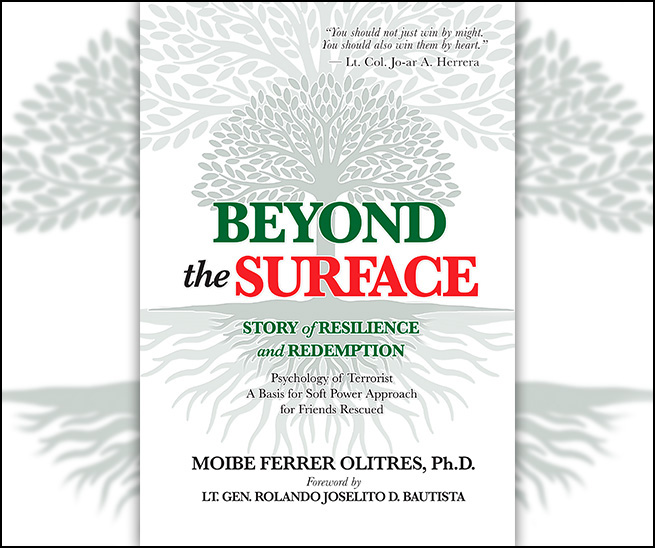
The thoughts of Lt. Col. Jo-ar Herrera, “If we cannot win them by might, win them by heart,” are very telling. While granting the Whole of Nation Approach is the cornerstone, the soft power approach is the method, and the positive psychology’s authentic happiness perspective is the medium. As a result, the “Good Life” project gets underway.
Project Good Life is a manifestation of love for the broken souls who are products of individual, familial, societal, and political discord. Overthrowing the government is a crime, but through the theoretical and conceptual framework, it is found that the friends rescued, like any other flawed human beings, deserve second chances. It is important to note that external wars or acts of terrorism are a projection of an internal war resulting from cyclic generational trauma. In the lives of the friends rescued, suppressing the emotional chaos is just their way of survival without being aware of its impact and consequence. By adhering to the CPP-NPA-NDF available at the moment of their overwhelming difficulty and risk-taking behavior were the ways of finding a sense of community and coping. The experience of social inequality originates in the chaotic family. Many of them are products of comparison and favoritism in the familial system. The friends rescued’s risk-taking behaviors are relatable to the volcano concept because, when triggered, they can explode and ruin lives. Each time they present themselves to the class during the program’s sessions, the blank spaces indicate the recurring traumatic flashbacks every time they are confronted with triggers around the corners of the classroom.
The discoveries and observations in the context of friends rescued in the Zamboanga Peninsula and the conceptualization and implementation of a holistic psychoeducation program are significant in ending the communist insurgency. This project is a strategic avenue to cut the generational curse of terrorism in the Philippines. Recollecting how the friends rescued were love-bombed by their manipulators and recruiters while they were on the brink of a desperate situation, the message is clear. Winning through the heart is exceptional. This craft hopes to process the participants’ healing their internal wounds and empowering their strengths.
Consequently, self-compassion, a sense of resilience, and a growth mindset, as well as a higher level of well-being and quality of life, can thrive individually and collectively. It is important to note that, as human beings, they cannot give what they do not have, and friends rescued cannot genuinely love others if they have not learned to love themselves first. It is a basic need that must be given prime importance above all else. A compassionate and inclusive program is what the recipients need to flourish. They have the chance to live this life out of authentic happiness, not just for survival, so they can pass it on to their children and the next generations to come.
Hence, it is best to include the psychological component in crafting policies to intensify the prevention of insurgency and terrorism. Educating the people, especially in the far-flung communities, about the basics of parenting, family, and spirituality and teaching the children how to thrive with their capabilities and be compassionate with themselves to love the people around them, including their community, is essential. It will help young people find their sense of purpose, avoid risk-taking and delinquent behaviors, and become genuinely happy Filipino citizens.

Leave a Reply