“On the 23rd of May 2017, the ISIS-Maute Terrorists unleashed a wave of violence in the Islamic City of Marawi taking hostages, looting, vandalizing, torching, and desecrating the historic City of Marawi. From the first day of the crisis up to its very last day, our soldiers fought courageously to liberate the city.”
— Lt Gen Rolly Bautista
RAID TO CAPTURE HAPILON
On the 23rd of May 2017, our forces moved in to raid the safehouse of Isnilon Hapilon, the so-called Emir of ISIS in Southeast Asia. Involved in this operation were members of the Joint Special Operations Unit 3 (JSOU3) supported by the 4th Scout Ranger Company (4SRC), the 14th Division Reconnaissance Company (14DRC), and the 51st Mechanized Infantry Company (51MIC). Early in the morning, we became aware that Isnilon Hapilon together with Omarkhayam and Abdullah Maute were located in a safehouse in Bgy Basak Malutlot, Marawi City.
Upon receiving this information, we decided to move in to capture Hapilon. Thus, BGen Rolly Bautista gave the green light for our forces to move in and capture Hapilon. Our first plan was to raid the safehouse at about 8 o’clock in the morning, but our operating units requested a delay in its execution to make way for a clearer picture of the target area.
It was about 2 o’clock in the afternoon when our operating forces jumped off from Camp Ranao, Marawi City and proceeded to Bgy Basak Malutlot. It was a short ride covering a distance of nearly two kilometers. Upon arriving at the target area, armored vehicles positioned themselves in predesignated areas along the main road.
Meanwhile, a team from JSOU3 on-board a civilian vehicle proceeded to close in on the target area. We were able to achieve the element of surprise, but our forces were also surprised by the number of enemies in the area – more or less 100 heavily armed enemy fighters. The firefight that erupted at about past 2 o’clock in the afternoon lasted until the next day. In the course of this operation, several of our soldiers were wounded and three were killed in action (KIA). Our target, Hapilon and the Maute brothers escaped through a hole in the wall of the safehouse.
As we were watching the events unfold in Bgy Basak Malutlot, some of our units were encountering armed men in other parts of Marawi City. At that time, we were not yet fully aware of the gravity of the threat to the City of Marawi. At the same time, we were receiving reports of skirmishes occuring in different parts of the city from as close as the Amai Pakpak Medical Center to as far as the Kilala Detachment located in the northeastern part of Marawi City. As time passed by, we slowly got a clearer picture of what was really happening in the entire City of Marawi.
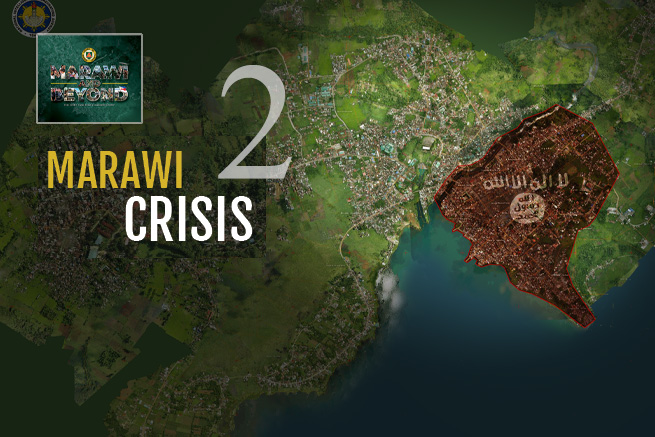
The ISIS-Maute Terrorist Group was on a rampage. They attacked the Marawi City Police Station, torched the Dansalan College, desecrated the St. Mary’s Cathedral, ransacked the Landbank Marawi City Branch, and caused the escape of 68 inmates from the Marawi City Jail. Social media was flooded with images of the ISIS flag being raised in different parts of Marawi City, an armored car from the Landbank Marawi City Branch and a police patrol vehicle were both paraded through the streets with black flags. These served as the early iconic images of the perceived success of the enemy in Marawi City.
It was only upon rummaging through what was left in the safehouse that we became aware of the extent of the enemy’s plan for Marawi City. Apparently the ongoing atrocities in various parts of the city were all inextricably interconnected. From all of these we learned that the enemy planned to lay siege on Marawi City and declare it as a wilayat or province of ISIS in Southeast Asia. Our move to capture Hapilon on the 23rd, however, preempted their plan and forced them to implement it three days ahead of the supposed implementation. The original date of implementation was to coincide with the start of the holy month of Ramadan. It was then that we realized that the fight for Marawi City was just beginning.
Addressing the Crisis
Our forces present in Marawi City on the 23rd of May consisted of a handful of soldiers, most of them were part of the combined units that were tasked to capture Hapilon, the rest were garrison personnel assigned to the Headquarters of the 103rd Infantry (Haribon) Brigade in Camp Ranao and other detachments located around Marawi City. Majority of our forces under the operational command of the Western Mindanao Command (WesMinCom) were conducting Focused Military Operations (FMO) against communist terrorists at a distance of about 30 kilometers from Marawi City. When the crisis erupted, the Commander of WesMinCom, Lt Gen Carlito Galvez Jr ordered us to abort our operations and instead shift focus on fighting the enemy in Marawi City.
As the crisis progressed, we received reinforcements coming from various parts of the country, such as: infantry battalions based in Luzon and the Visayas, who were deployed to Mindanao for the first time, and armored vehicles and crews from the Mechanized Infantry Division (MID) based in the Province of Tarlac. Aside from Philippine Army (PA) units, we were also complemented by units coming from the Philippine Navy (PN), and the Philippine Air Force (PAF). Our counterparts from the Philippine National Police (PNP) and the Philippine Coast Guard (PCG) also came to Marawi City to augment all the efforts directed at liberating the city.
With so many units being deployed in the City of Marawi, we needed an entity that would integrate, synchronize, orchestrate, and manage all the combined efforts needed to liberate it. This gave rise to the creation of the JTF Marawi under the leadership of BGen Rolly Bautista and his deputy BGen Alex Macario. This was created along with its subordinate functional cells and Joint Task Groups (JTGs).
At JTF Marawi, we had under our disposition five functional cells, nine JTGs, a Joint Intelligence Task Force (JITF) and a Joint Special Operations Task Force (JSOTF) with five JTGs. We also had an Information Operations (IO) Cell whose primary function was to synchronize and integrate our combat and non-combat capabilities, which enabled us to operate in the information environment, counter the enemy’s propaganda and disinformation, gain the support and trust of the public in our mission to liberate the City of Marawi, and to be able to translate our tactical gains into a moral and strategic victory.
Lt Col Irvin Tanap, the Air Liason Officer (ALO) from the Air Force, was tasked to coordinate and facilitate the air support missions, including air strikes conducted by our aircraft. Lt Col Hubert Acierto, the Fire Support Officer (FSO) was tasked to coordinate and supervise the use of direct and indirect artillery fires in support of the advancement of our troops and in targeting identified enemy positions. The Intelligence Cell provided us with accurate, timely, and relevant information that guided our decision making processes throughout the entire crisis.
Our Operations Cell was one of the most vital parts of the entire JTF Marawi. It set the tempo of our overall operations. The Operations Cell was like the conductor of the ensemble which was JTF Marawi.
Aside from these functional cells, our subordinate JTGs also performed designated tasks. The JITF under the leadership of Col Dean Mark Mamaril supported all phases of our operations. They concentrated mainly on gathering data and information on the enemy as the operations progressed. This was complemented by the efforts of the National Intelligence Coordinating Agency (NICA) under the leadership of its Director General Alex Paul Monteagudo. This enabled our troops to have an accurate picture of the enemy’s location, strength, and capabilities.
The JSOTF Trident under the stewardship of MGen Danilo Pamonag was stationed at the heart of the MBA and served as the command group for: JTGs Vector, Musang, Tiger, PNP, and Lawa. The JSOTF Trident was also responsible for: synchronizing, coordinating, and supervising the five JTGs in the MBA. Meanwhile, JTG Bakal was the provider of armor capabilities for all of our units both inside and outside the MBA. Early rehabilitation efforts at the controlled areas and community stakeholder engagements were tasks that we gave to JTG Ranao under the command of BGen Ramiro Manuel Rey.
The sustainment of our fighting troops was vital, this task was accomplished by JTG Ayuda headed by Col Filemon Radam Jr. JTG Scalpel spearheaded by our military physicians: Maj Dionido Napalang and Maj Caezar Almer Candelaria, attended to our wounded personnel. JTG Tabang led by Col Thomas Sedano Jr was at the forefront of managing the plight of the Internally Displaced Persons (IDPs) of the crisis, as well as providing the necessary support, for the IO campaign during the crisis.
Protecting our gains during the crisis and preventing the spread of the conflict was necessary. JTG Haribon headed by Col Gene Ponio secured the rear of the advancing troops, while JTG Lanao del Norte headed by BGen William Alunday and JTG Mitigator under Col Cirilo Thomas Donato jointly secured the Main Supply Routes (MSR) leading into and from the City of Marawi, to prevent possible enemy reinforcements from gaining entry back into Marawi City. Law enforcement operations in the controlled areas became one of the primary responsibilities of the JTG PNP that was placed under our disposition. Aside from this, police personnel were also fighting side by side with our troops in the MBA.
Declaration of Martial Law
When the initial security reports from Marawi City reached Moscow through Special Assistant to the President, Secretary Christopher Lawrence Go, he immediately relayed its contents to the President. The President, who was currently in a meeting with his Russian counterpart, excused himself and summoned to a closed door meeting, the Executive Secretary Salvador Medialdea, his Special Assistant Secretary Christopher Go, Defense Secretary Delfin Lorenzana, and the National Security Adviser Hermogenes Esperon.
On the night of the 23rd of May 2017, via a live press conference from Moscow, Russia, we saw then-Press Secretary Ernesto Abella announce the declaration of Proclamation No. 216 which placed the entire island of Mindanao under Martial Law, suspending the privilege of the writ of habeas corpus there.
With Martial Law in effect, we knew that it would conjure up the old images of abuses committed by the military during the Martial Law of the 1970s. We had expected opposition to the declaration of Martial Law and it was a big challenge on our part to show that the Martial Law of the 1970s was different from the Martial Law of 2017. With this in mind, we had to show the public that the declaration of Martial Law was not a ticket for abuse on the part of our soldiers. We made sure that we did not supplant the local chief executives (LCEs).
Rather, we worked side by side with them in addressing the crisis, most especially when it involved the plight of the civilians, that would be displaced by the fighting. We made it clear to our security forces that the doctrines of human rights must be upheld at all times and that no abuses would be tolerated whatsoever. If we did not put up the additional checkpoints and conduct thorough searches at our checkpoints throughout Marawi City, the people of the neighboring towns and provinces would not have felt that Martial Law in the island of Mindanao was in force.
Critics raised questions on the validity of Martial Law, but the Supreme Court denied these petitions. The House of Representatives and the Senate, both concurred on the extension of Martial Law until the 31st of December 2017. This was later on extended again until the end of 2018.
During the Marawi crisis, the strategizing and planning by JTF Marawi necessitated the implementing and innovation of a two-pronged approach, which was necessary for expanding our influence, establishing the legitimacy of our operations, and creating a moral victory.
Thus, the hard power and the soft power approaches. Both of these were mutually dependent on one another and necessitated their combined use in order to be effective. The hard power approach would focus on the military might and human resources of our security forces, etc. While the soft power approach would concentrate on people empowerment involving the national and local government, the communities, the people of Marawi City, stakeholders, volunteers, media, and others.
Hard Power Approach during the Marawi Crisis
During the Marawi crisis, we used and applied the hard power approach in fighting against the ISIS-Maute terrorists and liberating Marawi City from their clutches. As such, we created, organized, and utilized JTF Marawi for destroying this terrorist group. Our Operations Cell under Lt Col Tex Suderio integrated the hard power approach into our strategy utilizing various units and capabilities under our disposal in a combined arms, joint, and interagency manner.
In applying the hard power approach, we followed the SLICE method — Strategize, Locate, Isolate, Constrict, and Eliminate. During our time in the MBA, the SLICE approach was used to clear and liberate. The first step in strategizing and planning an operation was the identification and selection of the best suited units to accomplish the mission, as well as equipping and prepositioning these troops. Locating referred to the critical locations used by the enemy such as: Command and Control (C2) positions, logistics hubs, communication hubs, and even the locations of their hostages.
The SLICE Approach
After the planning process, the next step was for us to seal off the probable and possible exit points of the enemy through physical blockades by troops and patrols, and through the creation of observation posts. Afterwards, the troops had to clear and constrict, in order to flush the enemies toward a specific location, by advancing and clearing buildings one by one, floor by floor. Finally, eliminate was the process when the final blow was applied to destroy the enemy in the identified constriction area.
In applying the hard power approach, we followed the SLICE method — Strategize, Locate, Isolate, Constrict, and Eliminate. During our time in the MBA, the SLICE approach was used to clear and liberate. The first step in strategizing and planning an operation was the identification and selection of the best suited units to accomplish the mission, as well as equipping and prepositioning these troops. Locating referred to the critical locations used by the enemy such as: Command and Control (C2) positions, logistics hubs, communication hubs, and even the locations of their hostages.
After the planning process, the next step was for us to seal off the probable and possible exit points of the enemy through physical blockades by troops and patrols, and through the creation of observation posts. Afterwards, the troops had to clear and constrict, in order to flush the enemies toward a specific location, by advancing and clearing buildings one by one, floor by floor. Finally, eliminate was the process when the final blow was applied to destroy the enemy in the identified constriction area.
As part of strategize from the SLICE approach, our first response to the Marawi City crisis was the immediate termination of the combat operations in the boundary of Lanao del Sur and Bukidnon against the communist terrorists (CTs), followed by the eventual pull-out of the operating troops for redeployment to Marawi City. Furthermore, additional units from the Joint Special Operations Group (JSOG) were also called in. However, unfortunately, most of the operating troops on the ground had no specific training for urban warfare operations. Propitiously, JSOG with its experience from the Zamboanga siege and training for surgical operations in urban environments was in the best position to lead the fight. The Special Operations Forces (SOF) units became the preponderant force in Marawi City with almost the entire JSOG, Light Reaction Regiment (LRR), First Scout Ranger Regiment (FSRR), and Special Forces Regiment (Airborne) SFR(A) taking part. Redeployment of troops from nearby areas was tricky. We had to balance the redeployment of forces as this would create a vacuum in those areas where communist terrorist groups and other lawless armed groups were operating and could be taken advantage of. Hence, some units as far as Luzon and the Visayas were deployed to augment the troops in Marawi City. In the case of our armor units, the bulk of the armored vehicles came from the island of Luzon.
Furthermore, all throughout the crisis, our operating troops had to gain timely, relevant, and accurate information about the enemy. Intelligence gathering had been one of the initial challenges that our operating troops faced. We did not have sufficient information during the raid on the safehouse of Hapilon and at the start of the crisis. Locating the enemy was critical in identifying where to concentrate our forces, when to attack, where to attack, and what to expect once we attacked. Locating the enemy’s center of gravity within the MBA was even more difficult as they had a tendency to reposition and shift from one location to another and were very familiar with the layout of the terrain and the underground tunnels connecting buildings.
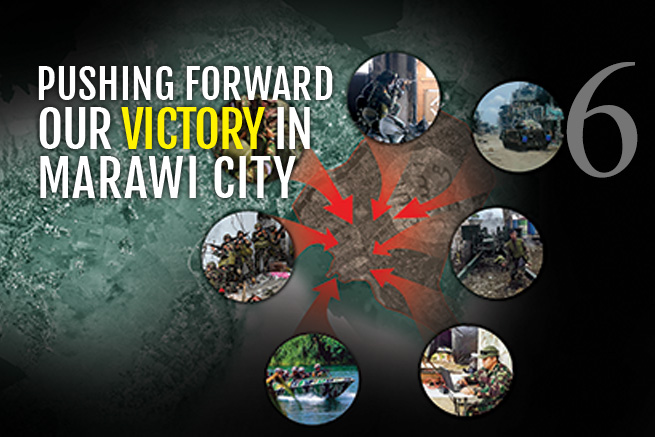
Isolating the vicinity of the conflict as part of our approach was necessary and could be used to our advantage. In accordance with our intelligence reports, it became clear to us that the enemy’s concentration was in the downtown or central business district of Marawi City. Sealing off parts of the City of Marawi became a priority. The bulk of our forces came from the north, northeast, east, and southeast area of the MBA. Our forces were positioned along the three bridges in Marawi that separated the MBA and the controlled areas. Lanao Lake was the only available supply and escape route for the enemy, therefore, we had to secure the lake. We also deployed troops in other towns and municipalities surrounding the lake to monitor the movement of boats. Fishermen were only allowed to fish during the day. Night time and early morning fishing were prohibited. Aside from these, we also placed checkpoints along all the roads leading into and out of Marawi City, thus, we were able to physically contain and isolate the enemy in the MBA.
Once we had contained and isolated the enemy in the MBA, the next task was to clear, constrict, and eliminate the threat in the remaining parts of the City of Marawi. During the operation, we had cleared sectors, block-by-block, building-by-building, floor-by-floor, and room-by-room, pushing the enemy towards our constriction area to be able to eventually eliminate them. The clearing was done simultaneously, which enabled our subordinate units to advance within almost abreast distance of each other. We feared that a large gap would expose a flank of a JTG which would make them vulnerable to enemy counterattack.
Eliminate is the process of applying the final blow to destroy the enemy in the identified constriction area. Towards the end of the crisis, we had constricted the enemy to the area of Datu sa Dansalan and the Lanao Lake. This was where we executed the fatal blow that destroyed the enemy forces. Eliminating the enemy leaders: Isnilon Hapilon, the Maute Brothers, and others, signaled the crumbling of the enemy resistance in Marawi City which led to their eventual defeat and the liberation of the City of Marawi.
The different JTGs were also applying SLICE in their operations albeit on a much smaller scale. They were strategizing which unit to put forward in an assault, taking into consideration the need to rotate units in order to avoid fatigue, and preserve the unit’s strength. They had to locate the enemy and designate buildings and targets for fires coming from the air assets, howitzers, and mortars. They were also isolating enemies within their sectors to prevent the latter from reinforcing or being reinforced by other terrorist groups. Clearing and constricting the enemies in their sector was among their tasks too. The units responsible for clearing blocks had to move within abreast distances of one another to reinforce mutual support, otherwise, lead elements from one unit clearing a block, may be subjected to enemy fire, coming from a block that is yet to be cleared by an adjacent unit. Finally, eliminating enemies in their respective sectors, and obtaining their objectives little by little, helped attain the bigger picture of eliminating the ISIS-Maute Terrorist Group in Marawi City.
At the tactical level, troops had to adapt to the realities of urban operations and the peculiarity of the enemy tactics. It was very different from the traditional jungle warfare that our troops had been used to. Troops applied the cycle of innovation by applying, observing, assessing, and evaluating. Critical elements were the C4 or Common Sense, Critical Thinking, Creativity, and Correct Timing. Common sense required logic, the knowledge of how things normally happen, and how the enemy usually behaves. Critical thinking was about finding reasons why things happen the way they do. Creativity was thinking of ways to counter or anticipate the moves and tendencies of the enemy. Correct timing was taking into consideration the time when it was best to apply an innovation.
A Combined arms, Joint, and Interagency OPERATIONS in Marawi CITY
During the Marawi crisis, we used the hard power approach against the ISIS-Maute Terrorist Group in a combined arms, joint, and interagency manner. We had units with different competencies, functions, and skills. We were performing combined arms operations in an urban terrain without us necessarily labelling it as such. In the application of combined arms in Marawi City, we relied on the: synergy, synchronization, coordination, and integration of different maneuver, maneuver support, and combat sustainment units.
At the start of the crisis, we faced many challenges in fighting the ISIS-Maute Terrorist Group. In spite of our limited capabilities in equipment, skills, and experience, we were able to overcome these issues and challenges through the use of a combined arms operations approach coupled with the innovations that we implemented on the ground.
THE INFANTRY AND SPECIAL OPERATIONS FORCES (SOF)
At the forefront of every assault on each building, house, and or physical structure in an urban operation were the infantry or foot soldiers. Maneuvering, assaulting, clearing, and securing buildings, were the tasks of the foot soldiers during the Marawi crisis. Being a foot soldier in an urban operation such as the Marawi crisis, was one of the hardest and most dangerous tasks that the daring Infantry soldiers faced.
Our foot soldiers were the ones in direct contact with the enemy, and at times they were only a few meters away from each other. Even if we had artillery, aircraft, machine gun fire, and cannon fire from our armored vehicles to soften the enemy’s positions, these could only kill the exposed enemies or those hidden under soft covers, but would not clear the numerous buildings around them. As such, it was our foot soldiers who had to do the most challenging and demanding tasks. It was they who entered the buildings and cleared them one after the other, thereby courting danger each time they moved in closer to the enemy positions. We dominated the urban terrain from day one of the battle.
Similarly, SOF from the FSRR, LRR, and SFR(A) were the ones with the much needed skills and capabilities in sniping, Close Quarters Battle (CQB), breaching, and offensive maneuvers. Having the preponderant number of forces in the MBA, SOF units played a major role in clearing the MBA of terrorist influence. Because of the abundant experience of our SOF during the Zamboanga siege and their adeptness at CQB they were highly effective in fighting the enemy. SOF units conducted training for CQB among the regular infantry battalions to be able to help them cope with the challenges of urban combat.
Our infantry soldiers were confronted by many challenges in maneuvering and confronting the enemy. If the enemy had a tendency to use layers of holes to conceal their firing positions behind a series of structures, our troops devised a solution. In response to this, we had to innovate and temporarily conceal the closest hole, in order to prevent the enemies from observing and shooting at our advancing troops. Materials used in concealing these holes were as simple as a piece of cloth or a laminated sack held by the troops. When concealing larger holes or openings such as: windows or doors, we used plywood. Over time, we became aware of the enemies waiting behind rat holes and developed the maxim, “Wag kang papasok sa hindi mo butas” (never enter passages made by the enemy). In other words, existing rat holes, doors, and windows especially those close to the frontlines were dangerous. To maneuver and move, we had to breach a wall and create our own rat holes, usually located on the side or rear of a structure.
In addition to these, designating numbers for all the buildings, houses, and structures in the MBA provided easy identification of targets, and a synchronization of troop movements, which turned out to be one of our best innovations. All the streets were given school names to facilitate the identification of our troops’ location. In the mountain and jungle environment there are few landmarks, therefore, we used grid coordinates to navigate. In an urban environment, there exists a plethora of houses, structures, and buildings, which made us come up with the numbering scheme innovation to pinpoint locations. The numbering of houses, structures, and buildings were plotted on maps which were distributed to the different JTGs, which allowed us to easily identify and designate targets. JTG Vector under the leadership of BGen Corleto Vinluan Jr can be credited for the idea of numbering the buildings in Marawi City. We first saw this practice during the Zamboanga siege of 2013.
Armor
During the crisis, armor units from MID headed by MGen Edgar Gonzales were among those at the forefront of the hard power approach in Marawi City. The modernized armored vehicles we had under our disposition played significant roles in the liberation of Marawi City. The modern weapons systems on some of these vehicles enabled us to observe and engage enemies both during the day and at night leading to numerous confirmed enemy kills. In addition, fire support vehicles firing high explosive and high explosive plastic rounds were very effective in breaching walls which created entry points for our troops.
Furthermore, we used the second storey of a building as a firing platform for our armored vehicles. By creating ramps leading to the second storey of a building, a new position was created which gave our armored vehicles and their crew a commanding view of the engagement area. This overwatch position allowed us and the vehicles to have a better line of sight of the enemy positions which was especially useful at night for our observation and sniping missions.
The variants of M113s with upgraded firepower were few in number. These vehicles were complemented by the deployment of various tracked and wheeled armored vehicles in the inventory. These armored vehicles helped our troops by performing a plethora of tasks: from shuttling our troops, to providing cover, providing support by fire, evacuating our killed and wounded soldiers, and ferrying supplies. Notably, our M113A2 Armored Personnel Carrier (APC) variants were the mainstay of the assaulting troops. Altogether, our armor units from JTG Bakal under the command of BGen Felicisimo Budiongan provided a mobile base of fire for our assaulting troops which they utilized during their assault on the enemy occupied buildings. Lastly, they also served as protection for the shuttling of troops or as mobile cover inside the MBA.
Fire Support
Our fire support units played a key role during the crisis. We softened targets either through aerial bombardment from fixed wing and rotary wing aircraft or from artillery batteries that were positioned around Marawi City.
The M101A1 105mm howitzer under the Army Artillery Regiment (AAR) commanded by BGen Agane Adriatico was the mainstay in providing direct and indirect artillery fire support for the troops in Marawi City. The urban nature of Marawi City, however, limited our effect and capability in delivering indirect artillery fire against the enemy. Due to the urban nature of the operation, the enemy was protected from our indirect fires, as they were hiding in basements and makeshift underground caverns, or even making use of the upper level of buildings.
Because of this peculiarity, we innovated and utilized 105mm howitzers for direct fire. We used the Italian Pack Howitzer and the M101A1 howitzer with 105mm shells for this purpose. Using these howitzers for direct fire required intense preparations. For starters, we had to drill the ground so that the spade of the howitzer could dig into the soil for stability. The firebase also had to be protected. Hence, our combat engineers had to innovate and create a wall of sandbags and drums filled with soil, rocks, and sand that we used to protect our artillery crew. In this wall was a gap large enough to accommodate the barrel of the howitzer. While creating firing positions, we placed a large piece of cloth or tarpaulin on the protective walls to deny the enemy from observing our troop movements. With the firebase made, the howitzer was ready to be used for our direct fire missions.
Sighting the target was basically done through the breach end of the bore with the aid of an improvised cross hair attached on the other end. The improvised cross hair was made from either two strands of grass laid in a cross that was held by a glob of grease or the bottom of a plastic container with its other parts cut out to resemble a cross hair. The use of howitzers for direct fire was quite effective in targeting the enemy positions and creating alternative avenues of approach for our attacking troops. This inevitably contributed to reducing the number of our casualties.
Aside from these, aircraft from the PAF and the PN conducted close air support (CAS) missions to soften enemy positions prior to the assault of our ground troops.
Combat Engineers
The employment in urban warfare of our combat engineers under the leadership of BGen Arnold Fernandez and BGen Dionisio Baudin was necessary, as they provided key passage for our operating troops. By doctrine, our combat engineers were there to provide support in terms of: mobility, counter-mobility, and for the survivability of our maneuvering troops.
During the first few days of the battle, our soldiers had to use whatever equipment they could lay their hands on for breaching which included: sledge hammers, hammers, and concrete chisels. Thus, the deployment of the engineering units with their equipment for breaching became a game changer for our infantry units. In terms of mobility, our combat engineers provided support by breaching walls, creating rat holes, and knocking down walls using bulldozers and explosives. These enabled our troops to maneuver as it provided passageways for both the infantry units and the armored vehicles. In certain cases, they breached mobility corridors in between buildings creating an alternative avenue of approach. Similarly, our combat engineers worked hand-in-hand with our Explosive and Ordnance Disposal (EOD) teams, to clear the enemy-laid improvised explosive devices (IED), land mines, and the unexploded ordnances (UXO) that had the potential to kill or injure troops. Meanwhile, on counter-mobility, our engineers destroyed enemy shelters, sandbagged, cleared buildings, and dumped dirt on the roads, reducing the mobility of the enemy. On survivability, our engineers fortified firebases and protected our lines by making and placing sandbags in our troops’ location. Aside from that, our engineers created wood planks as an add-on-armor for armored vehicles, giving them an additional layer of protection against fire from enemy RPG rounds.
Intelligence
During the Marawi crisis, the latest reports on the enemy locations were necessary in fighting the ISIS-Maute Terrorist Group. However, because of the urban nature of the environment, gathering information for our intelligence buildup was a challenge for us. People reported that groups of individuals of varying ages seemed to be scampering along the streets, they could have been the enemy, friendlies, or even civilians on the move attempting to escape from the conflict. Therefore, drones were used to gather real-time images and videos of Marawi City during the crisis. Similarly, the enemy had their own drones during the conflict. In a way, the crisis in Marawi City can be said to have been, “the clash of the drones,” for both of us, relied on using commercially available drones for similar ends. We used our drones to get a better picture of the MBA. Compared to aerial photography from aircraft, drones were cost efficient, and a faster means of getting a bird’s-eye view of the MBA. Secretary Hermogenes Esperon, National Security Adviser (NSA) provided the JTF Marawi drones in support of the entire Intelligence Surveillance Reconnaisance (ISR) operations.
One of our best innovations for the use of our drones was when it was used to establish a line of communication by delivering written instructions together with a mobile phone unit for hostages trapped in an enemy held building. This innovation led to the dramatic rescue of 17 hostages.
Both at the tactical and operational level, we can say that the use of drones in conducting ISR missions was effective. The images and videos provided by our drones enabled us on the ground to better plan out our assault and the deployment of our troops. The use of drones furthermore, acted as forward observers for our air assets, artillery batteries, and mortar platoons.
COMMAND AND CONTROL COMMUNICATIONS AND CYBER SYSTEMS (C4S)
In urban operations, C4S was vital in supporting us in terms of communication and night fighting. Our communication equipment played a critical role in coordinating, maneuvering, and synchronizing the operation. Signal equipment and our signal personnel laid the necessary groundwork which provided us with a smooth and uninterrupted means of communication in Marawi City. Some of the means by which we achieved this was through the following equipment: Combat Net Radios (CNR), commercial radios like Motorola and ICOM, Satellite Phones, mobile phones, the Text Blast System (TBS), and the Internet. Other C4S equipment included: a Night Fighting System and a Global Positioning System which we used to maneuver our troops.
Our application of the soft power approach during the crisis won the hearts and minds of the nation. It was manifested through the tremendous outpouring of support that we received from the affected communities and the general public. With the overwhelming support of the public, the legitimacy of our military operations against the ISIS-Maute Terrorist Group in Marawi City was established. In doing so, we were able to fulfill our mandate to serve the Filipino people and protect the sovereignty of the Republic of the Philippines.
We were able to convince and change the negative perception of the people towards the men and women in uniform. Decades of struggle accompanied by harbored resentments against the government and our soldiers were softened as they felt the genuine compassion of our soldiers for hostages, IDPs, and stakeholders affected by the crisis.
To agitate the people, the terrorists conjured allegations of corruption, injustice, and abuse purportedly done by the security forces. They exposed the atrocities of Martial Law in the ‘70s, and likened the present declaration to that. They sowed disinformation and fomented black propaganda to discredit the government. Extremist teachings were used to rally support and gain recruits.
These were some of the challenges that we had to deal with together with those coming from the MBA. Our standard for achieving victory in Marawi City meant: preserving human lives, physically destroying the ISIS-Maute Terrorist Group, and preventing/defeating their extremist narratives to spare future generations from taking up their ideology. To optimize the soft power approach, we facilitated and established support for our objectives, legitimized the government actions in Marawi City, and countered violent extremist narratives.
We applied the soft power approach during the Marawi crisis across all the levels of army operations: strategic, operational, and on the tactical level. On the tactical level, we applied it within the MBA particularly on the ISIS-Maute fighters, their hostages, and trapped civilians. On the operational level, we applied it outside the MBA, specifically by focusing on the IDPs of Marawi City, their local and traditional leaders, and the people from the surrounding towns, provinces, and the lake area. On the strategic level, we directed our efforts on the Filipino nation and the global community.
Information Operations (IO)
We were able to physically and psychologically contain the MBA in Marawi City. While our troops on the ground were providing the physical means to contain the battlefield, our use of Information Operations (IO) became vital in containing it psychologically. IO utilized both hard power and soft power approaches through different Information Related Capabilities (IRC). Led by Lt Col Jo-ar Herrera, the purposive use of the IO Cell allowed us to synchronize and integrate combat and non-combat capabilities. Our end goals were to dominate the information environment, defeat the enemy’s propaganda and disinformation, gain the support and trust of the public in our campaign against the ISIS-Maute Terrorist Group in Marawi City, and to translate our tactical gains into a moral and strategic victory.
JSOTF Trident and its subordinate JTGs applied the hard power approach in the MBA. The IO Cell, JTG Ranao, JTG Tabang, and CMO Coordinating Center (CMOCC) were at the forefront in applying the soft power approach, which relied mainly on IRC and CMO activities. The following narrates how we applied the soft power approach during the crisis using various IRC and CMO activities.
Focused Military Operations (FMO)
FMO provided the lethal aspect of IO. These were the various capabilities that we utilized in fighting the ISIS-Maute Terrorist Group in Marawi City. We translated our tactical gains from the MBA to the information environment through the use of: print, broadcast, interactive media, and digital/social media platforms. Through these, we were able to show that we could defeat the enemy, protect the people of Marawi City, and establish the legitimacy of our operations.
Information Support Affairs (ISA)
Our use of Information Support Affairs (ISA) played a significant role in our campaign against the ISIS-Maute Terrorist Group. Messages were designed to influence the enemy’s emotions, motives, reasoning, and behavior, thereby, destroying their will to fight. Trapped civilians and hostages inside the MBA were also included as part of our target audience. We applied ISA using various means available at our disposal: loudspeakers, leaflets, text blasts, radio broadcasts, tarpaulins, stakeholder and community engagements, digital media operations, and Countering Violent Extremism (CVE) programs.
At the MBA, JTG Tabang deployed several of their loudspeaker and radio broadcast teams purposely to deliver messages that would induce the enemy to surrender and if they did, accompanying instructions were given to them as to where to proceed and what to do. Advisories for civilians trapped in the MBA were continuously announced. On radio broadcasts, the existing two-way radio network of the province became a vital tool in reaching out to the people. It must be noted that in Marawi City, two-way radios are as important as mobile phones as a means of communication. We integrated radio broadcasts through our loudspeaker operations, thus, enabling programs to be aired live in the MBA. Another innovation was the installation of loudspeakers on armored vehicles, enabling our broadcasts to reach the enemy, their hostages, and trapped civilians. The said system was also utilized in delivering uplifting messages to our troops.
Our use of tarpaulins was based on the Maranao’s use of such to display their accomplishments and achievements along the road side. Our tarpaulins contained messages of love, unity, peace, patriotism, and courage. Our leaflets contained appeals for surrender. These were placed in plastic bottles and dropped through the use of helicopters, or distributed along checkpoints and in the evacuation centers.
The team from the AFP Reserve Command under the supervision of BGen Noel Buan and Maj Don Ravago managed the SMS text blast operations that we used during the crisis. Our text blasts team was composed of volunteer reservists: Lt Col Nathaniel Marquez, Lt Col Bob Almario, and Maj Happy Mañalac. They were responsible for communicating messages through texts which appealed to the enemy to surrender, provided public information support to affected communities and IDPs, raised the morale of the fighting troops. The text blasts also gave instructions to terrorists on what to do if they wished to surrender.
Public Information
We viewed Public Information as a critical element during the crisis. The collaborative effort of the different spokespersons: BGen Restituto Padilla (AFP), BGen Gilbert Gapay (EasMinCom), BGen Ramiro Rey (JTF Marawi), Col Edgar Arevalo (AFP-Public Information Office), Col Romeo Brawner (JTF Marawi), Lt Col Jo-ar Herrera (JTF Marawi and 1st Infantry Division), and Cpt Jo Ann Petinglay (WesMinCom) facilitated the synchronization of the effort.
More so, the public had the fundamental right to be informed. On the other hand, we could not just allow local and foreign media to freely roam around the MBA as they could have been hit by stray bullets, or their broadcast material could have compromised our ongoing operations at that time, or even worse media practitioners could have been taken as hostages by the enemy. We had to be proactive in engaging the media and at the same time, strike a balance between what we could show and tell the public vis-à-vis matters that could potentially compromise our operations.
During the crisis, we forged a partnership with mainstream media and social media platforms to strengthen Public Information. We assisted in the creation of an interagency crisis management team within Lanao del Sur to interact with the media and stakeholders. We also made sure that there was constant military visibility in the newsfeed during the conduct of FMO and stakeholders engagement activities during and after the crisis. With these, we sustained the promotion of a proactive information effort through press briefings or releases, public conferences, mainstream media field immersions, and our digital media peace advocacy campaigns. These helped shape the positive perception of the public, and allowed the integration of the concerned communities, stakeholders, and other supportive organizations to help counter enemy propaganda. We also developed a partnership with the Philippine Information Agency (PIA) through the assistance of Director Harold Clavite to increase our reach by capitalizing on their existing network.
Aside from these, platforms and equipment used for ISA were also used for Public Information campaigns such as: radio broadcasts, loudspeakers, and digital media among others.
In relation to Public Information, we established a media center located in the Provincial Capitol of Lanao del Sur. This was the venue where we updated the members of the media about the ongoing situation in Marawi City and held our press conferences. Our media team was responsible for managing the center 24/7, and members of the media were free to drop by anytime. The media center was established to release news bulletins for public consumption. We also saw the need to establish protocols, limitations, and procedures to integrate and handle the coverage of local and international press/media practitioners and outfits during the crisis. JTF Marawi was media savvy and friendly.
From the 23rd of May to the 30th of October 2017, we monitored a total of 1,551 news articles related to the crisis that were published online. Of these, 88% or a total of 1,365 carried positive views towards our action, 2% carried negative views, while the rest were neutral. Aside from these, we also partnered with mainstream media outfits to produce video reports and documentaries that highlighted the sacrifices and bravery of our soldiers during the crisis. These products went viral on social media and showed the public what we were doing in Marawi City, the humane side of our troops—trials, difficulties, sacrifices—and the plight of the IDPs as a result of the attack of the ISIS-Maute Terrorist Group.
Community and Stakeholder Engagement
The Marawi crisis affected the displaced civilians physically, psychologically, emotionally, and socially. The people of Marawi City suffered a great loss – death and injury; damage to personal property, cultural and religious structures; loss of livelihood and income; and a disruption of business and education. They were also confronted by the appalling living conditions in evacuation centers. We could not and should not have been indifferent to the plight of these displaced persons.
In every message that we sent out, we showed respect for their customs and traditions, empathy, and an understanding of these people’s plight. We used the best arguments supported by facts and figures to capture and shape the public sentiment and perception, as well as to counter those with opposing narratives. One good example was the incident of the 24th of July 2017, when people in some evacuation centers were agitated by left-leaning groups, who convinced them to march back into their respective homes in Marawi City. In response to this, we reasoned out with them by first apologizing for their displacement and explained to them that it was caused by the enemies’ occupation of Marawi City, and that staying in evacuation centers was for their own good, safety, and security.
We doubled our efforts in bridging gaps with the Maranao community. The dialogues that we conducted with them were appeals for their cooperation towards our peace-building campaigns. Our invitations to key local officials, religious leaders, civic organization representatives, and elders of the community were met with a positive response, as seen by their attendance and active participation during our meetings. These activities were orchestrated in order to mobilize the affected communities, to encourage them to take responsibilities to uplift their plight together with our support, and strengthen our advocacy for the establishment of a long and lasting peace in Mindanao.
Some of the activities that we conducted consist of the following:
CounterING Violent Extremism (CVE) Programs
We envisioned CVE programs to foster a closer cooperation and exchange between us and actors in the fields of conflict management and prevention. Col Facundo Palafox IV, G7, PA provided us with his guidance, directives, and support in the conduct of our operations. We purposely engaged the youth sector as they are the most vulnerable to extremist narratives used by terrorists.
Youth Leadership Summits (YLS)
We conducted several youth leadership summits. In partnership with the Teach Peace Build Peace Movement (TPBPM) headed by Bai Rohanisa Sumndad-Usman, and the Office of the Presidential Adviser on the Peace Process (OPAPP) led by Secretary Jesus Dureza. Participants came from the different evacuation centers inhabited by the displaced residents of Marawi City. The participants attended lectures on topics such as: peace advocacy, conflict resolution, and the negative impact of the culture of violent extremism. They were taught how to encourage the youth and children to express themselves creatively through art and movement.
Lanao Del Norte Peace Covenant
We also took part in the Lanao del Norte government’s peace covenant amongst Muslims, Christians, various indigenous people’s (IP) tribes, religious groups, and other organizations. During this activity we emphasized the need to preserve and protect the interests of the people, promote unity, and to foster the culture of peace as, “One Human Family Under God.” The message of the covenant reminded everyone that terrorism has no place in the land of bounty and beauty, where people who serve as ambassadors of peace, are bound together in love and faith.
Tabak Educational Tour
One of the highlights of our CVE activities was the Tabak Educational Tour that we conducted for the children of Marawi City. A total of 70 participants ranging from ages 7-13 years old were selected from the different evacuation centers to take part in the tour. Our purpose was to provide participants from conflict-affected areas an educational experience, as well as inculcating in them the social and cultural values of peacebuilding, while creating an exposure to peaceful environments. The Tabak Educational Tour was done in two batches: the first from the 28th of August to the 1st of September 2017; and the second one, from the 26th to the 30th of September 2017. The idea for the educational tour was an offshoot of the advocacy of the G7 office of the 1ID who believed that formative minds developed best in peace-loving environments.
The itinerary for the tour included various museums and attractions in Metro Manila such as: the Philippine Army Museum, the National Museum, the Mind Musem, Kidzania Manila, and the Manila Ocean Park.
The highlight of the activity was the participant’s meeting with President Rodrigo Roa Duterte in Malacañan Palace. The program was accomplished in partnership with Kilos Kabataan Livelihood Foundation headed by, Kristin Bangot and Dr. Naomi Lachica-Licuanan, president of the Rotary Club of Padre Burgos; the local governments of the ARMM, Lanao del Sur, and Marawi City; government partners such as: the PNP, PIA, and the Department of Social Welfare and Development (DSWD); and non-government organizations such as: the TPBPM; Mr. Manuel V Pangilinan of the following: Makati Medical Center Foundation, One Meralco Foundation, TV5 Tulong Kapatid Foundation, PLDT Smart Foundation, and North Luzon Expressway Corporation, and business establishments and private individuals: Max’s Restaurant, Mr Johnny Co, Francis Ki, Reina Tan, Sheeba Bautista, Soraya Reyes, Amado Go, Fidel S Tan, Anthony C Sua, Jeci ‘Bong’ Lapus, Henry C Yu, and Isabel and Isa Cojuango Suntay.
Hijab Troopers
The Hijab Troopers were composed of 60 female PA soldiers and 40 female PNP personnel. They wore a hijab as part of their uniform, a form of respect for the culture of the IDPs of Marawi City. They bridged the cultural gap by conducting peacebuilding activities for the community and were warmly welcomed by the IDPs in the different evacuation centers.
Juan and Juana of the Army
To enhance the psychosocial activities involving children in the evacuation centers, JTG Tabang and CMO Regiment brought the Sergeant Juan and Sergeant Juana mascots to Marawi City. Costumed in battle dress attire, male and female cartoon-like characters softened the trauma of war on these innocent children. Children posed for pictures and played games with mascots Juan and Juana.
Mobile Kitchen
Because of the sudden terrorist attack, people fled their homes in haste. They arrived at the designated evacuation centers practically empty-handed. The assorted relief goods that we distributed to them became their primary source of clothing, food, and hygiene kits. A variety of canned goods, instant noodles, bottled water, rice, hygiene products, blankets, mats, towels, laminated sacks, and others, made up the care packages that were distributed. To provide the IDPs with a hot meal, JTG Tabang initiated a mobile kitchen dubbed as ‘Food for Peace’ which made the rounds of the evacuation centers. The LGU of Marawi City was instrumental in the realization of this initiative.
Social Media Operations
Social media played a key role for our forces during the Marawi crisis. It was a new frontier that we engaged in. From the beginning of the crisis up to its end, social media was one of our tools that helped engage the public and win their support for the campaign against the ISIS-Maute Terrorist Group. It was through social media that the world first became aware of the crisis in Marawi City through posts of pictures of black flags flying around Marawi City and the raging inferno at Dansalan College. It was also through social media where images of the dead ISIS-Maute leaders first surfaced which signaled the end of enemy resistance in Marawi City.
Our Social Media Team worked round the clock. Its core was composed of the Tabak troopers. Lt Col Mike Aquino, head of mobile training team, and Mr. Marlon Magtira, a consultant and trainer, held the workshop for the Tabak troopers with the support of Col William Gonzales, the G8 of Philippine Army. Our guiding principle was to utilize appropriate words, acceptable actions, and powerful images in the products that we would upload online. Our personnel posted online materials to inform the public of the events happening in Marawi City, this gained their support.
We highlighted through social media how our personnel were fighting the enemy, and more importantly, how our soldiers were helping the displaced residents. These included activities that helped the IDPs in evacuation centers, daring rescue operations of trapped civilians, and various activities that we undertook with various stakeholders. We also monitored all forms of accounts advocating violent extremism on social media, and took the necessary action to deny them the platform to spread their violent extremist narratives. Our personnel also joined in the discussions online to explain our side and counter the negative perceptions that some Netizens may have had concerning our actions in the Battle of Marawi.
The Civil Relations Service, AFP (CRSAFP) under the stewardship of MGen Ronnie Evangelista, 4th Civil Relations Group (4CRG) headed by Lt Col Manny Garcia, and the social media sites of various army units, also helped us in increasing the reach of our social media products, and created digital materials as well to complement our efforts.
#SupportOurTroops commanded a huge following locally and internationally. People from all walks of life identified with this hashtag, and extended their support for the troops fighting it out for the liberation of Marawi City. The success of the hashtag was evident in several anecdotes that circulated on social media. It created a groundswell of support for our troops. Civilian sites appeared such as, Pinoy Para sa Sandatahang Lakas ng Pilipinas, launched in early June of 2017. Donations in cash and in kind started pouring in for our troops and the IDPs.
Our social media campaign from the 23rd of May 2017 to the 16th of October 2017 produced a total of 1,786 products, the majority of which were graphic images. We had a total reach of 124,883,247 individuals. We counted an aggregate total of 18,670,960 shares and 22,725,749 likes for these products. #SupportOurTroops peaked as the 3rd most trending hashtag on Twitter Philippines on the 2nd of July 2017, and since then has had a global reach of 16,752,250. This was a first in the history of the AFP.
Through the use of IRC, the tactical gains in Marawi City were translated into a strategic victory that resonated in the eyes, ears, and minds of the Maranaos and the FIlipino people. It showed them that the government and its security forces were united and capable of defeating anyone who threatened our country and our way of life.
Civil-Military Operations Coordinating Center (CMOCC)
The CMOCC was our most innovative and effective CMO onsite initiative. It served as the medium where civilian stakeholders (civil society groups, media, private individuals and government organizations) were able to engage us on three fronts – information dissemination, continuous dialogue, and in the conduct of emergency activities. The CMOCC effort was headed by Lt Col Herrera with the assistance of Maj Reynaldo Sambo, Maj Abdulah Mocsana, Cpt Mike Malacad, Cpt Clint Antipala, and Cpt Janaloden Sanggacala.
During the crisis the CMOCC was responsible for the rescue of trapped civilians in the war zone, retrieval of the dead, treatment of wounded civilians, organization of relief operations for IDPs, issuance of security clearances for local residents, and accepting donations for the troops and IDPs. The 6th Infantry Division (6ID) under the leadership of MGen Arnel Dela Vega, provided us with the 6th CMO battalion headed by Lt Col Gerry Besana, to support the CMOCC of JTF Marawi. With the establishment of JTG Ranao and JTG Tabang, some of these tasks particularly those dealing with security clearances and the management of IDPs were passed on to them. They also provided human resource and security for the conduct of our rescue and retrieval operations during the crisis.
The CMOCC was divided into four key elements namely: the Stakeholder’s Desk, Rescue, Retrieval, and Relief Operations for IDPs.
Stakeholder’s Desk
With the intent of showing our support for the people and the local government of Marawi City and Lanao del Sur, the Stakeholder’s Desk was introduced to provide them with a means of communicating with us. We held frequent consultations with key leaders and influencers especially on matters concerning the welfare of IDPs and early rehabilitation efforts.
Our engagements with key leaders also enabled us to reach audiences throughout the province of Lanao del Sur, and its neighboring provinces by conducting seminars, facilitating public forums, participating in cause-oriented activities, or in events organized by professional and civic organizations. It can be said that the Stakeholder’s Desk empowered the LGUs to function despite Martial Law being in effect.
The Stakeholder’s Desk serviced complaints, heard grievances, and received reports on any alleged abuses that may have been committed by our soldiers. Allegations of military abuses were not treated lightly. We were serious in punishing any abuse committed by our soldiers if properly documented.
Our immediate counterpart on the provincial level was the Provincial Crisis Management Council (PCMC), with the assistance of Jenny Alonto, the Public Information officer of Lanao del Sur, and Assemblyman Zia Alonto Adiong, which was created days after the crisis started. The PCMC became one of our key partners in addressing the human dimension of the conflict.
Rescue Operations
One of our most challenging and crucial tasks was saving the lives of innocent civilians trapped inside the war zone. The harrowing experience of families trapped in the war zone, as narrated to us, led us to initiate rescue operations to save them.
Rescue operations were a concerted effort undertaken in partnership with the local government of Lanao del Sur, ARMM – Humanitarian Emergency Action Response Team (ARMM-HEART), PNP, PDRRMO, and other volunteers.
We designated areas where our forces could meet trapped civilians. We laid down the procedures to be followed by civilians. For males, this at times meant removing one’s shirt. For females, we asked them to temporarily remove their hijabs or burkhas. The common denominator for both was the waving of a white flag signalling to us that they were civilians.
We received distress calls from thousands of trapped civilians all around the City of Marawi. We recorded important information such as: their cell number, date and time of the call, their location, and current state of health for those needing medical assistance. With the help of Maranao speaking officers, non-commissioned officers (NCOs), and representatives from the provincial government, we plotted distress calls on a map located at the CMOCC to mark their exact locations. In cases where their locations were near our troops, we coordinated with them to facilitate the rescue of the civilians.
We recorded a total of 1,777 individuals rescued as a result of our overall combined efforts.
Retrieval Operations
Recovering casualties from the crisis, especially cadavers of civilians and affording them the proper burial were among our concerns. In executing this task, we collaborated with the Bureau of Fire Protection (BFP) of Lanao del Sur, and the PNP Scene of the Crime Operations (SOCO) from the Lanao del Sur Police Provincial Office (PPO). A total of 232 bodies were recovered, processed for identification, and eventually buried as a result of this endeavor.
Relief Operations
We handled relief operations in partnership with the Provincial Government of Lanao del Sur, ARMM-HEART, DSWD, and the Provincial Social Welfare Development (PSWD) led by Maharlanny Alonto, for the delivery and distribution of relief goods to IDPs in the different evacuation centers. We provided the human resources, equipment, and security during our humanitarian assistance activities.
This endeavor created a big impact on the communities affected by the conflict.
Relief distribution showed the empathy of our troops for the plight of IDPs. We conducted a total of 21 relief operations for IDPs in different evacuation centers until we turned over the actual conduct of relief operations to JTG Tabang. However, our coordination with partners and stakeholders for relief operations continued.
As a result, the application of the soft power approach successfully brought about the defeat of the ISIS-Maute Terrorist Group, and awakened the patriotism of the Filipino people as evidenced by the outpouring of support that we received.
Some of us were brought to tears, as we were deeply moved by kids as young as five years, who sent us their project shoe box: containing candies, medicines, towel, biscuits, bottled water, and a handwritten note showing their appreciation for our heroism, dedication, selflessness, and unwavering commitment for the fight for freedom.
We experienced the gratitude and kindness of our fellow Filipinos who offered us: free meals, grocery items, and others, in restaurants, malls, and establishments in Iligan City and Cagayan de Oro City. We received recognition on board commercial airlines that offered us: free baggage allowances, and free seats for our wounded personnel.
In using the soft power approach in Marawi City, bullets and bombs were simply not enough. Touching the people’s hearts and making a difference in their lives were more important to us. Addressing the human dimension was a necessity in order to deny the enemy’s influence and prevent other people from taking up their violent and extremist ideology.
Sustainment of the Forces in Marawi
In every military battle the most important component behind the scene is sustainment. Sustainment units ensured the availability of various classes of supplies ranging from: ammunition, force protection equipment, food, clothing, and other mission essential supplies and equipment for our operating units. It also ensured that our wounded were treated accordingly and machines and other equipment used during the crisis were kept in good shape.
Initially, we faced challenges when it came to sustainment in terms of materiel and equipment. Nonetheless, these gaps were overcome with our adaptability. The Support Group of the 1ID under the supervision of Col Allan Hambala, Chief of Staff, 1ID orchestrated our initial sustainment efforts by providing transportation, supplies, and logistical runs to ensure that our troops were given sustenance and support. Leading this effort was the Headquarters, PA headed by the Commanding General, Lt Gen Glorioso Miranda, the Vice Commander, MGen Harold Cabreros, the Chief of Staff, BGen Robert Arevalo, and their staff; and the Army Support Command led by MGen Elmer Pabale.
The service rendered by our combat medics and surgeons was noteworthy. They were located in areas that were in close proximity to the engaged troops. With their help, a triage was established to classify patients according to the severity of their injuries. They attended to troopers whose casualties were most in need of critical care. The immediate care which they received, helped ensure the survivability of the wounded. Those in need of further treatment were evacuated to the appropriate medical facilities. Troops suffering from minor wounds voiced out their desire to return to their units and rejoin their comrades and buddies in the fight.
We are grateful for the logistics, medical, personnel, and community support which was extended to us by the Army’s 4ID, headed by MGen Benjie Madrigal, and all the medical personnel of the Camp Evangelista Station Hospital where our wounded were treated.
Likewise, our coordination and partnership with volunteer medical professionals, and private hospitals in the nearby cities, towns, and municipalities paved the way for the treatment of our other wounded personnel. This partnership with the private hospitals led to the arrest of some wounded enemy fighters who escaped the fighting in the City of Marawi.
Our effective and outstanding sustainment enabled the fighting forces in Marawi City to maintain the offensive stance against the enemy leading to their eventual defeat, and the liberation of the City of Marawi.
Joint Effort with other Major Services and other Government Agencies
The combined efforts of the entire AFP together with the PNP and the PCG personnel complemented our efforts in fighting the ISIS-Maute Terrorist Group in Marawi City.
Philippine Navy
The Fleet-Marine units under the leadership of the Navy Flag Officer in Command (FOIC), Vice Admiral Ronald Joseph Mercado, was composed of the Marine Battalion Landing Teams (MBLTs), and elements of the Marine Special Operations Group (MARSOG) from the Philippine Marine Corps (PMC), under the leadership of MGen Emmanuel Salamat, and subsequently, BGen Alvin Parreño. Naval Task Units, elements of the Naval Special Operations Group (NAVSOG), and the PN Naval Aviation Group (PN NAG), provided us with the additional forces needed in Marawi City. The JTG Tiger headed by BGen Custodio Parcon Jr and eventually, by BGen Melquiades Ordiales Jr, fought side by side with us. The joint nature of the operations was not only limited to combat engagement. The PN supported us by delivering from Luzon the additional armored vehicles and supplies we needed, through the use of their strategic sealift vessels. Naval aviation assets were also critical in delivering rocket fire against targets that we designated.
Philippine Air Force
The Philippine Air Force (PAF) under the leadership of Lt Gen Edgar Fallorina, performed battlefield air interdiction, close air support, air mobility, casualty evacuation (CASEVAC), transport, and logistic flight operations utilizing their rotary and fixed wing assets. Specific units involved were the following: 3rd Air Division (now the Tactical Operations Command) under MGen Domingo Palisoc, 5th Fighter Wing under Col Fabian Pedrogosa, 15th Strike Wing under BGen Pelagio Valenzuela, 205th Tactical Helicopter Wing under BGen Randy Tibayan, and 220th Airlift Wing under BGen Stephen Parreño.
Our ground operating troops together with the Philippine Forward Air Controllers (PFAC) and ALO were able to provide the pilots with timely and accurate information on target locations. The most laudable contribution of the PAF during the crisis was the sorties flown by the FA-50s, OV-10s, AW109, and SF260s, which became vital in softening up the enemy positions in Marawi City. Aside from CAS missions, they also performed airmobile operations that transported troops and supplies for deployment in Marawi City. Likewise, rotary wing assets were instrumental in the immediate airlift of our wounded soldiers.
Philippine National Police
The Philippine National Police (PNP) under the leadership of Police Director General Ronald “Bato” dela Rosa, provided assistance and support to us in the liberation of Marawi City. JTG PNP headed by Police Senior Superintendent Rolando Anduyan included units from: the PNP Special Action Force (SAF), PNP ARMM Regional Office, Regional Public Safety Battalion (RPSB), PNP Lanao del Sur Provincial Office, Marawi City Police Office, and the PNP Maritime Units. The SAF and RPSB units were at the MBA fighting side by side with us. Aside from fighting on the ground in Marawi, police units were also at Lake Lanao. In certain instances, the SAF units had special equipment and operating skills which complemented our operations. These included caliber .50 machine guns with tripod mounts and automatic grenade launchers. Laudable were the efforts of the PNP in their law enforcement operations during the crisis, and the personnel they sent to aid us in conducting our CMO activities as well, their female contingent for the Hijab Troopers.
Philippine Coast Guard
The Philippine Coast Guard, under the leadership of Rear Admiral Joel Garcia, provided us additional capabilities in securing the historical Lake Lanao. PCG assets were positioned near the mouth of the Agus River. During the day, they monitored enemy movements attempting to escape via the Agus River. At night, their boats patrolled the lake. Radar systems on board their boats allowed us to monitor surface movements during the night. The combined water surface assets of the PCG and PNP deployed at Lake Lanao consisted of more than half of the water surface assets of JTG Lawa commanded by Col Monico Batle.
Our efforts combined with that of the PN, PAF, PNP, and PCG liberated the City of Marawi and saved the lives of many innocent civilians. Whether it was from the pilot’s seat, or fighting on the front lines side by side with us, or guarding the waters in Marawi City, these personnel had provided the skills and capabilities that complemented our efforts in the liberation of the City of Marawi, and together, we defeated the ISIS-Maute Terrorist Group.
To address the Marawi crisis, Martial Law was declared, we utilized several facets of both the hard power and the soft power approaches, as the entire island of Mindanao came under the declaration, our soldiers remained committed to the enshrined principles of human rights. We made sure not to supplant the LCEs, they continued to discharge their duties. This was particularly important in addressing the human dimension of the conflict. The use of the hard power approach allowed us to physically isolate, contain, and defeat the ISIS-Maute Terrorist Group in Marawi City.
Through the hard power approach, we destroyed the enemy, cleared the MBA, and rescued the hostages. From the start, the Marawi crisis was a battle for the hearts and minds of the people. Thus, the soft power approach that we applied enabled us to psychologically isolate, contain, and morally defeat the enemy. Through it, we were able to gain public support and gain the legitimacy of our actions.